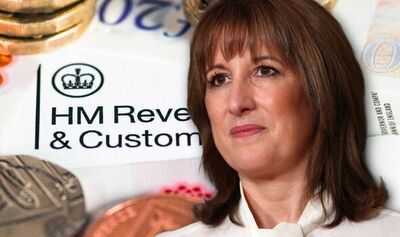
Pretty much everybody is paying more tax these days, and pensioners are no exception. With income tax thresholds frozen for another five years, the pressure is only set to intensify.
Taxes hit an all-time high under the Conservatives, but Chancellor Rachel Reeves has already added another £70billion to the burden, and counting.
Income, savings, rental profits, dividends, capital gains, inheritances and pensions are all being taxed more heavily. The tax squeeze shows no sign of easing, which means we all need to stay alert and look for ways to fight back.
TaxingThere are roughly 13 million state pensioners today, of whom 8.2 million now pay income tax, the latest figures show.
Please cover the 2023/24 tax year, and show an extra 1 million pensioners were dragged into the tax net that year. The figure is likely to be much higher today, as the freeze on income tax thresholds continues, as it will until 2031.
While more people are working beyond retirement age to make ends meet, that's not the main cause. Of those paying tax, 7.8 million say their primary income is their pension, so they're being taxed hard too.
The vast majority of pensioner taxpayers are on the basic rate of 20%, but nearly one million pensioners now pay higher rate tax at 40%, while around 30,000 are hit by the additional 45% rate.
Sarah Coles, head of personal finance at AJ Bell, said many pensioners are caught in a vicious circle. "More people are working later in life to close the income gap, and then paying tax on their earnings too."
While pensions remain the bedrock of retirement, ISAs are becoming increasingly important. They allow savers to draw income tax-free and potentially stay below key thresholds. "This gives people more control over their tax bills," Coles adds.
PlanningIf you risk paying tax on savings interest, a Cash ISA is well worth considering, as all returns are tax-free. "If dividend tax is a concern, a Stocks and Shares ISA makes sense, while also protecting against capital gains tax," said Coles.
These tax breaks are under pressure, too. From April next year, under-65s will see their Cash ISA allowance cut from £20,000 a year to £12,000, so it makes sense to use the higher allowance while it lasts.
Over-65s will retain the full £20,000 allowance, while the Stocks and Shares ISA limit remains unchanged at £20,000 for everyone.
Reeves is also introducing a 2% surcharge on interest earned on savings outside ISAs above the personal savings allowance, which is £1,000 for basic-rate taxpayers and £500 for higher-rate taxpayers.
Coles suggests tax planning as a household. "If your spouse or civil partner pays a lower rate of tax, transferring assets can help you make better use of pensions, ISAs and capital gains allowances."
For example, holding income-generating assets in the name of the lower earner can reduce the overall tax bill. And there's more you can do.
Act nowMichele Tieghi, founder of Psyfi Money, said too many people delay using their annual ISA allowance until the end of the tax year.
Someone investing £500 a month (£6,000 a year) in a Cash ISA paying 3.75% would earn £123 interest over the year. "But investing the full £6,000 upfront could almost double that to £229," he said.
The same applies to moving investments into an ISA. Selling shares held outside and buying them back into a Stocks and Shares ISA sooner rather than later gives them more time to grow tax-free.
All capital gains and dividend income inside an ISA are tax-free, but taxable if held outside. From April 6, Reeves also introduced a 2% surcharge on dividends earned outside an ISA.
ReliefPension contributions don't just build wealth for the future; they can also cut today's tax bill through generous tax relief.
Reeves plans to scale back workplace pension salary sacrifice schemes from 2029, but for now, they remain highly valuable. "Someone earning £60,000 who contributes £10,000 to their pension will only be taxed as if they earn £50,000," Tieghi said.
FamilyAnother option is to consider a Lifetime ISA for younger family members, which offers a 25% bonus from the government. Families can't tuck away £9,000 a year in a Junior ISA for the under-18s. Or pay up to £3,000 into a pension on behalf of a child or non-working family member and claim 20% tax relief. This way, the contributions only cost £2,880.
Finally, don't overlook state benefits such as Attendance Allowance and Pension Credit, and council tax discounts. Single occupiers, for example, can get 25% off. The tax burden will still rise, but at least you can reduce your exposure.
More ways to cut your tax billThere are other simple but often overlooked ways to reduce tax. The Marriage Allowance allows a non-taxpaying spouse to transfer £1,260 of their personal allowance to their partner, potentially saving up to £252 a year.
The capital gains tax annual exempt amount has been slashed to just £3,000, but can still be used each year to realise profits tax-efficiently.
Premium Bonds aren't for everybody. They may not suit pensioners who need a fixed income from them, but they do have one advantage. Winnings are entirely tax-free. However, the annual prize fund rate now looks low at 3.3%, while best buy savings accounts pay around 4.5%.
-
IndiGo Flight Experiences Power Bank Explosion During Taxiing in Chandigarh

-
Cabinet Approves Major Rail Multi-Tracking Projects to Enhance Connectivity

-
Historic Victory in West Bengal Elections 2026: A New Era Begins

-
Ambati Rayudu Takes Charge as Head of Cricket Operations in Hyderabad

-
Understanding Kalbaisakhi: The Weather Phenomenon Impacting India and Bangladesh