Rei Kawakubo: Fashion's quiet radical in loud, uncertain times
ETimes | May 5, 2026 9:40 PM CST

In an era defined by noise - of trends, of opinions, of relentless reinvention - Rei Kawakubo remains fashion’s most compelling contradiction. She does not chase relevance. She resists it. And yet, few designers feel as sharply attuned to the cultural moment as the founder of Comme des Garçons.
For those unfamiliar with her work, Kawakubo is not a designer in the conventional sense. She is an auteur. Her clothes are not meant to flatter so much as to provoke, question and, at times, unsettle. In 2026, as the world grapples with instability and identity, her vocabulary of resistance, imperfection and freedom feels less like avant-garde abstraction and more like a necessary language.
A tear that redefined fashion
Kawakubo’s relationship with non-conformity was evident from the very start. When she debuted in Paris in 1981, the fashion establishment was expecting polish, glamour, and the reassuring codes of luxury. Instead, she sent out a black jumper riddled with holes.
To her, those tears were not flaws. They were lace.
It was a quiet but radical redefinition - of beauty, of value, of what clothing could represent. At a time when perfection was synonymous with aspiration, Kawakubo introduced the idea that absence, damage, and incompleteness could carry their own poetry. The industry didn’t know what to make of it. Some dismissed it as “Hiroshima chic.” But history would recognise it as a rupture that changed fashion’s trajectory.
Before ‘anti-perfection’ was a trend
Today, a generation of Gen Z consumers celebrates “imperfect” aesthetics as a rejection of hyper-curated beauty. Kawakubo has been working in that space for over four decades.
Her designs have consistently disrupted symmetry, proportion and finish. Garments bulge, collapse, extend awkwardly or resist definition altogether. What appears accidental is, in fact, deeply intentional. Imperfection, in her world, is not a stylistic choice - it is a philosophy.
That makes her current relevance particularly striking. While the industry frames imperfection as a trend cycle, Kawakubo treats it as a permanent condition of creativity. She does not follow the cultural shift; she pre-empts it, often by decades.
The refusal to follow - and the inevitability of relevance
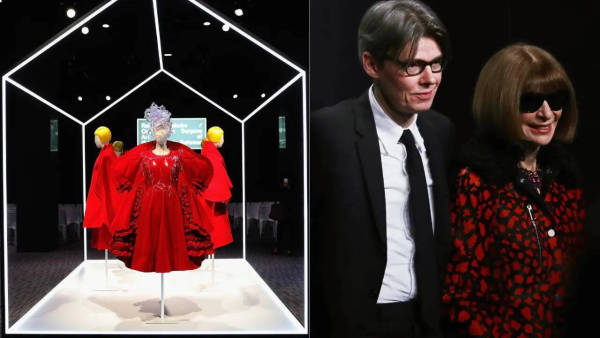
Kawakubo’s practice is closer to an omakase counter than to a department‑store rail: omakase is the Japanese “leave it to the chef” style of dining, where there’s no menu to choose from and you simply accept the sequence the chef decides to serve. Like that chef, Kawakubo asks her audience to trust her progression of ideas. She refuses to explain her work, refuses to align with seasonal expectations, refuses to soften her vision for commercial appeal. And yet, this very refusal is what keeps her relevant.
In uncertain times, when fashion often defaults to escapism or nostalgia, Kawakubo offers neither comfort nor clarity. Instead, she presents ideas -sometimes opaque, often challenging - that demand engagement. Her work reflects the complexity of the moment rather than smoothing it over.
That is perhaps why, despite never designing “for the market,” she continues to resonate. Her collections feel less like responses to trends and more like parallel conversations about the world.
Black as resistance: the 2026 shows
Her recent collections underline this philosophy with unusual directness. For Autumn/Winter 2026, titled Ultimately Black, Kawakubo returned to her most enduring motif. In her show notes, she wrote: “In the end, there is black. Ultimately Black. I have come to realize that, after all, black is the color for me. It’s just the strongest, the best for creation, and the color that embodies the rebellious spirit. And has the biggest meaning: the universe and the black hole.”
On the runway, black was not minimal - it was maximal, sculptural, almost overwhelming. It became a space rather than a shade, absorbing light and definition alike.
Earlier, in January, her menswear show Black Hole extended that idea into something more literal and more urgent. Garments seemed hollowed out, circling absence and void. Hand-painted leather shoes carried blunt declarations: “Live Free,” “Strong Will,” “Wear Your Freedom,” “My Energy Comes From Freedom.”
For a designer who typically avoids overt messaging, these statements felt pointed. They spoke to autonomy, to resistance, to the act of holding on to individuality in constraining times. In Kawakubo’s universe, fashion is not passive - it is an assertion.
Fashion as art - long before it was a theme
The current Met Gala theme, “Fashion is Art,” might feel like a timely cultural statement. For Kawakubo, it is simply a description of what she has always done.
Her work has consistently blurred the boundaries between clothing and sculpture. Over the past decade, in particular, she has described her creations as “objects for the body” - forms that exist somewhere between garment and installation.
This year’s recognition across the art world reinforces that position. Kawakubo has been named the centrepiece of the Independent Art Fair in New York, marking the first solo presentation of her work in the city since the Metropolitan Museum of Art’s landmark 2017 exhibition. Simultaneously, the National Gallery of Victoria in Melbourne hosted an expansive celebration of her practice, placing her firmly within a museum context.
That blurring extends beyond the runway. Kawakubo’s retail environments, particularly Dover Street Market, are conceived less as shops and more as curated spaces. Installations shift, designers are juxtaposed in unexpected ways, and the act of shopping becomes an encounter with ideas.
Finding hope in rupture
For all its darkness and defiance, Kawakubo’s work is not without hope. In fact, it is often quietly, stubbornly optimistic. In her Spring/Summer 2025 collection, tellingly titled Uncertain Future, she introduced an unexpected lightness - cartoonish, bell-shaped skirts that looked like twisted swirls of cream, tiered forms resembling iced cakes, and prints that shimmered through gauzy, translucent layers. It was a visual departure, but not a philosophical one. “With the state of the world as it is, the future as uncertain as it is, if you put air and transparency into the mix of things, there could be the possibility of hope,” she said at the time. In Kawakubo’s universe, destruction is never the end point - it is a necessary condition for renewal. Even her most fractured silhouettes carry within them the suggestion that something new, and perhaps more meaningful, can emerge.
Why she matters now
Rei Kawakubo’s continued relevance lies not in adaptation but in conviction. She has spent over 40 years building a language that resists easy consumption - one that values freedom over approval, imperfection over polish, and ideas over trends.
Fashion, in her hands, becomes more than clothing. It becomes a way of engaging with the world - one that is as challenging as it is necessary.
And perhaps that is why, decades after a torn jumper unsettled Paris, Rei Kawakubo still feels not just relevant, but essential.
For those unfamiliar with her work, Kawakubo is not a designer in the conventional sense. She is an auteur. Her clothes are not meant to flatter so much as to provoke, question and, at times, unsettle. In 2026, as the world grapples with instability and identity, her vocabulary of resistance, imperfection and freedom feels less like avant-garde abstraction and more like a necessary language.
A tear that redefined fashion
Kawakubo’s relationship with non-conformity was evident from the very start. When she debuted in Paris in 1981, the fashion establishment was expecting polish, glamour, and the reassuring codes of luxury. Instead, she sent out a black jumper riddled with holes.
To her, those tears were not flaws. They were lace.
It was a quiet but radical redefinition - of beauty, of value, of what clothing could represent. At a time when perfection was synonymous with aspiration, Kawakubo introduced the idea that absence, damage, and incompleteness could carry their own poetry. The industry didn’t know what to make of it. Some dismissed it as “Hiroshima chic.” But history would recognise it as a rupture that changed fashion’s trajectory.
Before ‘anti-perfection’ was a trend
Today, a generation of Gen Z consumers celebrates “imperfect” aesthetics as a rejection of hyper-curated beauty. Kawakubo has been working in that space for over four decades.
Her designs have consistently disrupted symmetry, proportion and finish. Garments bulge, collapse, extend awkwardly or resist definition altogether. What appears accidental is, in fact, deeply intentional. Imperfection, in her world, is not a stylistic choice - it is a philosophy.
That makes her current relevance particularly striking. While the industry frames imperfection as a trend cycle, Kawakubo treats it as a permanent condition of creativity. She does not follow the cultural shift; she pre-empts it, often by decades.
The refusal to follow - and the inevitability of relevance
Kawakubo’s practice is closer to an omakase counter than to a department‑store rail: omakase is the Japanese “leave it to the chef” style of dining, where there’s no menu to choose from and you simply accept the sequence the chef decides to serve. Like that chef, Kawakubo asks her audience to trust her progression of ideas. She refuses to explain her work, refuses to align with seasonal expectations, refuses to soften her vision for commercial appeal. And yet, this very refusal is what keeps her relevant.
In uncertain times, when fashion often defaults to escapism or nostalgia, Kawakubo offers neither comfort nor clarity. Instead, she presents ideas -sometimes opaque, often challenging - that demand engagement. Her work reflects the complexity of the moment rather than smoothing it over.
That is perhaps why, despite never designing “for the market,” she continues to resonate. Her collections feel less like responses to trends and more like parallel conversations about the world.
Black as resistance: the 2026 shows
Her recent collections underline this philosophy with unusual directness. For Autumn/Winter 2026, titled Ultimately Black, Kawakubo returned to her most enduring motif. In her show notes, she wrote: “In the end, there is black. Ultimately Black. I have come to realize that, after all, black is the color for me. It’s just the strongest, the best for creation, and the color that embodies the rebellious spirit. And has the biggest meaning: the universe and the black hole.”
On the runway, black was not minimal - it was maximal, sculptural, almost overwhelming. It became a space rather than a shade, absorbing light and definition alike.
Earlier, in January, her menswear show Black Hole extended that idea into something more literal and more urgent. Garments seemed hollowed out, circling absence and void. Hand-painted leather shoes carried blunt declarations: “Live Free,” “Strong Will,” “Wear Your Freedom,” “My Energy Comes From Freedom.”
For a designer who typically avoids overt messaging, these statements felt pointed. They spoke to autonomy, to resistance, to the act of holding on to individuality in constraining times. In Kawakubo’s universe, fashion is not passive - it is an assertion.
Fashion as art - long before it was a theme
The current Met Gala theme, “Fashion is Art,” might feel like a timely cultural statement. For Kawakubo, it is simply a description of what she has always done.
Her work has consistently blurred the boundaries between clothing and sculpture. Over the past decade, in particular, she has described her creations as “objects for the body” - forms that exist somewhere between garment and installation.
This year’s recognition across the art world reinforces that position. Kawakubo has been named the centrepiece of the Independent Art Fair in New York, marking the first solo presentation of her work in the city since the Metropolitan Museum of Art’s landmark 2017 exhibition. Simultaneously, the National Gallery of Victoria in Melbourne hosted an expansive celebration of her practice, placing her firmly within a museum context.
That blurring extends beyond the runway. Kawakubo’s retail environments, particularly Dover Street Market, are conceived less as shops and more as curated spaces. Installations shift, designers are juxtaposed in unexpected ways, and the act of shopping becomes an encounter with ideas.
Finding hope in rupture
For all its darkness and defiance, Kawakubo’s work is not without hope. In fact, it is often quietly, stubbornly optimistic. In her Spring/Summer 2025 collection, tellingly titled Uncertain Future, she introduced an unexpected lightness - cartoonish, bell-shaped skirts that looked like twisted swirls of cream, tiered forms resembling iced cakes, and prints that shimmered through gauzy, translucent layers. It was a visual departure, but not a philosophical one. “With the state of the world as it is, the future as uncertain as it is, if you put air and transparency into the mix of things, there could be the possibility of hope,” she said at the time. In Kawakubo’s universe, destruction is never the end point - it is a necessary condition for renewal. Even her most fractured silhouettes carry within them the suggestion that something new, and perhaps more meaningful, can emerge.
Why she matters now
Rei Kawakubo’s continued relevance lies not in adaptation but in conviction. She has spent over 40 years building a language that resists easy consumption - one that values freedom over approval, imperfection over polish, and ideas over trends.
Fashion, in her hands, becomes more than clothing. It becomes a way of engaging with the world - one that is as challenging as it is necessary.
And perhaps that is why, decades after a torn jumper unsettled Paris, Rei Kawakubo still feels not just relevant, but essential.
READ NEXT
-
“How will she go to the Assembly? Now she is not an MLA..” Sambit Patra sharp sarcasm on Mamata Banerjee’s statement of not resigning

-
‘Don’t let the hair grow on my head!’ Anupam Kher’s befitting reply to BJP leader’s statement on Mamata’s defeat and ‘baldness’
-
Scientists expressed concern over the spread of dangerous amoeba across the world.

-
Umer Mukhtar and Mahnoor Rahim resolve controversy

-
Must use rose face mist in summer, know here how to make and use it…