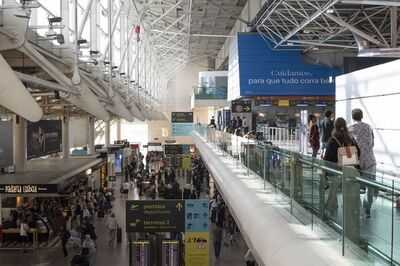
Popular European destinations have been urged to halt the entry-exit system (EES) after Portugal and Italy joined Greece in easing border checks. Travel experts believe Spain, France and Croatia could soon abandon the system, as British tourists may start prioritising countries with shorter airport queues.
Seamus McCauley of the travel company Holiday Extras warned that jobs would be at risk if countries did not act. He told Daily Mail: "Countries are not going to sit back and let Greece take their trade because they won't face EES delays at airports. To do so would be politically toxic as jobs are on the line."
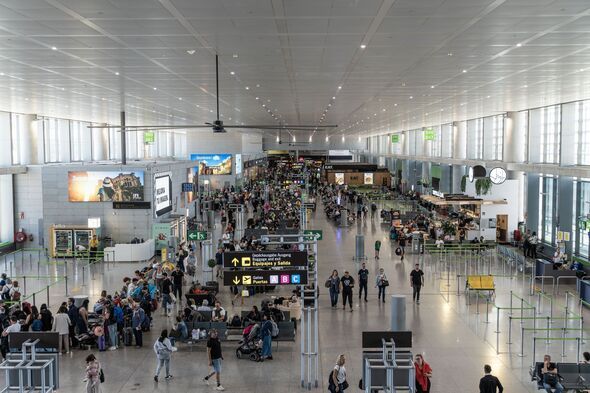
He continued: "The rollout has been an utter fiasco. British tourists are worth €3.5billion a year to the Greek economy and it has rightly decided it will not jeopardise that because EES is not working properly."
The new border checks, which were phased in from October 12, 2025, have been causing queues across the Schengen Zone as third-country nationals wait to supply their fingerprints and facial images to border officials.
Greece has suspended EES checks for British tourists at airports, while Portugal has begun waving passengers through during busy periods. Italy is expected to allow tourists to enter on a passport stamp ahead of May half-term, according to LBC.
Politicians in the Canary Islands have already called on the Spanish Government to suspend EES at airports across the archipelago, after reports of substantial queues.
David Morales, spokesperson for the political group Partido Popular, highlighted delays at Tenerife South, Lanzarote, Fuerteventura, and Gran Canaria. He described "third world scenes" of "British tourists, our main source market, crammed into airport terminals and even queuing in the sun outside the aircraft parking area".
He called for more staff and technological support in Spain, and warned the country would have "no chance" without such measures.
He also stressed the responsibility of AENA, Spain's airport operator, to provide sufficient space, comfort and hygiene for travellers.
ABTA, the trade association for tour operators and travel agents in the UK, previously said border authorities were not using the contingency plans available to them to help ease queues.
Border authorities are allowed to stand down the system or limit the number or extent of checks to avoid significant disruption.
In a letter to the European Commission on February 4, Mark Tanzer, chief executive of ABTA, said: "The ambition of a project like EES means it was never going to go completely smoothly, and we were prepared for that.
"However, what is frustrating is that border authorities have it within their power to ease queues and deal with issues as they arise - but that doesn't seem to be happening across the board.
"As the rollout expands and we head towards peak travel periods, we're urging border authorities to plan for busy periods and use the contingency measure available. It's critical the European Commission keeps a close eye on this throughout the rollout and beyond."
-
Best FD Rates in May 2026: These 5 PSU Banks Offer Up to 7.10% Interest for Senior Citizens

-
SBI Bank Strike Alert: Services May Be Hit for 4 Days in May—Check Dates Before Visiting Branch
-
₹15,000 Monthly Expense Today—How Much Will You Need After 20 Years? Full Inflation Calculation Explained

-
8th Pay Commission Update: ₹65,000 Minimum Salary Demand Raised in Pune Meet, Big HRA & Allowance Changes Proposed

-
What Is Circle Rate? How It Determines Property Value, Taxes, and Home Loan—Full Guide for Buyers