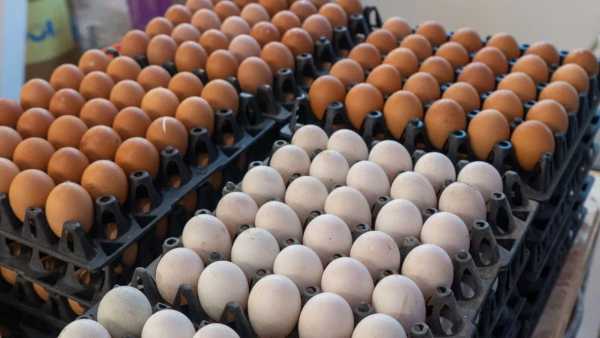
New Delhi: Are eggs, a cheap source of protein, contributing more to child stunting than eradicating it? A study conducted by researchers from institutions including the Royal Veterinary College, London School of Hygiene and Tropical Medicine, International Livestock Research Institute and Hyderabad’s ICMR-National Institute of Nutrition has answers for this question.
The researchers examined how eggs move from farms to children in the city’s low-income settlements. The study, published in Food Security (2026), found that the egg supply chain in Addagutta and Warasiguda may be contributing to child stunting in low-income communities. They cited conditions like poor regulation, unsafe handling practices and quality diversion in government nutrition programmes as reasons.
The research is based on interviews of farmers, traders, wholesalers, retailers and mothers. The researchers traced the supply chain to assess how it affects children receiving eggs through Anganwadi centres.
Lower-quality eggs diverted to Anganwadi centres
Smaller and lower-quality eggs, often rejected by the open market, were frequently diverted to Anganwadi nutrition schemes.
“A few farmers are cheating. They give small eggs to Anganwadi centres and charge full price,” an egg industry representative told researchers.
The paper also highlighted the sale and consumption of cracked eggs in poorer communities warning that cracked shells increase the risk of bacterial contamination, including Salmonella, especially during summer season in Hyderabad when refrigeration is largely absent across the supply chain.
Egg consumption lowers during summer
The egg consumption lowers during the summer due to a common belief that it generates body heat reduces consumption during hotter months. This leaves vulnerable children without an affordable source of protein and nutrition.
“Stakeholders’ individual perceptions drive business decisions and influence egg quality variations,” the authors wrote, adding that the largely trust-based system operates with minimal oversight.
“Our egg value chain analysis in Hyderabad reveals several critical issues potentially linking value chain activities with stunting. The widespread absence of standards and regulations and the trust-based system highlight a challenging environment for food safety,” the authors concluded.
Despite its rapid economic growth and agricultural success, India is one of the countries with the highest prevalence of child stunting globally, at 31.7 per cent in 2022.
-
TVK’s 108 MLAs May Resign If DMK Or AIADMK Stakes Claim To Form Government: Sources

-
IPL Toss Coin Has Unique History - Know What Makes It So Special

-
Nagaland State Lottery Result: May 7, 2026, 8 PM Live - Watch Streaming Of Winners List Of Dear Fame Sambad Night Thursday Weekly Draw

-
Israeli PM Benjamin Netanyahu Orders Strike In Beirut Targeting Hezbollah's Radwan Force Commander

-
Revenge in Rome: Filipina star Eala eyes payback against China's Wang