
Listen to this article in summarized format
Loading...
××
Subscribe to

Unlock AI Briefing and Premium Content
New Year Offer 24 Hours Left
Subscribe NowAlready a member? Sign In
What's Included
- Exclusive Stories
- Daily ePaper Access
- Smart Market Tools
- Curated Investment Ideas
- Ad-lite Experience
Subscription

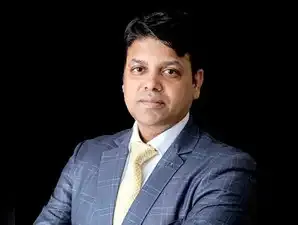
New edtech providers are innovating on how access, affordability, and outcomes come together, especially in smaller towns, as India's test-prep landscape grows beyond its big cities. SpeEdLabs, founded by Vivek Varshney, is betting on a school-integrated, full-stack model that embeds competitive exam preparation directly into classrooms rather than relying on the parallel coaching economy. In a conversation with Economic Times Digital, Varshney discusses the limitations of traditional coaching for new learners, how SpeEdLabs has grown to 800 schools, and the broader trends in India's edtech market suggested by its success. Edited excerpts.
ET: You have positioned SpeEdLabs as a response to the access gap in competitive exam prep. What did you see in smaller towns that convinced you the traditional coaching model was fundamentally broken?
Vivek Varshney (VV): In towns across India, we saw that students wanted to learn, but they did not have the right tools and a structured system to help them. While the need for high rigour coaching for national level competition is unavoidable, the benefits of starting early through small steps are getting acknowledged. Affordability, access to structured programs, national level assessment and benchmarking are the most important aspects for the students living in small towns. Even the teachers needed updated resources to deliver high rigor teaching for competitive exams.
With SpeEdLabs, a comprehensive solution is integrated in the school system which addresses all these problems. Our books are designed for small town students in easy language and more flow diagrams. Personalised adaptive learning app helps students access high quality study material and practice questions. National level assessments help them in benchmarking and identifying their strengths and weaknesses.
ET: Your model embeds preparation within schools rather than competing with coaching centres. How do you convince schools and parents that this integrated approach can match or outperform legacy coaching institutes?
VV: Our approach is based on the idea that students do not need to do work outside of school. Students can access these programs within the school system. It reduces overall costs, transportation hassles, and safety/security challenges. Parents have high trust in school teachers and management. SpeEdLabs Foundation programs provide all the tools for schools for the effective implementation of high rigor teaching and assessments.
Ecosystem network effect provides a competitive environment for the students in small towns. Their national level exams give them transparent current standing benchmarking and detailed analysis. The combination of these factors outperforms the traditional standalone small tuitions and coaching in these towns.
It also helps parents because they do not need to pay for help outside of school. The instability of traditional coaching teachers is also a big issue for the parents.
ET: SpeEdLabs operates as a full-stack platform rather than offering point solutions. What are the biggest advantages of this integrated model in terms of learning outcomes and operational efficiency?
VV: A fragmented approach often creates gaps between what students learn and what they practice and get tested on.
A full-stack model brings everything together in one system. Platform teaching resources include detailed lesson plans, lecture plans, teaching presentations, explanatory examples, preloaded assignments and customised assessment functionalities. Students learn concepts through notes/videos and then practice different types of questions through adaptive practice. They are assessed in a structured way throughout the academic year.
They get continuous feedback on their progress and our learning recommendation engine curates the Personalized improvement practice assignments & tests.
This improves conceptual learning and retention over time. For schools it simplifies things. Everything aligns with their schedule through a full year implementation structure. They do not have to manage different tools or delivery partners; and the entire system works effectively.
Our academic excellence team visits the school regularly to conduct classroom observations, teacher training, parent orientation and students’ guidance sessions. The overall system ensures improved learning outcomes for board excellence as well as competitive exam preparation.
ET: With 800 schools across 26 states and over 200,000 students, what have been the key drivers of this scale, and what does your expansion playbook look like from here?
VV: Our growth is because the model works with the school system. It helps every stakeholder-school management, teachers, students and parents. This has helped schools trust us over time. A big part of our growth has come from referrals where our partner schools tell other schools about us. We are uniquely positioned to provide a complete integrated solution for standalone and medium-fee schools in small towns, where other options lack the national level system and advanced edtech platform for teachers, management and students.
Our student retention over the last three years has been nearly 100 percent, which is an outcome of our solution effectiveness. The scale, affordability, and technology-first approach to solving challenges for teachers and students were the two main drivers of this exponential growth from 20 schools to 800 schools in three years. Our aim is to take our foundation programs to 5,000 schools in the next three years through our national partners.
ET: How does your revenue model work across schools, and what has been your growth trajectory in terms of sales and annual revenue over the last few years?
VV: The fundamental principle for us is bringing affordable high quality test prep programs to small towns. This comes with a strong edtech platform integrated through books and assessments. Students pay for these books and platform through a B2B2C business model. Our continuous product innovation is focused on Personalized learning and Improved Classroom delivery.
We have scaled 6x in last two financial years, from Rs 4.5 crore in FY24 to Rs 27 crore in FY26, with significant improvement in our operating efficiency. EBITDA Margin improved from 3.6% (FY25) to over 10% (FY26) on the back of economies of scale and other operating leverages.
ET: Affordability is central to your proposition. How do you balance keeping costs low for students while maintaining strong unit economics and profitability at scale?
VV: Affordability is achieved through scale. Our aim is to grow from 200,000 students to reach one million students in the next two years. We are expanding our program range through various test prep (JEE, NEET, IPMAT, CLAT, CUET, etc.) and STEM (robotics, coding, AI) programs to serve more students per school and more schools per district. This helps in the optimisation of servicing costs and R&D costs per student. Unit economics come from optimised printing costs, technology infrastructure costs and servicing costs with scale.
Education is naturally a public good service where the purpose is more important than profits. However, as a funded company aiming to build a long-term sustainable business, we will aim to maintain 18%-20% EBITDA margins, which will fund our R&D and program expansions.
ET: You are preparing students simultaneously for boards, JEE, and NEET within the school system. How do you ensure depth and rigor without overwhelming students or diluting outcomes?
VV: As we all know, the syllabus of all competitions is based on school curriculum concepts and the NCERT syllabus. The objective of our programs is to elevate the thinking level through high rigour problem solving and combining multiple concepts through first principle thinking. During the middle school years, it is most effective to teach students to study at 20 percent-30 percent high rigour. While this requires 20 percent extra effort from students, the operational efficiency of these programs in schools helps them. The school integrated program balances the school level curriculum and competition approach.
This builds confidence among students living in small towns and prepares them for national level competition by starting early. The continuous learning through age-appropriate rigour balances the academic complexity for the students without overwhelming them.
ET: Zooming out, what does SpeEdLabs’ growth signal about the next phase of edtech in India and are we moving away from direct-to-consumer models toward deeper institutional partnerships?
VV: India is a very large country with diverse student profiles depending upon their location, demographics, economic and family background. All kinds of models have huge scope for serving students. We can't say that we are moving away from the B2C model. However, there are costs and outcome benefits for the entire ecosystem through the school integrated programs. This will accelerate the edtech partnership models in India, and we are well positioned to scale in this model.
SpeEdLabs vision is to serve students through school integrated programs where we can create impact at scale. Our expertise is program design, innovation, technology for improved learning outcomes. We will continue building institutional partnerships through schools and colleges. Our approach is based on empowering the school teachers with the power of Research and Technology. This creates sustainable change and capacity building for long term impact in our partner schools.
ET: You have positioned SpeEdLabs as a response to the access gap in competitive exam prep. What did you see in smaller towns that convinced you the traditional coaching model was fundamentally broken?
Vivek Varshney (VV): In towns across India, we saw that students wanted to learn, but they did not have the right tools and a structured system to help them. While the need for high rigour coaching for national level competition is unavoidable, the benefits of starting early through small steps are getting acknowledged. Affordability, access to structured programs, national level assessment and benchmarking are the most important aspects for the students living in small towns. Even the teachers needed updated resources to deliver high rigor teaching for competitive exams.
With SpeEdLabs, a comprehensive solution is integrated in the school system which addresses all these problems. Our books are designed for small town students in easy language and more flow diagrams. Personalised adaptive learning app helps students access high quality study material and practice questions. National level assessments help them in benchmarking and identifying their strengths and weaknesses.
ET: Your model embeds preparation within schools rather than competing with coaching centres. How do you convince schools and parents that this integrated approach can match or outperform legacy coaching institutes?
VV: Our approach is based on the idea that students do not need to do work outside of school. Students can access these programs within the school system. It reduces overall costs, transportation hassles, and safety/security challenges. Parents have high trust in school teachers and management. SpeEdLabs Foundation programs provide all the tools for schools for the effective implementation of high rigor teaching and assessments.
Ecosystem network effect provides a competitive environment for the students in small towns. Their national level exams give them transparent current standing benchmarking and detailed analysis. The combination of these factors outperforms the traditional standalone small tuitions and coaching in these towns.
It also helps parents because they do not need to pay for help outside of school. The instability of traditional coaching teachers is also a big issue for the parents.
ET: SpeEdLabs operates as a full-stack platform rather than offering point solutions. What are the biggest advantages of this integrated model in terms of learning outcomes and operational efficiency?
VV: A fragmented approach often creates gaps between what students learn and what they practice and get tested on.
A full-stack model brings everything together in one system. Platform teaching resources include detailed lesson plans, lecture plans, teaching presentations, explanatory examples, preloaded assignments and customised assessment functionalities. Students learn concepts through notes/videos and then practice different types of questions through adaptive practice. They are assessed in a structured way throughout the academic year.
They get continuous feedback on their progress and our learning recommendation engine curates the Personalized improvement practice assignments & tests.
This improves conceptual learning and retention over time. For schools it simplifies things. Everything aligns with their schedule through a full year implementation structure. They do not have to manage different tools or delivery partners; and the entire system works effectively.
Our academic excellence team visits the school regularly to conduct classroom observations, teacher training, parent orientation and students’ guidance sessions. The overall system ensures improved learning outcomes for board excellence as well as competitive exam preparation.
ET: With 800 schools across 26 states and over 200,000 students, what have been the key drivers of this scale, and what does your expansion playbook look like from here?
VV: Our growth is because the model works with the school system. It helps every stakeholder-school management, teachers, students and parents. This has helped schools trust us over time. A big part of our growth has come from referrals where our partner schools tell other schools about us. We are uniquely positioned to provide a complete integrated solution for standalone and medium-fee schools in small towns, where other options lack the national level system and advanced edtech platform for teachers, management and students.
Our student retention over the last three years has been nearly 100 percent, which is an outcome of our solution effectiveness. The scale, affordability, and technology-first approach to solving challenges for teachers and students were the two main drivers of this exponential growth from 20 schools to 800 schools in three years. Our aim is to take our foundation programs to 5,000 schools in the next three years through our national partners.
ET: How does your revenue model work across schools, and what has been your growth trajectory in terms of sales and annual revenue over the last few years?
VV: The fundamental principle for us is bringing affordable high quality test prep programs to small towns. This comes with a strong edtech platform integrated through books and assessments. Students pay for these books and platform through a B2B2C business model. Our continuous product innovation is focused on Personalized learning and Improved Classroom delivery.
We have scaled 6x in last two financial years, from Rs 4.5 crore in FY24 to Rs 27 crore in FY26, with significant improvement in our operating efficiency. EBITDA Margin improved from 3.6% (FY25) to over 10% (FY26) on the back of economies of scale and other operating leverages.
ET: Affordability is central to your proposition. How do you balance keeping costs low for students while maintaining strong unit economics and profitability at scale?
VV: Affordability is achieved through scale. Our aim is to grow from 200,000 students to reach one million students in the next two years. We are expanding our program range through various test prep (JEE, NEET, IPMAT, CLAT, CUET, etc.) and STEM (robotics, coding, AI) programs to serve more students per school and more schools per district. This helps in the optimisation of servicing costs and R&D costs per student. Unit economics come from optimised printing costs, technology infrastructure costs and servicing costs with scale.
Education is naturally a public good service where the purpose is more important than profits. However, as a funded company aiming to build a long-term sustainable business, we will aim to maintain 18%-20% EBITDA margins, which will fund our R&D and program expansions.
ET: You are preparing students simultaneously for boards, JEE, and NEET within the school system. How do you ensure depth and rigor without overwhelming students or diluting outcomes?
VV: As we all know, the syllabus of all competitions is based on school curriculum concepts and the NCERT syllabus. The objective of our programs is to elevate the thinking level through high rigour problem solving and combining multiple concepts through first principle thinking. During the middle school years, it is most effective to teach students to study at 20 percent-30 percent high rigour. While this requires 20 percent extra effort from students, the operational efficiency of these programs in schools helps them. The school integrated program balances the school level curriculum and competition approach.
This builds confidence among students living in small towns and prepares them for national level competition by starting early. The continuous learning through age-appropriate rigour balances the academic complexity for the students without overwhelming them.
ET: Zooming out, what does SpeEdLabs’ growth signal about the next phase of edtech in India and are we moving away from direct-to-consumer models toward deeper institutional partnerships?
VV: India is a very large country with diverse student profiles depending upon their location, demographics, economic and family background. All kinds of models have huge scope for serving students. We can't say that we are moving away from the B2C model. However, there are costs and outcome benefits for the entire ecosystem through the school integrated programs. This will accelerate the edtech partnership models in India, and we are well positioned to scale in this model.
SpeEdLabs vision is to serve students through school integrated programs where we can create impact at scale. Our expertise is program design, innovation, technology for improved learning outcomes. We will continue building institutional partnerships through schools and colleges. Our approach is based on empowering the school teachers with the power of Research and Technology. This creates sustainable change and capacity building for long term impact in our partner schools.