The year 2014 is seen as a turning point in the history of India, when Narendra Modi took the reins of the country. At that time India was the 10th largest economy in the world and its GDP was approximately 1.86 trillion dollars. Today, within a decade, India has not only become economically stronger, but its prestige on the global stage has also increased significantly. Almost doubling of per capita income is proof that the benefits of development have reached a wide section of the society.
This boom in India’s economy is not limited to mere figures, but it is a sign of a broader change. India’s GDP is projected to cross $4 trillion by 2026 and a growth rate of 7.4 to 7.6 percent keeps it among the fastest growing major economies in the world. This achievement is the result of government policies, economic reforms and strong leadership.
Amit Shah’s role in this change has also been equally important. He strengthened the organization and established BJP as the biggest political force in the country. The duo of Modi and Shah did not limit politics only to power, but made it a medium for nation building.
The change that has taken place in the infrastructure sector is unprecedented. Expansion of roads, construction of highways, modernization of railways and increase in the number of airports—all these have ushered India into a new era. Modern trains, electrification and security technologies have made travel more safe and convenient. Providing roads and electricity to villages is an effort to make development inclusive.
Digital India campaign has made India technologically empowered. Systems like UPI have made the country a leader in digital payments. Today government services are available on mobile, which has increased both transparency and speed. This change is a big step towards making the life of the common citizen easier.
Social welfare schemes have also brought change in the lives of crores of people. Initiatives like Jan Dhan Yojana, Ujjwala Yojana, Ayushman Bharat and Pradhan Mantri Awas Yojana have connected the poor and deprived sections to the mainstream. These are not just schemes, but efforts to bring development to the last person of the society.
Considerable progress has also been made in the railway sector. Rapid electrification of tracks, operation of modern trains, and development of safety systems—all these have given a new identity to Indian Railways. For environmental protection, Railways has also taken steps like solar energy, LED lighting and reduction in carbon emissions.
Redevelopment of religious and cultural places has also been a special feature of this period. Projects like the construction of Ram Temple in Ayodhya, Kashi Vishwanath Dham Corridor and Mahakal Lok have given new life to India’s cultural heritage. It is not only a matter of faith but also a symbol of cultural pride.
Legal and policy reforms have also played an important role in changing the direction of the country. Decisions like Triple Talaq law, removal of Article 370 and Citizenship Amendment Act have affected the social and political scenario. While supporters consider these decisions as bold steps, critics discuss their effects.
India has created a new identity in the field of foreign policy. The policy based on the principle of “India First” has established India as a strong and self-confident nation on the global stage. India has maintained its strategic autonomy while maintaining balanced relations with the US, Russia and other major countries.
Even from the political point of view, BJP’s expansion has been unprecedented. The strong presence of the party in most of the states of the country shows that the party has done effective work at both the organizational and leadership levels. Strengthening the organization down to the booth level and focusing on local issues has been the basis of its success.
However, challenges also exist in this development journey. Employment generation, income inequality and problems in the agricultural sector are issues that require continued attention. But it is also true that the government is accepting these challenges and making efforts towards reform.
Narendra Modi’s leadership is not limited to just administration, but it is a vision—a vision that dreams of making India a developed nation. The goal of “Developed India 2047” is the result of this thinking. This is not just a slogan, but a resolution, continuous efforts are being made to realize it.
Amit Shah’s strategic ability and organizational skills have played an important role in putting this vision on the ground. He has strengthened the party and empowered it at every level.
Today India stands at a juncture where it is not only proud of its past but is also confident about the future. This confidence is the result of development that has taken place over the last few years.
The speed at which India has progressed under the leadership of Narendra Modi and Amit Shah is not only a matter of pride for the countrymen but also an example for the world. It would not be an exaggeration to say that if this direction and efforts continue, India will soon stand in front of the world as a developed nation.
Ultimately, this is not just a period of political success, but an era in which India is forging its new identity and leaving its mark on the global stage.
*Kantilal Mandot Senior Journalist*
-
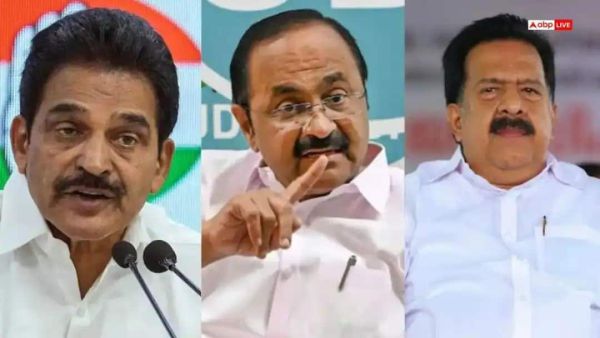
Kerala CM Race Heats Up, Three Nair Leaders Emerge Congress Frontrunners
-
'Specific Reasons Not Communicated': KSCA Alleges No Clarity From BCCI On Chinnaswamy Rejection As IPL 2026 Final Moves To Narendra Modi Stadium

-
'It's Going To Be An Exciting Contest': Sanjay Bangar Reflects His Thoughts Ahead Of SRH vs PBKS IPL 2026 Clash

-
Coinbase To Lay Off 14% Of Workforce As AI Transforms Operations: CEO Brian Armstrong

-
Inspector Avinash Season 2 OTT Release Date: Everything You Need To Know About Randeep Hooda Crime Thriller Series