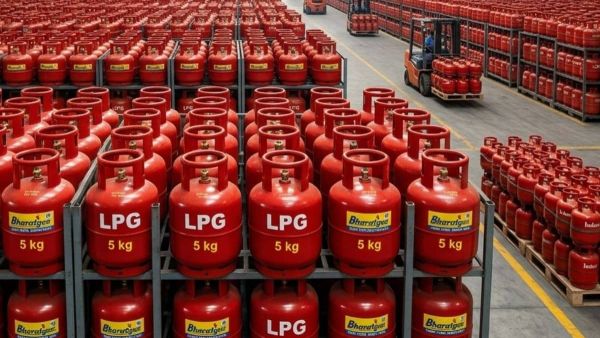
New Delhi: If your kitchen runs on both a gas cylinder and a piped gas line, this is an update you shouldn’t ignore. The Government of India has tightened the rules, and for many households, it could mean choosing just one fuel going forward. The Ministry of Petroleum and Natural Gas has announced that households that already have a PNG (piped natural gas) connection will not be allowed to keep or refill a domestic LPG cylinder. In simple terms, if piped gas is available and active in your home, you may be required to surrender your LPG connection immediately.
This is not just a guideline. The rule has been notified under the Essential Commodities Act, which gives the government legal backing to enforce it strictly. Oil companies have also been directed not to issue new LPG connections or provide refills to homes that already use PNG.
Why this rule is coming now
The timing of this decision is linked closely to the ongoing global energy situation. Tensions in West Asia, particularly involving countries like Iran and Israel, have disrupted key supply routes such as the Strait of Hormuz. This route is critical because a large share of the world’s oil and gas passes through it.
India is especially vulnerable to such disruptions:
Around 85–90% of LPG imports come from West Asian countries like Saudi Arabia and the UAE
Nearly 50% of natural gas is imported
About 88% of crude oil is sourced from abroad
When global supply chains are disturbed, prices rise and availability becomes uncertain. While India has managed crude oil supply by diversifying sources, LPG remains highly import-dependent, making it more sensitive to geopolitical shocks.
What the government is trying to do
The idea behind the new rule is straightforward:
Reserve LPG cylinders for households that have no alternative
Encourage people to shift to PNG where available
PNG is delivered through pipelines, which means it is less dependent on cylinder logistics and international shipping disruptions. It is also considered a cleaner and more stable fuel option. The government, through updates shared by the Press Information Bureau (PIB), has also highlighted that it is actively pushing PNG expansion across cities. Faster approvals, infrastructure push, and incentives are being offered to increase adoption.
Enforcement is already underway
This is not just on paper. Action has already started:
Over 43,000 consumers have voluntarily surrendered LPG connections after switching to PNG
Authorities are using data tracking systems to identify households with dual connections
LPG distributors have been warned against supplying cylinders to such homes
At the same time, enforcement against misuse has intensified:
More than 2,300 raids conducted across the country
Hundreds of LPG distributorships penalised or suspended
Use of Delivery Authentication Codes (DAC) to prevent diversion
No need to panic about supply
Despite the stricter rules, the government has made it clear that fuel supply remains stable:
100% supply is being maintained for domestic LPG, PNG, and CNG
No widespread shortages have been reported
Daily cylinder deliveries continue in large numbers
Citizens are being advised:
Do not panic-buy LPG cylinders
Use online booking instead of visiting distributors
Consider PNG, electric or induction cooking as alternatives
Try to conserve fuel during this period
Big picture for households
For the average household, the takeaway is practical- If you already have PNG, you may soon have to give up your LPG cylinder. If you rely only on LPG, there is no immediate change, but supply is being closely managed. In cities where PNG is expanding, switching may become the long-term norm.
This is not just a short-term reaction to a crisis. It signals a broader shift in India’s energy policy-moving away from cylinder-based fuel toward pipeline-based, more controlled and efficient systems. In simple words LPG will be prioritised for those who truly need it and PNG is being positioned as the future of urban cooking fuel
And with global uncertainties continuing, the government is clearly preparing for a system where every unit of fuel is tracked, controlled, and used more efficiently.
-
Make 5 restaurant-style mushroom dishes at home, the taste will be such that you will keep licking your fingers.

-
Which Country Invented Biryani? – NDTV Food
-
Swap avocado for cheaper creamy veg that tastes even better on toast

-
Want to keep diseases away in the rainy season? Note these important health tips of AYUSH Ministry

-
Trisha Krishnan wore a sheet mask in the flight, know how safe it is to wear in the air plane and what things should be kept in mind