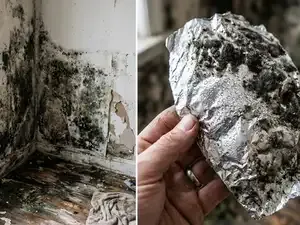
A dark stain on your kitchen wall may look small and harmless at first, but it could be a sign of a bigger moisture problem, experts say. The main confusion is whether the stain is from normal humidity (like cooking steam) or from water leaking inside the wall. Some architects and building experts say you can do a simple test at home using aluminum foil to find out the cause. The method is very easy — you just tape a piece of foil over the stain and wait for 24 to 48 hours. This trick is not a final answer, but it gives a quick clue before spending money on repairs or inspections.
The foil test is a simple and cheap way to understand wall moisture. But experts say it is only a starting point, not a full solution. The real fix depends on the cause — humidity or a leak. Acting early can save money, prevent damage, and protect health.
It shows if water is coming from inside the wall or from indoor humidity by checking which side gets wet.
Q2. What should I do if my wall has moisture or damp spots?
First find the cause, then improve ventilation for humidity or fix leaks quickly to stop damage and mold.
Where this idea comes from
The foil test is based on building science research and is used to understand wall moisture. Engineer Mohamad Kharseh and his team at Chalmers University of Technology explained this method in a 2017 research paper, as per Eco News. Their study described aluminum foil as one of the simplest ways to check where moisture is coming from. The idea is to seal off a small area so water cannot evaporate normally, making hidden moisture easier to detect.How the foil test works
Think of the foil like a small raincoat covering the wall — it blocks air and stops evaporation. Because of this, any water that appears becomes easier to understand. After 24–48 hours, you need to check both sides of the foil carefully.How to read the results
If the inside (wall-facing side) of the foil is wet, it means water is coming from inside the wall — this is called seepage. If the outer (room-facing side) is wet, it means indoor air moisture is turning into water, which is condensation. If both sides are wet, then both seepage and condensation could be happening at the same time. Experts say to check before wiping anything so you don’t lose important clues, as stated by Eco News.Extra warning signs
When you remove the foil, you might see a white powdery substance called efflorescence. This happens when water brings salts to the surface and then dries. The National Park Service says this can be a sign that water is entering the wall. If the stain keeps coming back even after drying, the moisture may be linked to weather, cooking, or seasonal humidity changes.How to do the test step-by-step
- First, wipe the wall dry — do not add water.
- Take a piece of aluminum foil (about 12 inches or big enough to cover the stain).
- Tape it tightly and seal all edges so no air gets in.
- Leave it untouched for 24 to 48 hours.
- Then remove it and check which side is wet.
- Experts say even a phone photo before and after can help compare changes, as mentioned in the report by Eco News.
If it is condensation (humidity problem)
Condensation usually happens due to poor ventilation and high indoor humidity. North Carolina State University Extension says indoor humidity should be kept below 60%. Ideally, 30% to 50% humidity works best to avoid walls getting damp. Use exhaust fans in kitchens and bathrooms, and keep them on even after cooking or showering. Opening windows when outside air is dry can also help. A dehumidifier can reduce moisture in stubborn rooms. The U.S. Department of Energy adds that controlling moisture can also lower energy costs and improve comfort.If it is seepage (water leak problem)
If water is coming from inside the wall, it should be treated like a leak. Possible causes include broken pipes, roof leaks, clogged gutters, or poor drainage. Cracks in walls during heavy rain can also let water enter. If the stain grows, paint bubbles, or there is a musty smell, experts say call a professional, as noted by Eco News. This could be an architect, home inspector, or moisture specialist.Why quick action matters
Wet walls can quickly turn into mold problems if not fixed. The U.S. Environmental Protection Agency says drying wet areas within 24–48 hours usually prevents mold growth. Their key advice is: control moisture to control mold.Health risks of damp walls
Dampness increases the chance of mold, especially in dark hidden areas. The Centers for Disease Control and Prevention says mold exposure can cause coughing, wheezing, or worsen asthma. Some people may not feel symptoms, but others can have serious breathing issues. The National Institute for Occupational Safety and Health has also linked damp buildings to respiratory problems, as per Eco News. In 2009, the World Health Organization reported higher rates of allergies and asthma in damp buildings.The foil test is a simple and cheap way to understand wall moisture. But experts say it is only a starting point, not a full solution. The real fix depends on the cause — humidity or a leak. Acting early can save money, prevent damage, and protect health.
FAQs
Q1. How does the aluminum foil test check wall moisture?It shows if water is coming from inside the wall or from indoor humidity by checking which side gets wet.
Q2. What should I do if my wall has moisture or damp spots?
First find the cause, then improve ventilation for humidity or fix leaks quickly to stop damage and mold.