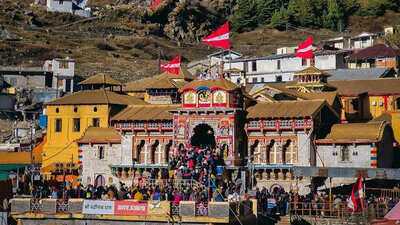
High in the Garhwal Himalayas of Uttarakhand lies the sacred temple of Vishnu in his form as Badrinarayan, located in Badrinath, one of the most visited pilgrimage sites in India and a key part of the Char Dham Yatra. Every year, millions of devotees make the challenging journey to this high-altitude shrine, drawn by both faith and the breathtaking Himalayan setting that surrounds it. What makes this temple truly unique is not just its popularity, but its unusual rhythm of worship. Due to extreme snowfall and harsh winter conditions, the temple remains open only for about six months each year, typically from April or May until October or November, after which it is ceremonially closed and remains inaccessible during the heavy Himalayan winter.
Why the Temple Is Believed to “Sleep” in Winter
 During the winter closure, the temple is not considered abandoned in a spiritual sense. Instead, tradition holds that the deity enters a state of divine rest or meditation, symbolically described as “sleeping” while the mountains are covered in snow. Before the doors are closed, rituals are performed and an eternal flame known as the Akhand Jyoti is lit inside the sanctum to continue burning throughout the winter months. Devotees believe that even when human access stops, the divine presence remains active in a subtle form, protected by spiritual forces. When the temple reopens months later, rituals resume seamlessly, reinforcing the belief that time inside the sanctum does not truly stand still but continues under divine guardianship.
The Deep Spiritual Meaning Behind the Cycle of Closure
Why Millions Still Make the Journey Every Year
Despite its remote location at over 3,000 meters above sea level, Badrinath continues to attract millions of pilgrims each year, making it one of the most visited Vishnu temples in India. The journey itself is considered part of the spiritual experience, often involving long travel, changing weather, and high-altitude conditions that test both endurance and devotion. For many devotees, visiting the temple is not just about darshan but about experiencing a living tradition that has continued for centuries. The belief that the deity “rests” and “awakens” annually adds emotional depth to the pilgrimage, making each visit feel like part of a larger cosmic cycle rather than a one-time event.
A Living Temple Between Earth and Eternity
The story of Vishnu in Badrinath is ultimately about continuity rather than interruption. The temple’s seasonal closure, its burning eternal lamp, and its reopening each year create a rhythm that connects human devotion with natural cycles in a deeply symbolic way. It is this blend of geography, faith, and timeless ritual that makes the temple more than just a place of worship. It becomes a living reminder that divinity, in Hindu tradition, is not static but cyclical, not distant but present within the rhythms of the world itself.
Explore the latest trends and tips in Health & Fitness, Spiritual, Travel, Life Hacks, Trending, Fashion & Beauty, and Relationships at Times Life!
-
EU reaches tentative deal on simpler AI rules, plans ban on 'nudifier' apps

-
Nitish Kumar's son, 30 others join Bihar Cabinet

-
UK househorlds urged to remove lettuce from plastic packaging as soon as possible

-
RCB vs LSG, IPL 2026: Bengaluru Aim to Bounce Back Against Out-of-Form Lucknow in Crucial IPL Clash

-
Sohrabuddin Sheikh case: Bombay HC upholds acquittal of 22 accused