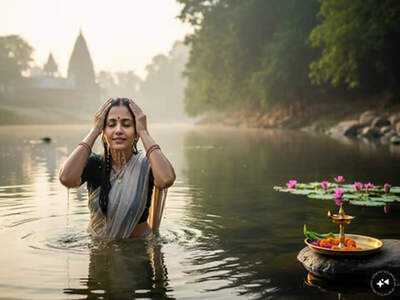
*Snan* (Bathing) in Hinduism: Bathing holds a significant place in Hindu practices, particularly before engaging in worship (*puja*) or participating in sacred ceremonies. It is customary for individuals to bathe prior to worship, and those who do not may find themselves unable to partake in these rituals. This raises important questions: Why is bathing a prerequisite for worship? What is the proper technique for bathing? And how many forms of bathing exist?
The Necessity of Bathing
**Why is Bathing Necessary?**
Morning bathing is essential for achieving ritual purity, enabling individuals to perform worship, recite scriptures, chant (*japa*), and engage in ascetic practices (*tapa*). Scriptures highlight that the human body, with its nine orifices, continuously releases impurities. Thus, bathing in the morning serves to cleanse and purify the body. The texts emphasize that bathing in sacred waters (*tirtha*) during the morning hours purifies the physical form. Additionally, those who bathe are believed to be protected from ghosts, spirits, and other negative entities. Bathing not only cleanses the body but also absolves sins and contributes to spiritual merit (*punya*). This is why morning bathing is highly recommended.
Benefits of Regular Bathing
**The Benefits of Bathing**
Regular bathing bestows ten virtues upon an individual. Specifically, those who bathe in the morning gain attributes such as beauty, radiance, strength, purity, longevity, good health, freedom from greed, relief from nightmares, spiritual discipline (*tapa*), and enhanced intellect (*medha*). The *Veda Smriti* suggests that anyone wishing to achieve wealth, robust health, and physical strength should make bathing a regular practice.
Types of Bathing
**There Are Seven Types of Bathing**
According to scriptures, seven distinct types of bathing are recognized:
**Mantra Snan:** Bathing while reciting sacred mantras.
**Bhauma Snan:** Applying sacred earth or mud to the body.
**Agni Snan:** Using sacred ash (*bhasma*) on the body.
**Vayavya Snan:** Applying dust from cow hooves to the body.
**Divya Snan:** Bathing in rainwater while standing in sunlight.
**Varuna Snan:** The conventional method of bathing by immersing in water.
**Mental Bath:** Introspection is referred to as a "mental bath."
Proper Bathing Techniques
What is the correct method of bathing?
It is deemed most auspicious to bathe before dawn, during the *Brahma Muhurta*, as this grants spiritual merit known as *Prajapatya*. It is advised against applying oil and scrubbing the body while in the river; instead, one should cleanse on the riverbank before entering the water. This bathing practice is vital for both physical well-being and spiritual cleanliness.
If conventional bathing is not possible, a head bath can be performed, or one may wipe the body with a damp cloth, which is also considered an acceptable form of bathing.
Connect with Us
PC Social Media
-
Viral Video: Hrithik Roshan Recreates Kaho Naa Pyaar Hai Hookstep At Friend's Wedding

-
David Warner To Accept Drink Driving Charge, Admits 'Reckless And Foolish' Mistake

-
Former India U-19 Pacer Amanpreet Singh Gill Dies At 36; Virat Kohli, Yuvraj Singh Offer Condolences

-
Vivo X300 FE Review: This Tiny Flagship Is Built For Camera Lovers

-
iPhone 18 Pro Might Launch On This Date: Check What's Coming