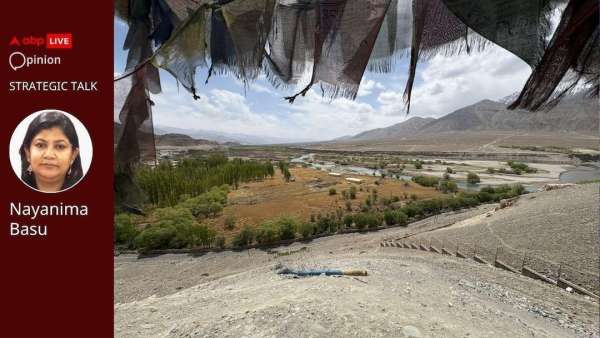
Ladakh, a region renowned for its breathtaking landscapes and rich cultural heritage, is currently at the forefront of a significant political movement advocating for its rights and autonomy. The people of Ladakh are fervently demanding full statehood, the establishment of a legislative assembly, and inclusion in the Sixth Schedule of the Indian Constitution. These demands arise from a deep-seated representation deficit and the necessity to safeguard the region's unique tribal culture, land, and natural resources.
Since its bifurcation from Jammu & Kashmir in 2019, Ladakh has faced a notable shift in governance; crucial decisions that affect the local populace are now made by central bureaucrats, rather than by representatives from the region. This shift has sparked widespread protests led by the Leh Apex Body (LAB) and the Kargil Democratic Alliance (KDA). Following its transition to a Union Territory (UT) without a legislative assembly, Ladakh lost its four elected Members of the Legislative Assembly (MLAs) that were previously part of the Jammu & Kashmir Assembly, a change that has fuelled dissatisfaction among residents.
The reorganisation of Ladakh came about as a result of the abrogation of Articles 370 and 35A under the Jammu and Kashmir Reorganisation Act in August 2019. The region’s population, predominantly comprising over 90 percent Scheduled Tribes, is now advocating for a local assembly. They argue that self-governance and accountability are essential, as decisions impacting their lives should be made by locally elected representatives instead of distant central authorities. Additionally, by seeking protection under the Sixth Schedule of the Constitution, Ladakhis hope to gain autonomy through the establishment of District Councils, which would possess legislative powers over vital areas such as land management, forest usage, and local administration. This would also serve as a preventative measure against an influx of outsiders that could alter the delicate social fabric of the region.
Since last year, protests in an otherwise peaceful and quaint Ladakh have gained momentum, with fervent demonstrations reflecting the people's resolve. On March 16, 2026, this fervour was palpable as thousands of residents participated in a complete shutdown, accompanied by massive rallies in both Leh and Kargil. The gathering, spearheaded by the Leh Apex Body and the Kargil Democratic Alliance, underscores a resilient community united in their quest for full statehood, a local legislative assembly, and the critical inclusion in the Sixth Schedule of the Indian Constitution.
In September 24, 2025, the movement saw a significant escalation in late 2025 following a hunger strike by environmentalist and activist Sonam Wangchuk. Protests in Leh turned violent, resulting in the torching of the BJP office, police firing that killed four people, and the arrest of over 60 activists. In addition to the four deaths, between 50 and 90 people were injured, including at least 30 security personnel. Eventually, on September 26, Wanghcuk was arrested and detained under the National Security Act (NSA).
Wangchuk was released on March 14, 2026, after 170 days in Jodhpur Central Jail. The Union Ministry of Home Affairs (MHA) revoked the detention order to "foster peace and stability" and encourage dialogue in the region. Upon his release, Wangchuk attributed the detention to "linguistic misunderstandings" and "excessive interpretation" of his speeches by authorities. Tensions, however, continue to remain high in Ladakh, often referred to as the ‘Land of High Passes’, even as local leaders, representatives of the youth organisations as well as monks and nuns talk of holding protests again. In fact, they are now talking of continuing their “revolution” if New Delhi continues to ignore their demands.
The demand for UT status in Ladakh began in the 1980s. Continued unrest with the state government in Jammu and Kashmir and the national government in Delhi pushed many to ask for autonomy. The compromise with the national government resulted in the formation of the Ladakh Autonomous Hill Development Council. Formation of the council has raised hopes with the Ladakhis that eventually they will be able to govern their own land. However, with limited powers, the objective of the Council to achieve genuine autonomy as a UT continues to remain elusive. Prior to becoming a UT, which is now headed by a Lieutenant-Governor, the administration was managed by two District-Magistrate-cum Development Commissioners, each deployed in Leh and Kargil.
However, in the present times, to manage the same administration, nearly a dozen IAS and IPS officers have been deployed. The Leh Apex body and the Kargil Democratic Alliance (KDA) have been at loggerheads with the Centre voicing the demands of the local population. The Centre, on the other hand, has largely resisted granting full statehood or the Sixth Schedule, citing Ladakh's strategic importance as a buffer zone bordering China and Pakistan. However, in order to soothe nerves, the Centre introduced the Ladakh Reservation Regulation, 2025, which provides an 85 percent quota for locals in government jobs based on a 15-year residency requirement. New Delhi has also made a proposal to grant Article 371-like protections in lieu of the Sixth Schedule.
Article 371 provides special provisions to specific states to address regional imbalances, protect local culture, and ensure equitable development. While the government has proposed Article 371-type protections for Ladakh as a more flexible alternative to the Sixth Schedule, local leaders remain firm on their demand for a full legislature and Sixth Schedule status for stronger legislative autonomy.
During his two-day visit to Leh on April 30-May 1, Home Minister Amit Shah met Wangchuk, Chering Dorjay Lakrook, former minister and co-convener of the Leh Apex Body (LAB) and a few other leaders from LAB and KDA but their key proposals were rejected and no major breakthroughs were reached regarding their demands. This was Shah’s maiden visit to Ladakh since it became UT. The talks are expected to resume on 22 May in New Delhi. This is a crucial moment for New Delhi to address Ladakh's demands to prevent instability and further escalation of tensions in a region vital to India's national security, especially given its borders with China and Pakistan. Additionally, the government cannot afford to have another border region fraught with tensions; a peaceful Ladakh would always be a more favourable situation for India.
Nayanima Basu is a senior independent journalist.
-
DMK Calls Meeting Of MLAs After Poll Drubbing, May Appoint Tamil Nadu Opposition Leader
-
PSG Can Win Ligue 1 If Rival Lens Drops Points While Race For A Champions League Spot Heats Up

-
Catalyst Group Founder A.S Pandit Attends High-Profile IPL Clash as Special Guest, Strengthening Business & Leadership Influence Across Industries

-
IGBC Gold Certified Infinity Heights Leads the Way in Eco-Conscious Hilltop Living

-
Polka Dots To Skinny Jeans: Five Style Picks That Never Go Out Of Fashion