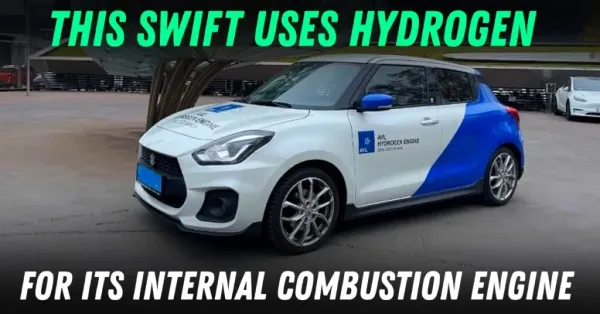
Suzuki showed a hydrogen-powered Swift at the 47th International Vienna Motor Symposium in April 2026, and it is one of the more practical hydrogen demonstrations the auto industry has seen in recent years. The car is not a fuel cell vehicle.
It runs a hydrogen internal combustion engine, which burns hydrogen directly in the cylinder rather than using it to generate electricity through a chemical reaction. This is an important development because it makes the technology more accessible to produce at scale.
The Swift’s engine is a modified 1.4-litre four-cylinder unit developed in collaboration with Austrian engineering firm AVL, whose specialisation in powertrain systems gave the project its technical depth.
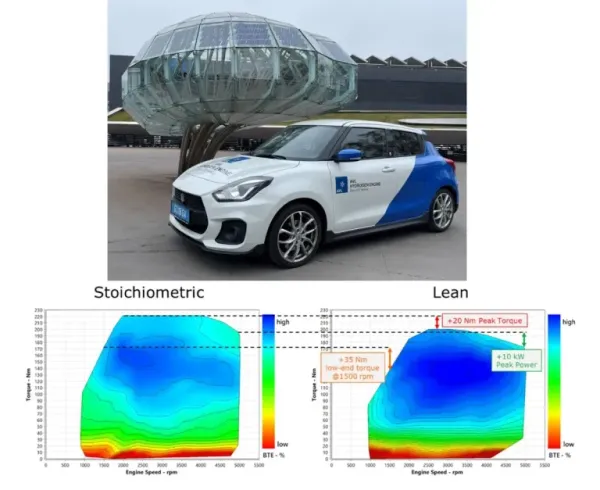
The system uses direct injection of hydrogen and can switch between two combustion modes: a lean mode, and a Lambda=1 stoichiometric mode that uses cooled exhaust gas recirculation to keep combustion temperatures in check.
In Lambda=1 mode, the engine produces 100 kW and 220 Nm of torque, which is around 10 kW and 20 Nm more than the lean mode. For a car of the Swift’s size and weight, these are numbers that translate to more than adequate performance in real world conditions.
Hydrogen combustion produces no carbon dioxide. The residual emission concern is nitrogen oxides, which form when combustion temperatures are high. That is precisely what the cooled EGR system targets.
By recirculating and cooling exhaust gases back into the intake, the system reduces peak combustion temperatures and keeps NOx output in check. The technology is mature in diesel applications and has been adapted here for hydrogen.
Suzuki’s choice of the Swift as the demonstrator is to make a point. It is a globally recognisable nameplate built around compact dimensions and accessible pricing, the opposite of the kind of large, expensive vehicles that most hydrogen demonstrations have used. The message is that hydrogen ICE technology can be engineered into affordable small cars, not just commercial vehicles or luxury flagships.

The government has been building a hydrogen mobility framework under the National Green Hydrogen Mission, backed by an outlay of Rs 19,744 crore through 2030. Mobility is one of five pilot sectors in that mission.
In April 2026, a Toyota Mirai fuel cell vehicle was handed over to the National Institute of Solar Energy for a two-year real-world trial across varied terrain and traffic conditions, specifically to generate data for scaling hydrogen infrastructure policy.
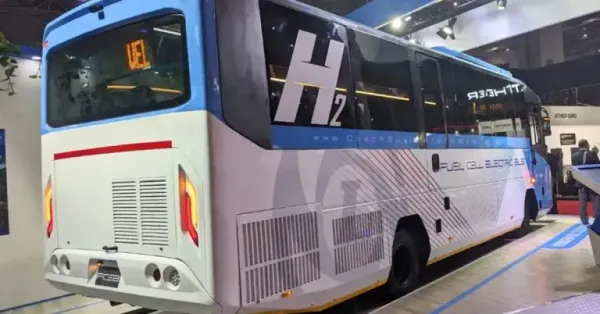
The government has also set a target of at least 1,000 hydrogen-powered trucks and buses on roads by 2030, with hydrogen refuelling infrastructure planned at 200 km intervals on major corridors. The Rs 496 crore earmarked for hydrogen mobility pilots in FY26 signals that physical deployment is the next big step.
Hydrogen sits alongside CNG, strong hybrids, and battery EVs in a multi-fuel energy strategy rather than a single-technology mandate. The rationale is practical: a country with this level of geographic and economic diversity needs a multi-energy solution to mobility. Battery EVs address urban commutes well. Hydrogen addresses range, refuelling speed, and high-load applications that batteries handle less efficiently.
The Suzuki-AVL demonstration adds a dimension that has been missing from most hydrogen mobility conversations: a proof of concept that hydrogen ICE technology can fit inside a compact, affordable car.
Maruti Suzuki, which produces the Swift domestically and is the country’s largest carmaker by volume, follows Suzuki Motor Corporation’s technology roadmap closely. If Maruti adapts this technology for the Indian market, it will have major ramifications on mobility here.
-
Love Horoscope Today for Saturday, May 16, 2026: Pisces will keep their partner happy, know the condition of other signs

-
Aquarius Tarot Horoscope Today, May 16, 2026: Exchange of Auspicious Messages Will Increase, Benefit of Artistic Thinking

-
Career Horoscope Today, May 16, 2026: Sagittarius Will Succeed, Check the Career Outlook for All Zodiac Signs

-
Pisces Tarot Horoscope Today, May 16, 2026: Success in tasks and focus on savings growth

-
Gemini Tarot Horoscope Today, May 16, 2026: Continue to make positive strides in all matters and stay focused on your goals