Summary
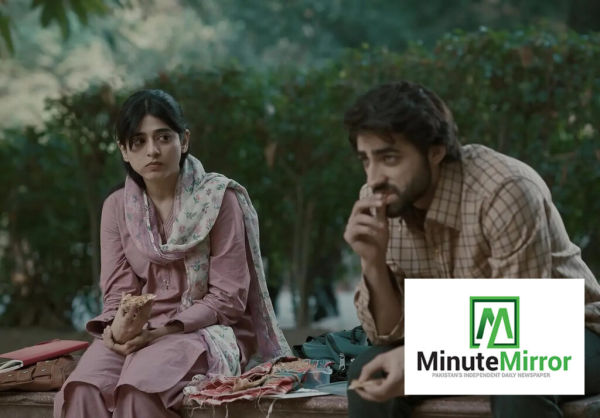
- At the centre of the drama is Pakeezah, portrayed by Sehar Khan, a young woman whose life is shattered after becoming the victim of a horrifying crime.
- Sehar Khan described the role as emotionally exhausting and said she approached the character by imagining how she herself would react in a similar situation.
- According to Kashif, tackling serious social issues in television dramas can be difficult because audiences often prefer lighter entertainment over emotionally uncomfortable subjects.
AI Generated Summary
Aik Aur Pakeezah has emerged as one of the most critically acclaimed Pakistani dramas of the year, earning praise for its sensitive storytelling, emotionally charged performances and nuanced treatment of difficult social issues.
At the centre of the drama is Pakeezah, portrayed by Sehar Khan, a young woman whose life is shattered after becoming the victim of a horrifying crime. The irony of her name “Pakeezah,” meaning pure forms one of the drama’s strongest thematic layers, as society begins to label her “impure” because of an act committed against her.
Sehar Khan described the role as emotionally exhausting and said she approached the character by imagining how she herself would react in a similar situation.
“I didn’t premeditate my role,” she explained. “I just thought, how would I have reacted if this had happened to me? The pain on screen was my own pain.”
The actress recalled several emotionally difficult scenes during filming, particularly the moment when Pakeezah finally meets lawyer Saman, the first person who truly understands her trauma and offers hope for justice.
Another emotionally intense moment for Sehar came in the final episode, when Pakeezah’s mother indirectly tells her it would be unjust to forgive her brother after he attempted to murder her.
Sehar added that the role affected her so deeply that she needed time away from work after completing the project. She also credited writer Bee Gul and director Kashif Nisar for shaping the drama into a meaningful and impactful experience.
For Nameer Khan, who played Faraz, the drama marked his first appearance as a male lead. He described the role as both challenging and rewarding, especially because Faraz’s family members were never shown on screen despite heavily influencing his life and emotional struggles.
“I had to depict Faraz’s pain and struggles without the audience physically seeing the people causing them,” he said.
Director Kashif Nisar praised Bee Gul’s script, calling it one of the most intelligent and contemporary stories he had encountered in recent years.
According to Kashif, tackling serious social issues in television dramas can be difficult because audiences often prefer lighter entertainment over emotionally uncomfortable subjects.
“It is difficult to grip audiences with a hard-hitting story,” he observed. “But we tried to make it engaging without sensationalising the issue.”
The director clarified that the drama was never intended to focus solely on the violent incident itself, but rather on the emotional and social consequences faced by ordinary people afterward.
He also revealed that the casting decisions for Sehar Khan and Nameer Khan were made collectively with Kashf Foundation founder Roshaneh Zafar.
The ensemble cast also featured Hina Khawaja Bayat, Noor ul Hassan, Nadia Afgan, Saqib Sameer, Ali Jan, Ali Aftab Saeed, Davar Mahfooz and Namra Shahid.
Hina Khawaja Bayat’s portrayal of “Mummy” was particularly praised for serving as the moral compass of the drama. The actress explained that the character acted as a maternal figure for multiple women while offering wisdom shaped by her own painful experiences.
“She was the writer’s voice, guiding people toward reflection and understanding,” Hina said.
The drama also explored broader themes such as victim-blaming, cybercrime, honour killings, violence against women and access to justice.
Roshaneh Zafar explained that the project aimed to spark important conversations within society, especially regarding how women are judged after becoming victims of abuse or violence.
“We wanted audiences to understand that while laws exist to protect women, they are often not implemented because victims remain silent due to shame or family pressure,” she said.
According to Roshaneh, Kashf Foundation closely collaborates with real-life survivors when developing drama concepts, ensuring that stories remain authentic and grounded in reality.
We welcome your contributions! Submit your blogs, opinion pieces, press releases, news story pitches, and news features to opinion@minutemirror.com.pk and minutemirrormail@gmail.com
-
Woman, 24, dies after being left in hospital corridor with 'unconnected' oxygen mask

-
Paytm Bets On AI Makeover To Drive FY27 Momentum
-
Border official and ex-Hong Kong chief guilty of spying for China
-
Understanding Women's Intentions Through Chanakya's Wisdom

-
Partial road closure announced of street in key Abu Dhabi area