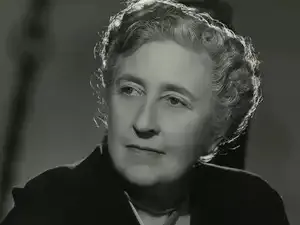
Quote of the Day: A memorable Quote of the Day often carries a meaning that extends far beyond the moment in which it was spoken. Some quotes survive for generations because they touch something deeply human—fear, ambition, love, doubt or intuition. Among the many literary voices that continue to influence readers worldwide, few remain as beloved as Agatha Christie, the legendary mystery writer whose stories reshaped detective fiction forever. Her words, “Follow your instinct. It’s the best advice,” continue to resonate because they reflect a truth many people discover only through experience.
Quote of the Day matters because it offers guidance in a world often crowded with conflicting opinions and uncertainty. Christie’s observation about instinct speaks not only to solving mysteries but also to understanding people, making decisions and navigating life itself. Her stories frequently relied on human intuition, hidden motives and subtle observations, making this quote especially fitting for the woman widely known as the “Queen of Crime Fiction.”
The Quote of the Day today by Agatha Christie is: “Follow your instinct. It’s the best advice.”
The quote reflects Christie’s lifelong fascination with human psychology and perception. Throughout her novels, instincts often guided detectives toward truths that facts alone could not immediately reveal. Whether through Hercule Poirot’s understanding of human behaviour or Miss Marple’s quiet observations of village life, Christie repeatedly showed that intuition can uncover what logic sometimes misses.
Born on September 15, 1890, in Torquay, Devon, England, Agatha Christie became one of the most successful and widely read authors in literary history. Her books sold more than 100 million copies and were translated into roughly 100 languages, making her one of the most influential writers of modern times. She earned worldwide recognition as a detective novelist and playwright whose works transformed crime fiction into a global literary phenomenon.
Agatha Christie was born as Agatha Mary Clarissa Miller to Frederick Alvah Miller and Clara Boehmer. She came from a family with both American and British roots. Her father was an affluent stockbroker, while her mother played a major role in shaping Christie’s early education and imagination. Unlike many children of her era, Christie was educated at home during her early years. Her parents taught her reading, writing, arithmetic and music, helping to nurture her creative instincts from childhood, as per information sourced from IMDb and Britannica.
Her father died in 1901, an event that deeply affected the family. Afterward, Christie attended a girls’ school in Torquay between 1902 and 1905 before continuing her education in Paris from 1905 to 1910. Her time in France exposed her to culture, music and literature, influences that later shaped her writing style and storytelling abilities.
Even as a young woman, Christie dreamed of becoming a writer. She produced numerous short stories and novels, though many were initially rejected by publishers. Instead of giving up, she continued refining her craft, seeking advice from established writer Eden Phillpotts while quietly building the skills that would later define her career.
Christie’s life changed dramatically during World War I. After marrying military officer Archibald “Archie” Christie in 1914, she joined the Voluntary Aid Detachment and worked as a nurse. Later, she became an apothecaries’ assistant, gaining detailed knowledge about medicines and poisons. That experience would later become one of the defining features of her mystery novels, many of which involved carefully researched poisoning cases.
During the war, Christie wrote her debut novel, The Mysterious Affair at Styles, completed in 1916 and published in 1920. The novel introduced the world to Hercule Poirot, the eccentric Belgian detective who would become one of the most iconic fictional investigators in literary history.
The success of the novel transformed Christie’s career. It was followed by The Secret Adversary and Murder on the Links, establishing her reputation as a rising force in detective fiction. Readers were captivated by her clever plots, hidden clues and ability to surprise audiences until the final pages.
Throughout the 1920s and 1930s, Christie emerged as one of the defining literary voices of her generation. Her novels regularly became bestsellers in Britain and the United States. In 1926, The Murder of Roger Ackroyd brought her major critical recognition and remains one of the most discussed detective novels ever written.
Christie created another famous detective figure in Miss Jane Marple, the observant elderly woman who first appeared in Murder at the Vicarage in 1930. While Poirot relied on psychology and order, Miss Marple used her understanding of ordinary human behaviour to solve crimes.
Her stories balanced suspense with sharp social observation. Christie understood human weakness, deception and pride better than many writers of her time. This understanding gave her mysteries emotional depth beyond their puzzles.
Among her most famous works were And Then There Were None, Murder on the Orient Express, Death on the Nile and The Mirror Crack’d From Side to Side. Many of these novels later became successful films and television adaptations, ensuring Christie’s stories reached generations far beyond the original readers.
Christie also became a towering figure in theatre. Her play The Mousetrap, first performed in 1952, achieved a world record for the longest continuous theatrical run. It remained one of London theatre’s defining productions for decades, as per information sourced from IMDb and Britannica.
Another successful play, Witness for the Prosecution, also gained widespread acclaim and was adapted into film. Christie’s ability to build suspense translated naturally from novels to stage productions.
Her writing success was remarkable not only because of her popularity but because of her consistency. Over decades, she maintained an extraordinary ability to produce mysteries that felt fresh, inventive and psychologically compelling.
She also wrote romantic novels under the pseudonym Mary Westmacott, showing a different side of her literary personality. Even outside detective fiction, Christie demonstrated strong emotional insight and storytelling skill.
Despite her public success, Christie experienced difficult personal periods. In 1926, shortly after the death of her mother, her husband Archie Christie announced that he wanted a divorce because he was involved with another woman, as per information sourced from IMDb and Britannica.
The emotional shock led to one of the most mysterious episodes of her life. Christie disappeared for 10 days, prompting a nationwide search and intense media attention. She was eventually discovered in a Yorkshire hotel under a false name. Christie later claimed to have no memory of the incident, and the episode remains one of the great real-life mysteries connected to her name.
The divorce was finalized in 1928, though Christie retained the surname that had already become famous worldwide. She later married archaeologist Max Mallowan in 1930, beginning a far happier chapter in her life. Her travels with Mallowan through Iraq and Syria inspired settings and details for many later novels.
The meaning behind Agatha Christie’s Quote of the Day lies in trusting one’s inner judgment even when situations seem uncertain or confusing. “Follow your instinct. It’s the best advice” highlights the importance of intuition, especially when logic alone cannot provide all the answers.
Christie’s own life reflected this belief. Her stories often showed that people reveal truth through subtle behaviour rather than obvious evidence. Detectives like Poirot and Miss Marple succeeded because they noticed emotional patterns, contradictions and instincts others ignored.
The quote also carries relevance beyond detective fiction. In everyday life, people frequently rely on instinct when making choices about relationships, careers, opportunities and trust. Christie’s words remind readers that intuition is shaped by experience, observation and emotional intelligence.
At the same time, the quote encourages confidence. Many people hesitate because they fear making mistakes or being judged by others. Christie’s advice suggests that instinct can act as a quiet guide when external opinions become overwhelming.
Agatha Christie continued writing well into her later years, though health problems gradually affected her memory and writing process. Still, her influence on literature never faded. She was appointed Commander of the Order of the British Empire in 1956 and later became a Dame Commander in 1971, as per information sourced from IMDb and Britannica.
Christie spent much of her later life in Winterbrook, Oxfordshire, alongside Max Mallowan. Their marriage remained strong until her death. During World War II, she again worked in a hospital pharmacy, adding even more realism to her understanding of medical details in crime fiction.
Christie died of natural causes on January 12, 1976, in Wallingford, Oxfordshire, at the age of 85. Yet her stories continue to sell worldwide decades after her death. New adaptations of her novels regularly introduce younger audiences to her work, proving the timelessness of her storytelling.
Today, Agatha Christie remains one of the most influential authors ever published. Her mysteries shaped the detective genre, while her characters became permanent figures in popular culture.
Beyond today’s Quote of the Day, Agatha Christie left behind many memorable observations that continue to inspire readers:
“I like living. I have sometimes been wildly, despairingly, acutely miserable, racked with sorrow; but through it all I still know quite certainly that just to be alive is a grand thing.”
“It is a curious thought, but it is only when you see people looking ridiculous that you realize just how much you love them. ”
“Very few of us are what we seem.”
“The impossible could not have happened, therefore the impossible must be possible in spite of appearances.”
“Poirot," I said. "I have been thinking."
"An admirable exercise my friend. Continue it.”
“A mother's love for her child is like nothing else in the world. It knows no law, no pity. It dares all things and crushes down remorselessly all that stands in its path.
“An archaeologist is the best husband a woman can have. The older she gets, the more interested he is in her.”
These quotes reveal Christie’s humour, intelligence and understanding of human nature. Like her novels, her words combine wit with emotional insight.
As a Quote of the Day, “Follow your instinct. It’s the best advice” continues to resonate because it speaks to something universal. In uncertain moments, instinct often becomes the voice people trust most. Through her writing and her life, Agatha Christie showed that observation, intuition and human understanding can reveal truths hidden beneath appearances. Decades after her death, her stories and words still captivate millions, securing her place as one of literature’s most enduring voices.
Quote of the Day matters because it offers guidance in a world often crowded with conflicting opinions and uncertainty. Christie’s observation about instinct speaks not only to solving mysteries but also to understanding people, making decisions and navigating life itself. Her stories frequently relied on human intuition, hidden motives and subtle observations, making this quote especially fitting for the woman widely known as the “Queen of Crime Fiction.”
Quote of the Day Today May 7
The Quote of the Day today by Agatha Christie is: “Follow your instinct. It’s the best advice.”
The quote reflects Christie’s lifelong fascination with human psychology and perception. Throughout her novels, instincts often guided detectives toward truths that facts alone could not immediately reveal. Whether through Hercule Poirot’s understanding of human behaviour or Miss Marple’s quiet observations of village life, Christie repeatedly showed that intuition can uncover what logic sometimes misses.
Born on September 15, 1890, in Torquay, Devon, England, Agatha Christie became one of the most successful and widely read authors in literary history. Her books sold more than 100 million copies and were translated into roughly 100 languages, making her one of the most influential writers of modern times. She earned worldwide recognition as a detective novelist and playwright whose works transformed crime fiction into a global literary phenomenon.
Early Life and Education of Agatha Christie
Agatha Christie was born as Agatha Mary Clarissa Miller to Frederick Alvah Miller and Clara Boehmer. She came from a family with both American and British roots. Her father was an affluent stockbroker, while her mother played a major role in shaping Christie’s early education and imagination. Unlike many children of her era, Christie was educated at home during her early years. Her parents taught her reading, writing, arithmetic and music, helping to nurture her creative instincts from childhood, as per information sourced from IMDb and Britannica.
Her father died in 1901, an event that deeply affected the family. Afterward, Christie attended a girls’ school in Torquay between 1902 and 1905 before continuing her education in Paris from 1905 to 1910. Her time in France exposed her to culture, music and literature, influences that later shaped her writing style and storytelling abilities.
Even as a young woman, Christie dreamed of becoming a writer. She produced numerous short stories and novels, though many were initially rejected by publishers. Instead of giving up, she continued refining her craft, seeking advice from established writer Eden Phillpotts while quietly building the skills that would later define her career.
World War I and the Birth of Hercule Poirot
Christie’s life changed dramatically during World War I. After marrying military officer Archibald “Archie” Christie in 1914, she joined the Voluntary Aid Detachment and worked as a nurse. Later, she became an apothecaries’ assistant, gaining detailed knowledge about medicines and poisons. That experience would later become one of the defining features of her mystery novels, many of which involved carefully researched poisoning cases.
During the war, Christie wrote her debut novel, The Mysterious Affair at Styles, completed in 1916 and published in 1920. The novel introduced the world to Hercule Poirot, the eccentric Belgian detective who would become one of the most iconic fictional investigators in literary history.
The success of the novel transformed Christie’s career. It was followed by The Secret Adversary and Murder on the Links, establishing her reputation as a rising force in detective fiction. Readers were captivated by her clever plots, hidden clues and ability to surprise audiences until the final pages.
Rise as the Queen of Crime Fiction
Throughout the 1920s and 1930s, Christie emerged as one of the defining literary voices of her generation. Her novels regularly became bestsellers in Britain and the United States. In 1926, The Murder of Roger Ackroyd brought her major critical recognition and remains one of the most discussed detective novels ever written.
Christie created another famous detective figure in Miss Jane Marple, the observant elderly woman who first appeared in Murder at the Vicarage in 1930. While Poirot relied on psychology and order, Miss Marple used her understanding of ordinary human behaviour to solve crimes.
Her stories balanced suspense with sharp social observation. Christie understood human weakness, deception and pride better than many writers of her time. This understanding gave her mysteries emotional depth beyond their puzzles.
Among her most famous works were And Then There Were None, Murder on the Orient Express, Death on the Nile and The Mirror Crack’d From Side to Side. Many of these novels later became successful films and television adaptations, ensuring Christie’s stories reached generations far beyond the original readers.
Plays, Theatre Success and Literary Achievements
Christie also became a towering figure in theatre. Her play The Mousetrap, first performed in 1952, achieved a world record for the longest continuous theatrical run. It remained one of London theatre’s defining productions for decades, as per information sourced from IMDb and Britannica.
Another successful play, Witness for the Prosecution, also gained widespread acclaim and was adapted into film. Christie’s ability to build suspense translated naturally from novels to stage productions.
Her writing success was remarkable not only because of her popularity but because of her consistency. Over decades, she maintained an extraordinary ability to produce mysteries that felt fresh, inventive and psychologically compelling.
She also wrote romantic novels under the pseudonym Mary Westmacott, showing a different side of her literary personality. Even outside detective fiction, Christie demonstrated strong emotional insight and storytelling skill.
Personal Struggles and Mysterious Disappearance
Despite her public success, Christie experienced difficult personal periods. In 1926, shortly after the death of her mother, her husband Archie Christie announced that he wanted a divorce because he was involved with another woman, as per information sourced from IMDb and Britannica.
The emotional shock led to one of the most mysterious episodes of her life. Christie disappeared for 10 days, prompting a nationwide search and intense media attention. She was eventually discovered in a Yorkshire hotel under a false name. Christie later claimed to have no memory of the incident, and the episode remains one of the great real-life mysteries connected to her name.
The divorce was finalized in 1928, though Christie retained the surname that had already become famous worldwide. She later married archaeologist Max Mallowan in 1930, beginning a far happier chapter in her life. Her travels with Mallowan through Iraq and Syria inspired settings and details for many later novels.
Quote of the Day Meaning
The meaning behind Agatha Christie’s Quote of the Day lies in trusting one’s inner judgment even when situations seem uncertain or confusing. “Follow your instinct. It’s the best advice” highlights the importance of intuition, especially when logic alone cannot provide all the answers.
Christie’s own life reflected this belief. Her stories often showed that people reveal truth through subtle behaviour rather than obvious evidence. Detectives like Poirot and Miss Marple succeeded because they noticed emotional patterns, contradictions and instincts others ignored.
The quote also carries relevance beyond detective fiction. In everyday life, people frequently rely on instinct when making choices about relationships, careers, opportunities and trust. Christie’s words remind readers that intuition is shaped by experience, observation and emotional intelligence.
At the same time, the quote encourages confidence. Many people hesitate because they fear making mistakes or being judged by others. Christie’s advice suggests that instinct can act as a quiet guide when external opinions become overwhelming.
Later Years and Lasting Legacy
Agatha Christie continued writing well into her later years, though health problems gradually affected her memory and writing process. Still, her influence on literature never faded. She was appointed Commander of the Order of the British Empire in 1956 and later became a Dame Commander in 1971, as per information sourced from IMDb and Britannica.
Christie spent much of her later life in Winterbrook, Oxfordshire, alongside Max Mallowan. Their marriage remained strong until her death. During World War II, she again worked in a hospital pharmacy, adding even more realism to her understanding of medical details in crime fiction.
Christie died of natural causes on January 12, 1976, in Wallingford, Oxfordshire, at the age of 85. Yet her stories continue to sell worldwide decades after her death. New adaptations of her novels regularly introduce younger audiences to her work, proving the timelessness of her storytelling.
Today, Agatha Christie remains one of the most influential authors ever published. Her mysteries shaped the detective genre, while her characters became permanent figures in popular culture.
Iconic Quotes by Agatha Christie
Beyond today’s Quote of the Day, Agatha Christie left behind many memorable observations that continue to inspire readers:
“I like living. I have sometimes been wildly, despairingly, acutely miserable, racked with sorrow; but through it all I still know quite certainly that just to be alive is a grand thing.”
“It is a curious thought, but it is only when you see people looking ridiculous that you realize just how much you love them. ”
“Very few of us are what we seem.”
“The impossible could not have happened, therefore the impossible must be possible in spite of appearances.”
“Poirot," I said. "I have been thinking."
"An admirable exercise my friend. Continue it.”
“A mother's love for her child is like nothing else in the world. It knows no law, no pity. It dares all things and crushes down remorselessly all that stands in its path.
“An archaeologist is the best husband a woman can have. The older she gets, the more interested he is in her.”
These quotes reveal Christie’s humour, intelligence and understanding of human nature. Like her novels, her words combine wit with emotional insight.
As a Quote of the Day, “Follow your instinct. It’s the best advice” continues to resonate because it speaks to something universal. In uncertain moments, instinct often becomes the voice people trust most. Through her writing and her life, Agatha Christie showed that observation, intuition and human understanding can reveal truths hidden beneath appearances. Decades after her death, her stories and words still captivate millions, securing her place as one of literature’s most enduring voices.