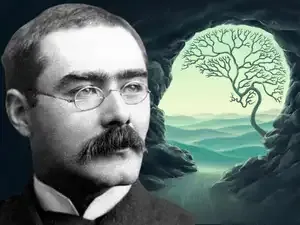
Quotes are short lines but they carry deep meanings. They help people stay motivated, learn important life lessons, and think differently about success and failure. Many famous writers, leaders, and artists have shared quotes from their own experiences. These words continue to inspire people around the world even today.
ALSO READ: Quote of the day by Ernest Hemingway: “The best way to find out if you can trust somebody is to trust them” — simple lessons on why trust reveals true character and how taking risks helps you understand people better
Kipling later studied at a boarding school in Devon. Life at the school was strict and harsh, but it also influenced many of his future writings. His famous book Stalky & Co. was inspired by his school experiences, according to Britannica. These early struggles shaped his personality and writing style.
He also released famous story collections like Soldiers Three and The Phantom Rickshaw, according to Britannica. One of his most famous stories from this period was “The Man Who Would Be King.” His writing style became very popular because it was emotional, powerful, and easy to connect with.
By 1889, Kipling returned to England and quickly became one of the most talked-about writers in the country, according to Britannica. His poetry collection Barrack-Room Ballads included famous poems like “Gunga Din” and “Mandalay.” His popularity grew rapidly and many people considered him one of the finest writers of his generation.
ALSO READ: Quote of the day by Abraham Maslow: “In any given moment, we have two options…” — inspiring lesson on why choosing growth over comfort leads to success and how small brave decisions shape your future
His other famous works included Captains Courageous and The Light That Failed. His books mixed adventure, emotions, history, and strong storytelling. According to Britannica, his writing made him one of the most successful authors of his era.
Even with criticism, his literary influence remained strong. Later critics and scholars continued studying his works because they reflected the politics and thinking of the British Empire during that period. His children’s books and stories still remain widely popular today.
Kipling died on January 18, 1936, in London. Even today, his books, poems, and quotes continue inspiring readers around the world. His writings are remembered for strong storytelling, life lessons, courage, discipline, and imagination.
ALSO READ: Quote of the day by Stephen King: “Talent is cheaper than table salt…” — simple lesson on how hard work matters more than talent for success by famous horror writer of Carrie and The ShiningQuote of the day by Stephen King: “Talent is cheaper than table salt…” — simple lesson on how hard work matters more than talent for success by famous horror writer of Carrie and The Shining
Quote of the Day — Rudyard Kipling
“He travels the fastest who travels alone.”Meaning of the Quote
Rudyard Kipling is saying that a person can sometimes move ahead faster when they work alone. When too many people are involved, progress can become slow because of distractions, arguments, or waiting for others. The quote teaches people to trust themselves, stay focused, and move forward with confidence. It also reminds people that independence can help them achieve their goals faster.About Rudyard Kipling
Rudyard Kipling was born on December 30, 1865, in Mumbai, then called Bombay. He later became one of the most famous English writers in the world, according to Britannica. He was known for his short stories, poems, and novels based on British India and military life. Kipling won the Nobel Prize for Literature in 1907 and became the first Englishman to receive the honour, as per Britannica. His stories, poems, and children’s books made him one of the biggest literary names of his time.ALSO READ: Quote of the day by Ernest Hemingway: “The best way to find out if you can trust somebody is to trust them” — simple lessons on why trust reveals true character and how taking risks helps you understand people better
Childhood and early struggles
Kipling’s father, John Lockwood Kipling, was an artist and museum curator, according to Britannica. His family had strong links with famous artists and important public figures. Even though he came from a respected family, Kipling’s childhood was difficult. At the age of six, he was sent to England and stayed in a foster home for five years, according to Britannica. He later described these painful experiences in his story Baa Baa, Black Sheep.Kipling later studied at a boarding school in Devon. Life at the school was strict and harsh, but it also influenced many of his future writings. His famous book Stalky & Co. was inspired by his school experiences, according to Britannica. These early struggles shaped his personality and writing style.
Journalism and rise to fame
Kipling returned to India in 1882 and started working as a journalist, according to Britannica. During this time, he closely observed Indian culture, soldiers, workers, and everyday life. He started publishing poems, stories, and newspaper sketches. His poetry collection Departmental Ditties was released in 1886. He later published Plain Tales from the Hills in 1888.He also released famous story collections like Soldiers Three and The Phantom Rickshaw, according to Britannica. One of his most famous stories from this period was “The Man Who Would Be King.” His writing style became very popular because it was emotional, powerful, and easy to connect with.
By 1889, Kipling returned to England and quickly became one of the most talked-about writers in the country, according to Britannica. His poetry collection Barrack-Room Ballads included famous poems like “Gunga Din” and “Mandalay.” His popularity grew rapidly and many people considered him one of the finest writers of his generation.
ALSO READ: Quote of the day by Abraham Maslow: “In any given moment, we have two options…” — inspiring lesson on why choosing growth over comfort leads to success and how small brave decisions shape your future
Famous books and global success
Kipling wrote many famous novels and story collections during the 1890s and early 1900s. His novel Kim became one of his greatest literary works, according to Britannica. He also wrote The Jungle Book and The Second Jungle Book, which became loved by children and adults across the world.His other famous works included Captains Courageous and The Light That Failed. His books mixed adventure, emotions, history, and strong storytelling. According to Britannica, his writing made him one of the most successful authors of his era.
Later life and criticism
Kipling later settled in Sussex, England, where he continued writing books and poems, according to Britannica. In 1907 he received the Nobel Prize for Literature. However, many critics later attacked his political views because he strongly supported British imperialism. After World War I, some people viewed him as an imperialist writer, as stated by Britannica.Even with criticism, his literary influence remained strong. Later critics and scholars continued studying his works because they reflected the politics and thinking of the British Empire during that period. His children’s books and stories still remain widely popular today.
Legacy and influence
According to Britannica, Kipling continued writing stories, poems, and travel works throughout his life. His children’s book Just So Stories became very popular among young readers. His autobiography Something of Myself was published after his death in 1941.Kipling died on January 18, 1936, in London. Even today, his books, poems, and quotes continue inspiring readers around the world. His writings are remembered for strong storytelling, life lessons, courage, discipline, and imagination.
ALSO READ: Quote of the day by Stephen King: “Talent is cheaper than table salt…” — simple lesson on how hard work matters more than talent for success by famous horror writer of Carrie and The ShiningQuote of the day by Stephen King: “Talent is cheaper than table salt…” — simple lesson on how hard work matters more than talent for success by famous horror writer of Carrie and The Shining
Other famous Quotes by Rudyard Kipling
- “Words are, of course, the most powerful drug used by mankind.”
- “Gardens are not made by singing 'Oh, how beautiful,' and sitting in the shade.”
- “We have forty million reasons for failure, but not a single excuse.”
- “If you can keep your wits about you while all others are losing theirs, and blaming you, the world will be yours and everything in it.”