
The NTA chief explained that for major examinations like JEE, NEET, and CUET, center allocation depends not solely on the choice of city, but also on the subject combination, the examination shift, and the availability of secure infrastructure.
Every year, during the major entrance examinations held across the country, a recurring complaint is frequently heard: “I did not get the examination city of my choice.” This year, too—following the JEE, NEET, and CUET examinations—thousands of students raised this very same question. Now, Abhishek Singh, the Director General of the National Testing Agency (NTA), has provided a detailed response to this issue. He explained that, amidst the expectations of millions of aspirants, determining examination centers is not merely a task of selecting a city; rather, it is an extremely complex undertaking.
This year, a combined total of approximately 5.5 million registrations were recorded for JEE Main, NEET UG, and CUET UG. Specifically, over 1.6 million students applied for JEE Main, approximately 2.27 million for NEET UG, and 1.568 million for CUET UG. Many of these students appeared for more than one examination. Conducting examinations on such a massive scale constitutes a significant challenge in itself.
Not Just the City: Multiple Factors Are Interlinked
According to the NTA chief, when a student selects a preferred city as an option, the examination center cannot be determined based solely on that criterion. In reality, three factors operate in tandem: the City + the Combination of Selected Subjects + the Examination Shift.
It frequently happens that in the specific city where a student desires a center, all available secure centers suitable for that particular subject combination and examination shift have already reached their full capacity. In such instances, the student must be allotted a center in a different city.
Greatest Complexity in CUET
In CUET UG, students are granted the flexibility to select up to five subjects. Consequently, this year saw the emergence of 12,906 distinct subject combinations. The task of fitting each unique combination into a specific examination shift—while simultaneously preparing question papers tailored to the respective languages and linking them to secure computer centers—becomes a monumental undertaking. Students have the option to take the examination in 13 different languages; this implies that every single question paper must be prepared in all 13 languages. This makes the planning process even more complex.
How Many Received Their Preferred City?
According to the NTA, 79% of students were allotted their first-choice city. Meanwhile, 96.6% of students received a city from within their list of preferences. In contrast, only 3.4%—or approximately 53,000 students—were allotted a city outside of their preferred choices. While 3.4% may sound like a small figure, in reality, it represents a significant inconvenience for thousands of students. In light of this, the NTA also opened a free re-allotment window, subject to the availability of vacant seats.
Infrastructure: A Major Factor
Abhishek Singh acknowledged that, particularly in states like Uttar Pradesh, Bihar, and Delhi, the sheer volume of students is immense; however, the number of adequately secure centers required for Computer-Based Tests (CBT) has not expanded at a commensurate pace. The CUET is a relatively new examination—only four years old—yet the demand for it has surged rapidly. Consequently, there is an urgent need for state governments, testing agencies, and other relevant institutions to collaborate on enhancing infrastructure.
The Unique Challenges of NEET
- Secure printing and transportation of question papers
- Biometric verification at examination centers
- Surveillance via approximately 150,000 CCTV cameras
- Provision of scribes for students with disabilities
- Coordination among the police, state governments, embassies, and various other agencies
The Dilemma: Security vs. Convenience
The NTA chief stated that the fundamental challenge lies in determining how to keep the examination process user-friendly for students while simultaneously upholding its security, confidentiality, and integrity. Every step implemented for the sake of security is deemed essential; yet, these very measures often come across to students as overly stringent.
-
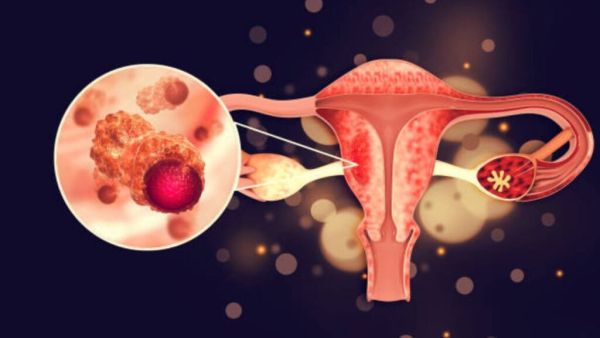
Gas or period pains that are ignored can be a cancer risk, doctors warn women
-
Capture every moment now! The market was shaken by the new Vivo smartphone, the rivals broke sweat with the powerful camera

-
India-EU’s big initiative: ‘Treasure’ will emerge from battery waste, recycling mission worth Rs 169 crore started

-
Top 5 youngest foreign players to score centuries in IPL: Cooper Connelly Read

-
Liverpool scales back plans for ticket price increases after protests from fans