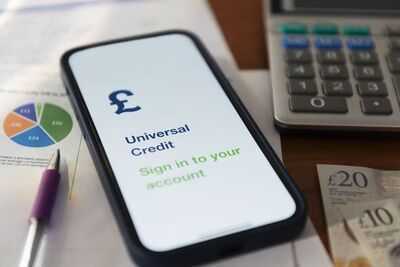
People claiming Universal Credit should expect to receive additional funds in their payments from May or June, depending on when their most recent assessment period occurred. Some claimants could witness increases of up to 6.1%.
This follows the DWP's benefit rate uplift that was implemented in April. Nevertheless, due to the 'first full period' rule, Universal Credit recipients typically only see the increase reflected in their payments from May at the earliest, with some cases extending into June. Every year, benefit rates rise on April 6, marking the start of the new tax year. For most benefits, this uplift appears in claimants' very next payment.
However, the first full period rule stipulates that Universal Credit recipients must complete a full assessment period starting after the new rates have taken effect before becoming entitled to the enhanced amounts. Each assessment period typically spans four weeks, with payments issued a week following its completion.
Consequently, those whose assessment period began just prior to the new rates being introduced will probably only receive the increase in June, while those with assessment periods beginning after April 7 will benefit from the uplift sooner.
Turn2Us clarifies: "For many benefits, the new rates will take effect from 7 April. However, for some Universal Credit claimants, increased rates will take effect around June. This is because The new rate won't be paid until the first assessment period that begins on or after 7 April."
For instance, if Sarah's assessment period commences on 4th April, it will conclude on 3rd May with her payment expected around 10th May. This payment will continue to reflect the previous rates since her assessment period began before the new rates took effect on 6th April.
Her subsequent assessment period will run from 4th May to 3rd June, with payment made approximately on 10th June. This payment will incorporate the new, enhanced rate as this marks her first complete assessment period following the rate adjustments.
Conversely, Jack, whose assessment period started on 8th April and concluded on 7th May, would see the increased rates reflected in his payment around 14th May, almost a month ahead of Sarah receiving the uplift, as his assessment period commenced after the new rates were introduced.
Several additional changes beginning in April will also impact Universal Credit recipients moving forwards, including a further boost. Typically, DWP benefits rise in line with inflation, which stood at 3.8% when calculated for the 2026/2027 uplift.
Nevertheless, Universal Credit will also receive an extra 2.3% rise to the standard rate, bringing the total standard rate increase to approximately 6.1%.
The adjustment is designed to 'rebalance' Universal Credit rates. Parliamentary documentation indicates that this change achieves its aim "by increasing the basic standard allowance that all claimants receive, while reducing the additional payments for most claimants newly found to have disabilities and health conditions that affect their capability for work".
Projections suggest that by 2029/2030, the Universal Credit standard allowance will stand 4.8% higher as a result of this adjustment than it would have been under the previous framework.
-
Virat Kohli Reversing T20 Retirement? Historic Tournament Returns After 128 Years

-
New Hyundai EV SUV Localised For India Debut In 2027

-
US Releases Classified UFO Records After Trump Directive On ‘Alien Life’

-
Bhavna Khade's Hat-Trick Powers Union Bank To 3-1 Win In St Peter's Cup Hockey Tournament 2026

-
Karan Johar's Maharaja-Inspired Jewellery At Met Gala 2026 After-Party Breaks The Internet: Check Out