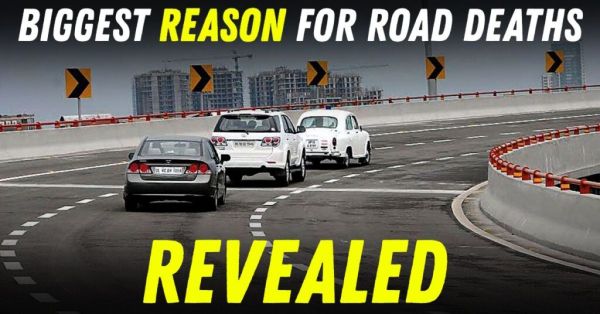
Over 1.73 lakh people were killed on roads in 2023. That is 475 deaths every single day, spread across 4,64,029 accident cases recorded that year. The number is not a statistical abstraction. It means that while you were reading this paragraph, a family somewhere was informed that someone they depended on is gone. And in nearly 6 out of every 10 of those fatalities, the cause was the same thing: speeding.
The NCRB’s data for 2023, the most recent comprehensive national figure available, shows that 1,01,841 deaths, which is 58.6 percent of all road fatalities, were directly caused by over-speeding. Careless driving and dangerous overtaking added another 23.6 percent, or 41,035 more deaths. Together, these two behaviours account for over 80 percent of everyone killed on roads in a year. Everything else, drunk driving, wrong-side driving, poor weather, red-light jumping, accounts for the remaining fraction.
The physics is unambiguous. At 40 km/h, a car hitting a pedestrian gives that person roughly a 90 percent chance of survival. At 80 km/h, that flips. The chance of dying rises above 85 percent. Speed does not just increase the probability of an accident. It multiplies the severity of every crash. A minor impact at 30 km/h becomes a fatal one at 70 km/h.

But the scale of speeding deaths here goes beyond physics. It is enabled by a consistent failure of enforcement. Speed camera networks outside major expressways are sparse and often non-functional. Fixed speed traps are known quantities that drivers slow down for and then accelerate past. Handheld radar enforcement is inconsistent and concentrated in a small number of cities. The result is that the vast majority of speeding, including the kind that kills, goes undetected and unpunished.
Of the 1.73 lakh deaths in 2023, 45.8 percent involved two-wheeler riders. In a country where helmets remain optional in practice regardless of what the law says, that figure is predictable.
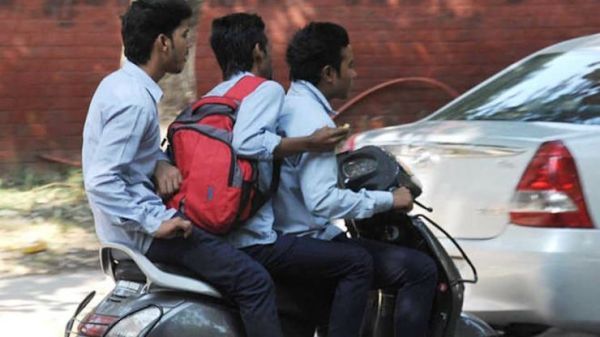
Tamil Nadu alone recorded 11,490 two-wheeler deaths in 2023, accounting for 14.4 percent of the national total. Uttar Pradesh added 8,370. Nearly 50,000 of approximately 75,000 two-wheeler fatalities nationally in 2022 involved riders not wearing helmets.
The irony is that two-wheelers are typically not the fastest vehicles on the road. Their over-representation in fatalities comes from a combination of speed, lack of protective gear, and the complete absence of structural protection that a car provides. A car crash at 80 km/h may injure occupants. The same collision on a two-wheeler is almost always fatal.
Expressways, which carry some of the highest posted speed limits, also concentrate fatalities in specific ways. In 2023, expressways alone recorded 3,630 accidents and 2,372 deaths, a fatality rate per accident that is far higher than national highways or state roads. The combination of high design speeds, high actual speeds, and limited scope for error creates an unforgiving environment.
The government’s target of zero road deaths by 2030, called the Vision Zero initiative, requires enforcement density, road design improvements, and cultural change simultaneously.
On the enforcement side, ADAS systems, including mandatory automatic emergency braking and lane departure warnings on new cars above a certain price threshold, are beginning to address one piece of the problem.
But the majority of vehicles on the road today, and the majority of deaths, involve older cars and two-wheelers where technology plays no role at all.
The data has not changed much in over a decade. Speeding kills, and it kills at scale.
-
10 Quick Breakfast Recipes India Loves: Healthy Breakfast Ideas Indian Families Can Make for Easy Morning Meals Fast

-
Adhik Maas: Children born in Adhik Maas are blessed with special blessings of Lord Vishnu, know how these children are.

-
Khalil-ur-Rehman Qamar faces backlash over remarks on

-
Mother’s Day 2026: These soaked foods are a boon for women after 40, both weight and hormones will remain balanced…

-
Mother’s Day 2026: These soaked foods are a boon for women after 40, both weight and hormones will remain balanced…