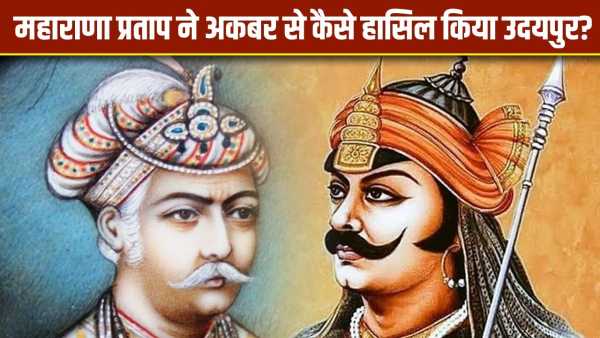
Abul Fazal wrote in Akbarnama that Rana Pratap escaped alive from the battlefield and the Mughals failed to capture him.
Maharana Pratap is not only a symbol of bravery but also of harmony. In the medieval period, it may seem imaginary to have a ruler who did not differentiate between the king and his subjects, but Maharana made it true. He started playing, sitting and eating with the Bhil forest dwellers since childhood and followed this tradition throughout his life. His nature of eating and sleeping while sitting on the ground with the soldiers gave him so much love and trust among the army that without worrying about the hardships, his soldiers kept fighting till their last breath to protect the motherland.
Historians of western thinking ended by mentioning the incident of Haldighati battle in which they had to retreat after a valiant struggle. But the next truth was the Battle of Diwar, in which Maharana made a comeback and won back most of his kingdom from the Mughals. On the occasion of his birth anniversary, read some incidents related to him.
Deprived of luxuries since childhood
Maharana Pratap became a victim of discrimination in his childhood itself. Father Udai Singh was kind to the second queen Dheer Bai. Jagmal and Sagar were his sons. She wanted to see Jagmal on the throne of Mewar. In this plan it was necessary to keep Maharana Pratap away from his father. Dheer Bai was successful in this. When Pratap reached Udaipur from his birthplace Kumbhalgarh with his mother Jaywanta Bai, he was not allowed to stay there. On the orders of Udai Singh, Jaywanta Bai and Pratap were sent to reside in Kunwarpada below the Chittorgarh fort. There were only ten soldiers with him for security. Pratap was completely deprived of the comforts and luxuries that princes enjoyed.
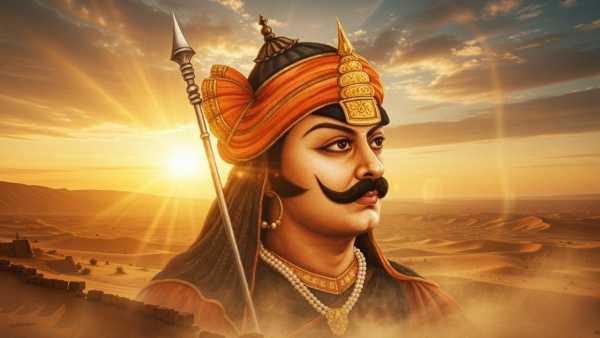
Maharana Pratap Used to eat collectively while sitting on the ground with the soldiers.
Struggle amidst hardships gave strength
These childhood deprivations became a part of Pratap's life in future too. But the practice of earning strength by struggling amidst hardships also helped him a lot in the future. Food used to come for them from Chittor fort. Pratap started the tradition of 'food box'.
They used to eat collectively while sitting on the ground with the soldiers engaged in security. This style of Pratap created a feeling of immense love and trust for him in the hearts of the soldiers. It sent a very good message among the public also. People's curiosity and respect for him increased. Pratap followed the tradition of sharing food with the soldiers throughout his life. This quality of his generated a lot of enthusiasm among the soldiers.
Bhils remained together for life
Of course, his father Maharana Udai Singh had sent him away from Udaipur. But the lifestyle in which the child Pratap was being initiated while wandering among the Bhils and tribals in the forests of Chittor, provided him with courage and bravery the trust and support of a large section of people, who did not shy away from sacrificing their lives for him at every step in the difficult times ahead. While playing with these Bhils who were completely unfamiliar with the royal food and habits, Pratap learned their dialect. Had their meal. Embraced them and supported them.
The mothers of the Bhil community felt so much affection and respect for this prince that they started calling him “Kika” (little boy). It is interesting that even after Pratap ascended the throne of Mewar, Bhils kept calling him “Rana Kika” and Maharana kept accepting it lovingly. In reality, Pratap had gained immense trust of the people of his kingdom by ending the distinction between king and subjects.
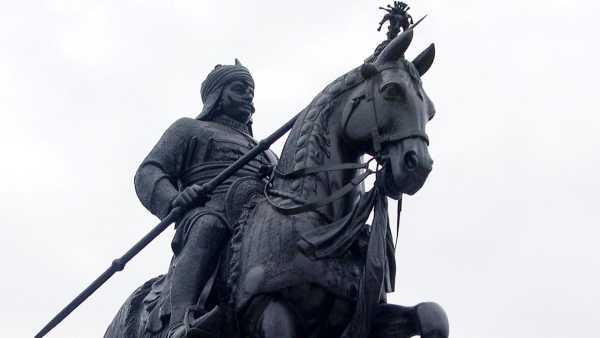
Maharana was the eldest among the total 25 sons of Maharana Pratap's father. Photo: Getty Images
No compromise on self-respect for power
Pratap's father Maharana Udai Singh died in 1572. Pratap was the eldest among his total 25 sons. But Udai Singh had declared Jagmal, born from Dheer Bai, as his successor. Pratap was humbled before his father's decision. But the chieftains of the court considered it necessary for Pratap to ascend the throne for the protection of Mewar. Pratap ascended the throne after some controversy. He dealt with internal challenges. But Akbar's eyes were on the remaining Mewar.
Like many Rajput kings, Pratap too could have ruled peacefully by making a compromise with Akbar. But it was not acceptable for him to bow down before the foreign aggressor. He was not ready to lose self-respect for power. In reality the question was not about personal power. It was a struggle to protect the motherland, its culture and traditions from the foreign invader. The struggle was not just political. It was also cultural, social and moral resistance.
Haldighati war taught us to change strategy
On 18 June 1576, the armies of Mughal and Maharana Pratap fought in Haldighati. The Mughal army was heavy in terms of numbers and weapons. Pratap's army was limited. Weapons were also less than that of the enemy. But despite these shortcomings, Pratap and his army were twenty compared to the enemy in terms of bravery and courage. In the battle of the narrow pass, Pratap defeated the Mughals.
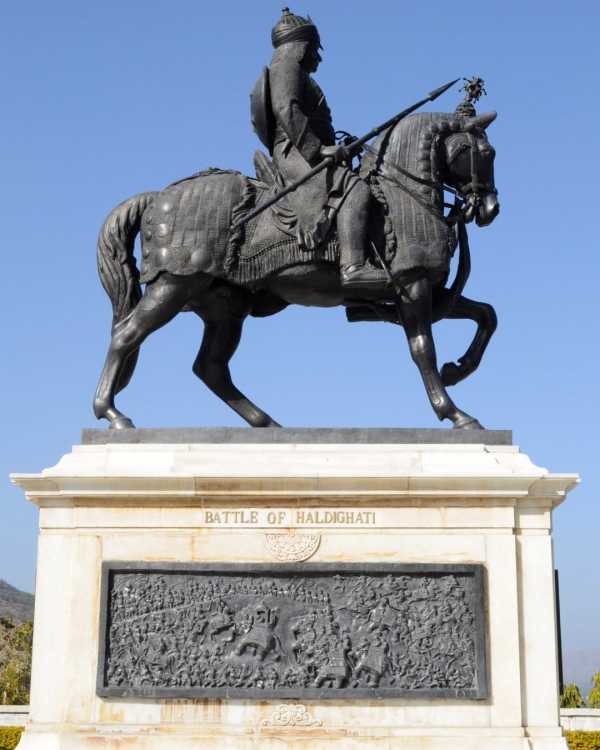
On 18 June 1576, the armies of Mughal and Maharana Pratap fought in Haldighati. Photo: Getty Images
The role of his horse Chetak in this war became legend. The Bhil warriors stunned the enemy army. But lack of army and resources for a decisive victory was forcing Maharana to stop at one border. He was not just courageous. He was also a clever strategist. So they decided to retreat for the next front. In the opinion of historians, the battle of Haldighati was neither a decisive victory of the Mughals nor a complete defeat of the Rana.
This war taught Maharana the need for change in strategy. They had limited army and resources to compete with the huge military power of the Mughals. Therefore, instead of face-to-face conflict, guerrilla and limited war was a better path. To win, it was necessary to disrupt the ration supply chain of the Mughal army and defeat it. Abul Fazal wrote in Akbarnama that Rana Pratap escaped alive from the battlefield and the Mughals failed to capture him.
Wandering in the forests preparing to return to war
Maharana hardly had any peaceful days in his life. But especially after the Haldighati war, times were very difficult. They kept wandering in the forests of Gogunda, Kumbhalgarh, Aravalli and the hills of southern Mewar not to save their lives but to accumulate army and strength for counterattack. This was a time when there was no food for the family. There was no place to hide one's head.
The incident of grass bread was from this time. Historical facts may not confirm this literally, but there is consensus among historians that Pratap and his family lived in extreme poverty. But Maharana was not alone in this struggle. Bhamashah and his brother Tarachand surrendered their entire wealth at the feet of Maharana who was going through poverty. This was not a small amount. This became the basis of the revival of Mewar. This amount was so large that it provided decisive assistance to Maharana Pratap in organizing a large army and equipping it with weapons. It is believed that this amount could have covered the military expenses for the next twelve years.
another winning streak
With the army organized, Maharana was once again ready to fight Akbar. In 1577, Pratap started conquering Mughal Thanas. After capturing Udaipur, Akbar changed the name of the place to Muhammadabad. Pratap captured it again. Old name Udaipur restored. Got Mughal coins melted down. Gogunda also taken back. Now Pratap was under the spell. In September 1577, the joint army of Mewar and Bhatis started destroying the fields of the area. Here, along with three thousand horsemen, the Mughal infantry was also present under the leadership of Mujahid Beg. Hundreds of Mughal soldiers along with Mujahid were killed in the fierce battle.
Mohi was captured by Pratap. Around 1580-81, Akbar was battling rebellions in Bengal, Bihar and the North-West Frontier. Akbar's priorities had changed. Taking advantage of this situation, Maharana Pratap along with his trusted chieftains Bhamashah, Hakim Khan Sur, Chundawat chieftains and Bhil allies made the strategy of Diwar campaign. Pratap regained most of the 36 forts he had lost earlier. Made Chavand the capital. Reorganized the administration. Also paid attention to agriculture and trade of the state.
Haldighati settled in Diwar
Diwar, located in the valleys of the Aravalli mountain range (in present-day Rajsamand district), was the route connecting Mewar with Marwar and Gujarat. Capture of Diwar meant control over the lifeline of Mewar. Pratap moved forward with his army. Historians are not unanimous on its date. Some have considered the time of Diver campaign to be 1582. Whereas Omendra Ratnu has given the date of attack as Vijayadashami of 1583.
Here Pratap's army attacked the Mughals from three sides. Many soldiers including Mughal commander Serima Khan, Uzbek Bahlol Khan were killed in the deadly attack. There were no prisoners of war in this war. Pratap's army had wreaked havoc on the enemy army that day. By noon, the saffron flag was hoisted at Diwar police station. That night, Pratap had won over all the thirty-two Mughal stations that surrounded Mewar. He had regained Kumbhalgarh.
According to Colonel James Todd, just as the Greeks decisively stopped the foreign invaders at Marathon, Pratap broke the backbone of the Mughal stations at Diwar. After this campaign, most of the mountainous parts of Mewar again came under the control of Maharana. The victory of Diwar restored the lost confidence and self-respect of Pratap's army as well as the people of his state. The disappointment of the defeat at Haldighati ended. Once again a message was sent to the Mughals that Mewar was not ready to bow down.


-
Why Chennai’s Nehru Stadium Was the Perfect Venue for Vijay’s Swearing-In as Tamil Nadu Chief Minister

-
From PM Modi To Kamal Hassan Wishes Pour In As TVK's Vijay Sworn In As Tamil Nadu CM

-
Who is S Keerthana? TVK’s First Woman MLA From Sivakasi Whose Fluent Speech In Hindi Sparks Buzz
-
UP Education Minister Targets ‘Rain, Rain Go Away,’ Claiming Popular Rhyme Promotes Selfishness Over Traditions
-
UP Cabinet Expansion Likely Today; BJP Eyes Social Balance Ahead Of 2027 Polls