According to data from Australia’s Department of Home Affairs (DHA), nearly 4,800 offshore student visa applications were rejected in March, when only 59% of Australian student visa applications were approved, marking the lowest monthly approval rate on record.
Most applicants lost the non-refundable visa fee of A$2,000, which was sharply increased from A$710 nearly two years ago.
In total, the Australian government collected nearly AU$65 million in student visa fees during the month. The revenue stream has become so substantial that it could fund agencies such as the Bureau of Meteorology or the Australian Bureau of Statistics, Keri Ramirez, managing director of Studymove, a Sydney-based consultancy providing data analytics, benchmarking and market intelligence for the international education industry, told Times Higher Education (THE).
Ramirez estimated that visa fees from international students and their dependents generated around A$735 million for Australia last year, a sharp rise from A$244 million in 2018.
He said most of the revenue came from higher education applicants, who paid A$469 million in 2025, nearly four times the A$121 million recorded in 2018.
He said the scale of the earnings raised “ethical concerns,” as quoted by THE.
According to Ramirez, many countries only charge substantial visa fees at the final stages of processing, when applicants are almost certain to receive approval.
Former deputy secretary of the Department of Immigration Abul Rizvi described Australia’s student visa policy as “unethical” and “bad.”
“We should be… in the business of attracting the best students, and cranking up the application fee will not help in attracting the best students,” he told THE.
|
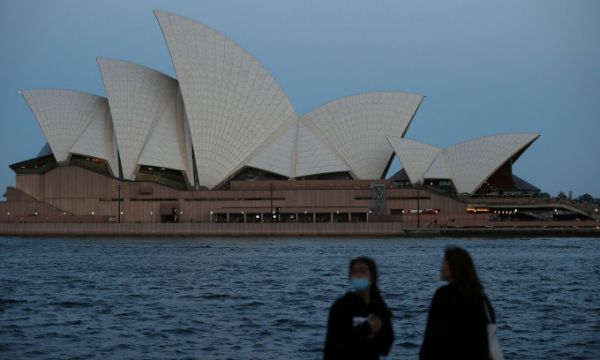
People stand on the harbour waterfront near the Sydney Opera House in Sydney, Australia, Nov. 11, 2020. Photo by Reuters |
According to the DHA, around 6,900 student visas were approved in March, when the approval rate fell to a record low of 59.6%, eight percentage points below the previous low of 67.6% recorded in February. Grant rates for March had remained above 73% for more than 20 years prior to this decline.
China and several major Southeast Asian markets, including Vietnam, the Philippines and Indonesia, recorded relatively low rejection rates of around 4-15%.
Students from South Asia, however, were among the hardest hit. The approval rate was only 27% for Nepalese applicants and 49% for Indian applicants.
Rizvi said immigration officers had become stricter, now requiring applicants to demonstrate financial capacity for their entire course of study rather than just the first year.
Over the past two years, Australia has steadily tightened student visa rules as part of efforts to curb immigration following a post-Covid-19 surge that pushed the number of international students to nearly 1.1 million in 2024.
Post-study work rights have been reduced from 4-6 years to 2-3 years, while English language and financial requirements have been tightened. The required proof of funds has also been raised by 20% to A$29,710 (US$21,400). Student visa application fees have meanwhile increased to A$2,000, among the highest in the world.
More than one million international students came to Australia last year. The most popular undergraduate and postgraduate fields of study were management and commerce, followed by information technology.
-
JMI PhD Admission 2026: Jamia Millia Islamia Releases PhD Admission Schedule; Applications Begin May 11
-
Great News for Youth! Jharkhand CGL Recruitment Notification Released; Numerous Posts to be Filled

-
New West Bengal Chief Minister Shuvendu Adhikari Begins Tenure with Tribute to Tagore

-
'Proud to have motivating figures', says PM Modi on Bengal's oldest BJP worker Makhanlal Sarkar

-
UK households could save £2,400 on household bills by doing 1 'fun' task