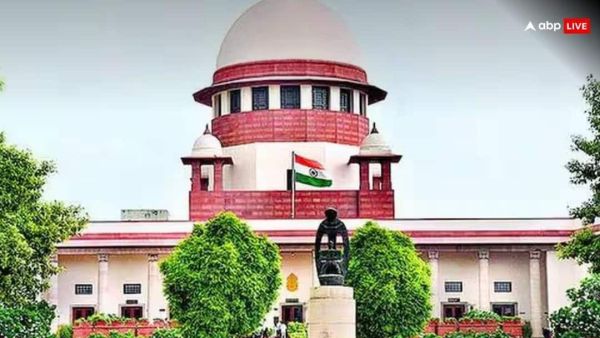
A fresh legal battle has emerged over government formation in Tamil Nadu, with a petition moved before the Supreme Court seeking directions to Governor Rajendra Arlekar to invite C Joseph Vijay to form the government as leader of the single-largest party in the Assembly. The plea, filed on May 8, 2026, argues that constitutional conventions and judicial precedents require the Governor to first allow Vijay to stake claim and then prove his majority on the floor of the House.
TVK Worker Moves Supreme Court Over Govt Formation
The writ petition was filed by Chennai-based TVK member Ezhilarasi P., who contended that the Governor is constitutionally bound to invite the leader of the largest party before considering alternative post-poll arrangements.
The plea comes amid reports suggesting that the Governor may examine the possibility of rival alliances or post-election coalitions before making a final decision on government formation in the state.
In the recently concluded Assembly elections, Tamilaga Vettri Kazhagam emerged as the largest party with 108 seats in the 234-member Assembly. The Dravida Munnetra Kazhagam secured 59 seats, while the All India Anna Dravida Munnetra Kazhagam won 47. The Congress, with five MLAs, extended support to TVK, taking the alliance tally to 113, still short of the majority mark of 118.
Vijay had met the Governor on May 7 to formally submit his claim to form the government.
Petition Cites Constitutional Principles
According to the petition, a press release issued by Lok Bhavan on May 7 stated that the Governor informed Vijay that TVK had not yet demonstrated majority support in the Assembly.
The plea argues that refusing to invite the single-largest party despite its claim amounts to a violation of Articles 12 and 32 of the Constitution.
To strengthen its case, the petition relies on recommendations made by the Sarkaria Commission as well as several significant Supreme Court rulings, including S. R. Bommai v. Union of India, Jagdambika Pal v. Union of India, Chandrakant Kavlekar v. Union of India, G. Parmeshwara v. Union of India and Shivraj Singh Chouhan v. Speaker, MP Legislative Assembly.
Debate Intensifies Over Governor’s Constitutional Role
The petition outlines what it describes as the accepted order of preference for inviting parties to form a government. According to the plea, a pre-poll alliance commanding a majority gets first preference, followed by the single-largest party capable of proving support on the Assembly floor. A post-poll coalition with majority backing comes after that.
The filing also stresses that imposing President's Rule should remain the last constitutional option.
The petitioner has argued that by delaying an invitation to Vijay, the Governor risks departing from established democratic conventions and judicially recognised principles governing hung assemblies.
As the political impasse deepens in Tamil Nadu, the Supreme Court petition has added a major constitutional dimension to the already intense battle over who will form the state’s next government.
-
Arrests Mount To 11 In Odisha Mob Lynching Case As Minister Vows Exemplary Action
-
India Implements Major Reforms with New Labour Codes

-
KKR's Remarkable Comeback in IPL 2026: Can They Secure a Playoff Spot?

-
Massive Drug Seizure at Delhi Airport: Nearly 35 Kilograms of Marijuana Confiscated

-
HPSCB Job Alert: Recruitment Notification Issued for 91 Junior Clerk Posts; Applications to Begin on This Date..