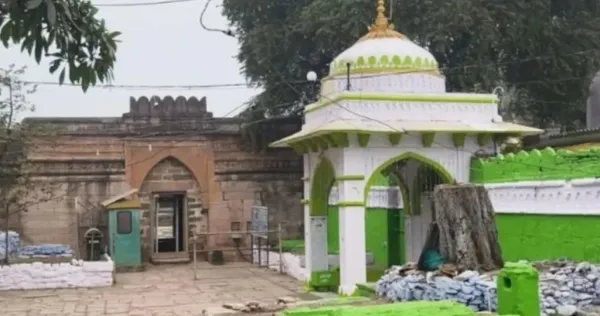
Tezzbuzz Desk – The debate has once again intensified in the country regarding the Places of Worship (Special Provisions) Act-1991. The recent legal discussions and the ongoing Bhojshala case in the Madhya Pradesh High Court have raised new questions regarding the interpretation of this law and its scope.
As per the law, there is a clear provision that the ancient and historical monuments protected by the Archaeological Survey of India are outside the scope of this Act. That is, this law does not directly apply to such monuments, which are already protected under the Ancient Monuments and Archaeological Sites Act, 1958.
According to Sections 3 and 4 of the Act, the religious nature of any place of worship cannot be changed from its position as on 15 August 1947. Its objective is to maintain the status quo of religious places in the country. However, some important exceptions are also given under Section 5.
These exceptions include ancient monuments, cases already settled by the courts and disputes that were resolved by mutual consent before the law came into force. The special thing is that the Ayodhya dispute was also kept in a separate category under the special provisions of this Act.
Meanwhile, a hearing is going on in the Madhya Pradesh High Court regarding the Bhojshala complex (which the Hindu side considers as Vagdevi Temple and the Muslim side considers it as Kamal Maula Masjid). This matter is once again in the news because both sides are making different claims regarding its religious nature.
The Hindu side argues that this is an 11th century temple and their religious rights are being affected by the current system of the Archaeological Survey of India. The Muslim side says that this place existed as a mosque on August 15, 1947, hence its form cannot be changed.
The matter is also currently pending in the Supreme Court, where the constitutional validity of the Places of Worship Act has been challenged. The petitioners say that this law limits the right to judicial remedies, while supporters believe that it is necessary to maintain religious peace and status quo in the country.
-
Education Week from May 11–17 under Praja Palana programme
-
Iran says ‘clock is ticking’ for US interests amid Hormuz tensions
-
Gelatin sticks found on Bengaluru route ahead of PM Modi’s visit; 1 detained
-
Archery World Cup Stage 2: India won gold without a coach, defeated China, Deepika Kumari’s experience came in handy

-
Make natural bleach at home with gram flour and turmeric instead of parlor chemicals, which will make the face clean, healthy and natural – News Himachali News Himachali