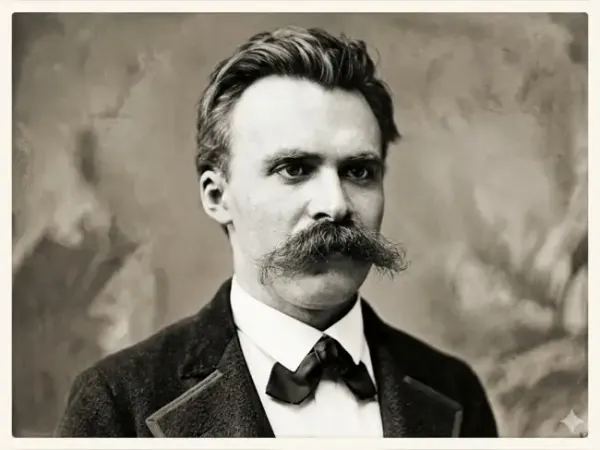
Quote of the day by Friedrich Nietzsche brings attention to a famous statement: “To live is to suffer, to survive is to find some meaning in the suffering.” The quote connects philosophy, life lessons, success, challenges, and positivity. Friedrich Nietzsche was a German scholar and philosopher. His ideas shaped modern thinking. His writings influenced philosophers, psychologists, writers, and artists. The quote explains how humans face suffering and search for meaning. This explainer covers his life, early years, works, philosophy, influence, and the lessons people can learn from the quote today.
“To live is to suffer, to survive is to find some meaning in the suffering.”
The quote explains that suffering is part of life. Every person faces pain, loss, failure, and struggle. Survival depends on how people understand these experiences. Nietzsche believed humans create meaning through experience. Without meaning, suffering feels empty. With meaning, suffering becomes part of growth and survival. The quote connects to daily life. People face work stress, health problems, and personal loss. The quote suggests that meaning helps people continue despite problems.
In 1864, he joined the University of Bonn to study theology and classical philology. Later he transferred to the University of Leipzig. He discovered Arthur Schopenhauer’s philosophy and met composer Richard Wagner.
These works explained morality, religion, values, and meaning.
Quote of the day today and its meaning
Quote by Friedrich Nietzsche is:“To live is to suffer, to survive is to find some meaning in the suffering.”
The quote explains that suffering is part of life. Every person faces pain, loss, failure, and struggle. Survival depends on how people understand these experiences. Nietzsche believed humans create meaning through experience. Without meaning, suffering feels empty. With meaning, suffering becomes part of growth and survival. The quote connects to daily life. People face work stress, health problems, and personal loss. The quote suggests that meaning helps people continue despite problems.
Life lessons from the quote
The quote gives many lessons.First lesson
Life includes suffering. No person avoids hardship. Accepting this helps people prepare for reality.Second lesson
Meaning gives strength. When people understand why they struggle, they gain purpose.Third lesson
Challenges can lead to growth. Hard experiences can shape skills and thinking.Fourth lesson
Positivity comes from purpose. When people find meaning, they feel stronger.Early life of Friedrich Nietzsche
Friedrich Nietzsche was born on October 15, 1844 in Röcken, Saxony, Prussia. His father was a pastor named Carl Ludwig Nietzsche. His father died when Nietzsche was young. He grew up in a household with his mother, sister, grandmother, and aunts. The family moved to Naumburg in 1850. He studied at a preparatory school and later attended Schulpforta, a Protestant boarding school. He showed strong academic ability and studied classical education.In 1864, he joined the University of Bonn to study theology and classical philology. Later he transferred to the University of Leipzig. He discovered Arthur Schopenhauer’s philosophy and met composer Richard Wagner.
Academic career and Basel years
In 1869, he became a professor of classical philology at the University of Basel. He did not complete a doctoral thesis, but his published work impressed scholars. During the Franco-German War in 1870, he served as a medical orderly. He suffered illness that affected his health for life. His first book “The Birth of Tragedy” was published in 1872. It discussed Greek tragedy and culture. The book sparked debate. He resigned from his position in 1879 because of health problems.Years of isolation and major works
Between 1879 and 1889 he lived in Switzerland, France, and Italy. He suffered illness and lived with limited social contact. During this period he wrote many works:- Beyond Good and Evil
- On the Genealogy of Morals
- Thus Spoke Zarathustra
- The Gay Science
- The Antichrist
- Ecce Homo
These works explained morality, religion, values, and meaning.