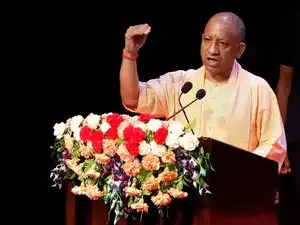
New Delhi: In a finely calibrated social engineering exercise, the Yogi Adityanath-led Uttar Pradesh government has expanded its Cabinet with a clear emphasis on smaller, less politically dominant, caste groups within the OBC and Scheduled Caste segments that may not individually command large vote banks but offer significant incremental gains in tightly contested elections.
The expansion, which includes six fresh inductions and two promotions, reflects BJP's continued focus on aggregating micro-social coalitions across regions, ensuring both caste and geographic spread.
Also Read: Yogi Adityanath 2.0 ministry expanded: 2 cabinet ministers, 4 state ministers inducted
With barely a year left for UP assembly elections, the exercise is being seen as BJP's attempt to counter Samajwadi Party chief Akhilesh Yadav's PDA (Pichda, Dalit, Alpsankhyak) outreach strategy. Significantly, several of the caste groups accommodated in the reshuffle are believed to have drifted away from BJP during the Lok Sabha elections, prompting the party to recalibrate its social coalition ahead of the 2027 contest.
From eastern UP, Hansraj Vishwakarma, an MLC from Varanasi, representing the Vishwakarma OBC community has been elevated. A grassroots leader with deep organisational roots, his elevation signals the party's intent to reward loyal cadre while strengthening its hold in the Purvanchal belt. Given his proximity to the central leadership, he may be assigned a significant portfolio.
Western UP finds representation in Surendra Diler, MLA from Khurja in Bulandshahr, who is a Valmiki Scheduled Caste. His induction bolsters the party's outreach among sanitation-linked Dalit communities.
From Bundelkhand, Krishna Paswan, MLA from Khaga, brings in representation from the Pasi community -- an influential but often underrepresented Scheduled Caste group in the region. Her inclusion underlines BJP's continued push to consolidate support among non-dominant Dalit sub-castes in this belt.
The OBC matrix is further broadened with Kailash Rajput (Lodh), a community with influence in central and western UP, while the promotion of Somendra Tomar (Gurjar) strengthens the party's position in western UP, particularly in districts where Gurjars play a decisive role. Ajit Pal (Pal community), with influence in parts of central and eastern UP, was also elevated, reinforcing outreach among the pastoral OBC groups.
Adding organisational heft with regional balance, Bhupendra Singh Chaudhary, a prominent Jat leader from western UP and former state BJP president, brings both caste and regional weight. He enjoys the confidence of BJP's central leadership.
Also Read: UP Cabinet expansion: Akhilesh Yadav questions BJP over accommodation of turncoat leaders
In contrast, upper-caste representation remains measured. Manoj Pandey, a Brahmin leader from Awadh region who recently crossed over from the Samajwadi Party during the Rajya Sabha bypolls, is the lone general category induction. His inclusion appears more politically strategic than representational. Notably, there has been no fresh inclusion from the Thakur community, a move that signals a conscious attempt to avoid perceptions of over-concentration of power within any single dominant group.
The expansion, which includes six fresh inductions and two promotions, reflects BJP's continued focus on aggregating micro-social coalitions across regions, ensuring both caste and geographic spread.
Also Read: Yogi Adityanath 2.0 ministry expanded: 2 cabinet ministers, 4 state ministers inducted
With barely a year left for UP assembly elections, the exercise is being seen as BJP's attempt to counter Samajwadi Party chief Akhilesh Yadav's PDA (Pichda, Dalit, Alpsankhyak) outreach strategy. Significantly, several of the caste groups accommodated in the reshuffle are believed to have drifted away from BJP during the Lok Sabha elections, prompting the party to recalibrate its social coalition ahead of the 2027 contest.
From eastern UP, Hansraj Vishwakarma, an MLC from Varanasi, representing the Vishwakarma OBC community has been elevated. A grassroots leader with deep organisational roots, his elevation signals the party's intent to reward loyal cadre while strengthening its hold in the Purvanchal belt. Given his proximity to the central leadership, he may be assigned a significant portfolio.
Western UP finds representation in Surendra Diler, MLA from Khurja in Bulandshahr, who is a Valmiki Scheduled Caste. His induction bolsters the party's outreach among sanitation-linked Dalit communities.
From Bundelkhand, Krishna Paswan, MLA from Khaga, brings in representation from the Pasi community -- an influential but often underrepresented Scheduled Caste group in the region. Her inclusion underlines BJP's continued push to consolidate support among non-dominant Dalit sub-castes in this belt.
The OBC matrix is further broadened with Kailash Rajput (Lodh), a community with influence in central and western UP, while the promotion of Somendra Tomar (Gurjar) strengthens the party's position in western UP, particularly in districts where Gurjars play a decisive role. Ajit Pal (Pal community), with influence in parts of central and eastern UP, was also elevated, reinforcing outreach among the pastoral OBC groups.
Adding organisational heft with regional balance, Bhupendra Singh Chaudhary, a prominent Jat leader from western UP and former state BJP president, brings both caste and regional weight. He enjoys the confidence of BJP's central leadership.
Also Read: UP Cabinet expansion: Akhilesh Yadav questions BJP over accommodation of turncoat leaders
In contrast, upper-caste representation remains measured. Manoj Pandey, a Brahmin leader from Awadh region who recently crossed over from the Samajwadi Party during the Rajya Sabha bypolls, is the lone general category induction. His inclusion appears more politically strategic than representational. Notably, there has been no fresh inclusion from the Thakur community, a move that signals a conscious attempt to avoid perceptions of over-concentration of power within any single dominant group.