Gold loan (Representative image)
Kolkata: Small Finance Banks (SFB) aggressively pivoted toward secured lending in FY26 to stabilise asset quality and earnings, as the bad-loan ratio from unsecured microfinance book remained elevated. The shift comes amid a regulatory nudge to these lenders for greater diversity in their asset pools.
This shift involves growing reliance on gold loans, which saw the fastest traction in the financial services sector over the past two years.
Meanwhile, the sector's cumulative microfinance portfolio contracted in line with reliance on secured loan business, although the bigger SFBs reported sequential growth in lending to the bottom-of-the-pyramid borrowers.
Also Read: Small Finance Banks lead Indian banking job creation in FY25
"Our strategic focus remains on building a granular, diversified and an increasingly secured lending portfolio, which we believe is essential for improving asset quality, earnings stability and long-term scalability," said K Paul Thomas, MD, ESAF Small Finance Bank.
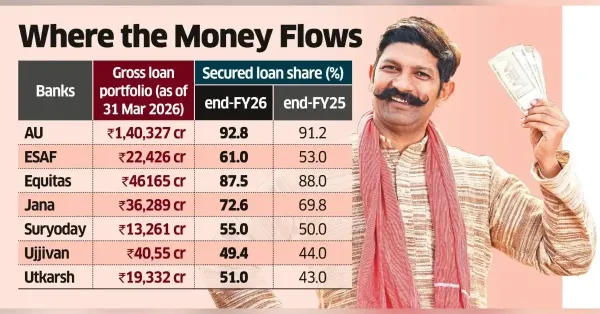
ESAF's secured portfolio share rose to 61% of the asset base at the end of FY26 from 53% a year prior. Its gold loan portfolio surged 55% year-on-year to ₹8,858 crore contributing 39.5% of total portfolio and overtaking microloans share of 39%.
Jana Small Finance Bank reported a 141% YoY jump in gold loan to ₹2,358 crore, albeit on a low base.
The Reserve Bank of India (RBI) has been urging SFB leaders to diversify their business streams to minimise credit risks. Indeed, the central bank returned Ujjivan Small Finance Bank's application for voluntary transition to a universal bank, asking it to diversify loan portfolio further before applying again.
The RBI, in June last year, reduced the mandatory priority sector lending target for SFBs to 60% of adjusted net bank credit, down from 75%, creating a space for widening their product array. Ujjivan's secured product mix now stood at 49.4% as compared with 44% at the end of FY25. "We shall re-submit our application once we have further demonstrated a well-diversified loan book," Managing Director Sanjeev Nautiyal said.
To be sure, AU Small Finance Bank, having the largest share (92.8%) of secured portfolio, is in the process of transitioning into a universal bank. Jana Small Finance Bank, another universal bank aspirant, has a secured share of 72.6%, up from 69.8% a year back. Besides growing the secured book faster, these lenders have also grown their unsecured microfinance business in line with the revival of the sector from intense stress.
Also Read: After asset quality hit, small finance banks to sharpen risk controls for 2026
In contrast, Suryoday Small Finance Bank's joint liability group (JLG)-based micro loans contracted further to ₹1,512 crore at the end of March from ₹2,062 crore a year prior. The JLG book stood at ₹2,389 crore on March 31, 2024. Strikingly, a quarter of its current JLG book turned bad. Its unsecured inclusive finance portfolio, which includes JLG loans, stood at ₹5,964 crore while 12.7% of it was non-performing loans.
Utkarsh Small Finance Bank's JLG portfolio contracted further to ₹5,789 crore from ₹6,419 crore three months back and ₹9,207 crore a year prior. Its NPA ratio from micro loans stood at 13.5%. Jana also has a high 16.6% bad loan ratio from the JLG book of ₹3,298 crore. Its total unsecured portfolio stood at ₹9,674 crore with a 6.8% of non-performing loan share.
At an aggregate level, SFBs saw their microfinance portfolio declining to ₹51,800 crore as on March end, from ₹55,700 crore three months prior, while bigger private banks, pure-play microfinance companies and other non-bank lenders grew their respective cumulative micro loan portfolios, data from CRIF High mark showed.
This shift involves growing reliance on gold loans, which saw the fastest traction in the financial services sector over the past two years.
Meanwhile, the sector's cumulative microfinance portfolio contracted in line with reliance on secured loan business, although the bigger SFBs reported sequential growth in lending to the bottom-of-the-pyramid borrowers.
Also Read: Small Finance Banks lead Indian banking job creation in FY25
"Our strategic focus remains on building a granular, diversified and an increasingly secured lending portfolio, which we believe is essential for improving asset quality, earnings stability and long-term scalability," said K Paul Thomas, MD, ESAF Small Finance Bank.
Where the money flows
ESAF's secured portfolio share rose to 61% of the asset base at the end of FY26 from 53% a year prior. Its gold loan portfolio surged 55% year-on-year to ₹8,858 crore contributing 39.5% of total portfolio and overtaking microloans share of 39%.
Jana Small Finance Bank reported a 141% YoY jump in gold loan to ₹2,358 crore, albeit on a low base.
The Reserve Bank of India (RBI) has been urging SFB leaders to diversify their business streams to minimise credit risks. Indeed, the central bank returned Ujjivan Small Finance Bank's application for voluntary transition to a universal bank, asking it to diversify loan portfolio further before applying again.
The RBI, in June last year, reduced the mandatory priority sector lending target for SFBs to 60% of adjusted net bank credit, down from 75%, creating a space for widening their product array. Ujjivan's secured product mix now stood at 49.4% as compared with 44% at the end of FY25. "We shall re-submit our application once we have further demonstrated a well-diversified loan book," Managing Director Sanjeev Nautiyal said.
To be sure, AU Small Finance Bank, having the largest share (92.8%) of secured portfolio, is in the process of transitioning into a universal bank. Jana Small Finance Bank, another universal bank aspirant, has a secured share of 72.6%, up from 69.8% a year back. Besides growing the secured book faster, these lenders have also grown their unsecured microfinance business in line with the revival of the sector from intense stress.
Also Read: After asset quality hit, small finance banks to sharpen risk controls for 2026
In contrast, Suryoday Small Finance Bank's joint liability group (JLG)-based micro loans contracted further to ₹1,512 crore at the end of March from ₹2,062 crore a year prior. The JLG book stood at ₹2,389 crore on March 31, 2024. Strikingly, a quarter of its current JLG book turned bad. Its unsecured inclusive finance portfolio, which includes JLG loans, stood at ₹5,964 crore while 12.7% of it was non-performing loans.
Utkarsh Small Finance Bank's JLG portfolio contracted further to ₹5,789 crore from ₹6,419 crore three months back and ₹9,207 crore a year prior. Its NPA ratio from micro loans stood at 13.5%. Jana also has a high 16.6% bad loan ratio from the JLG book of ₹3,298 crore. Its total unsecured portfolio stood at ₹9,674 crore with a 6.8% of non-performing loan share.
At an aggregate level, SFBs saw their microfinance portfolio declining to ₹51,800 crore as on March end, from ₹55,700 crore three months prior, while bigger private banks, pure-play microfinance companies and other non-bank lenders grew their respective cumulative micro loan portfolios, data from CRIF High mark showed.