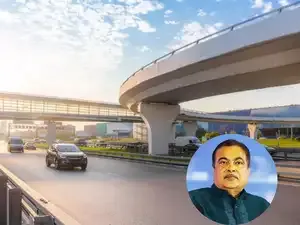
Union Minister for Road Transport and Highways Nitin Gadkari on Monday inaugurated the Multi-Lane Free Flow (MLFF) tolling system at the Mundka-Bakkarwala plaza on Delhi’s Urban Extension Road-II (UER-II). This significant upgrade introduces barrier-less toll collection, allowing vehicles to pass through without stopping. Using FASTag and Automatic Number Plate Recognition (ANPR) technology, the system aims to drastically reduce congestion, save travel time, improve fuel efficiency, and lower vehicular emissions for daily commuters in and around the national capital.
Vehicles no longer need to slow down or stop at toll plazas. The system automatically detects the FASTag linked to the vehicle and deducts the toll amount while it is in motion.
In cases of insufficient balance, invalid FASTag, or technical issues, an Electronic Notice (E-Notice) is generated, giving users 72 hours to make the payment.
This is the second major implementation of MLFF in the country after the successful launch on the Surat-Bharuch stretch of NH-48 in Gujarat.
With its rollout in Delhi, the system is now entering urban corridors, promising better connectivity for both city traffic and surrounding areas.
The government plans to gradually expand MLFF across more national highways, aiming to create a seamless, efficient, and transparent tolling network nationwide.
(With TOI inputs)
What is Multi-Lane Free Flow (MLFF) Tolling?
The MLFF system is a completely contactless and barrier-free toll collection method.Vehicles no longer need to slow down or stop at toll plazas. The system automatically detects the FASTag linked to the vehicle and deducts the toll amount while it is in motion.
In cases of insufficient balance, invalid FASTag, or technical issues, an Electronic Notice (E-Notice) is generated, giving users 72 hours to make the payment.
This is the second major implementation of MLFF in the country after the successful launch on the Surat-Bharuch stretch of NH-48 in Gujarat.
How It Will Benefit Delhi Commuters
The new system on UER-II is expected to bring major relief to daily commuters. Key benefits include:- Zero waiting time at toll plazas
- Smoother and faster traffic movement
- Reduced fuel consumption and lower pollution levels
- Improved overall driving experience on one of Delhi’s important corridors
Broader Impact
During the Gujarat launch, Gadkari had emphasised that barrier-less tolling would improve “Ease of Living” and support “Ease of Doing Business”.With its rollout in Delhi, the system is now entering urban corridors, promising better connectivity for both city traffic and surrounding areas.
The government plans to gradually expand MLFF across more national highways, aiming to create a seamless, efficient, and transparent tolling network nationwide.
(With TOI inputs)