India’s urban unemployment rate for persons aged 15 years and above eased to 6.6% in the January-March 2026 quarter from 6.7% in the previous quarter, according to the latest Periodic Labour Force Survey (PLFS) data released by the government on Monday.
The rural unemployment rate, however, edged up to 4.3% during the quarter from 4.0% in October-December 2025. Overall labour force participation rate (LFPR) for persons aged 15 years and above stood at 55.5% during January-March 2026, compared to 55.8% in the previous quarter.
Urban LFPR slipped marginally to 50.2% from 50.4%, while rural LFPR eased to 58.2% from 58.4% in the preceding quarter.
Also Read: Substantial regional disparities in labour market conditions across India: SBI Research Report
The overall female LFPR remained broadly unchanged at 34.7% in the January-March quarter, compared to 34.9% in the previous quarter. Rural female LFPR stood at 39.2%, down from 39.4%, while urban female LFPR remained nearly stable at 25.4% against 25.5% earlier.
The Worker Population Ratio (WPR) for persons aged 15 years and above stood at 52.8% during the quarter, compared to 53.1% in the previous quarter. Urban WPR remained largely stable at 46.9%, while rural WPR declined marginally to 55.7% from 56.1%.
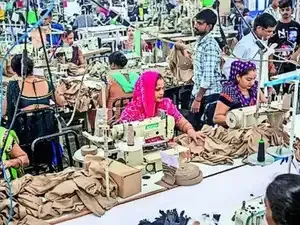
The survey showed that regular wage and salaried employment in rural areas rose to 15.5% during January-March 2026 from 14.8% in the previous quarter. The share of self-employed workers in rural areas declined to 62.5% from 63.2%.
The sectoral composition of rural employment also shifted during the quarter. The share of workers engaged in agriculture declined to 55.8% from 58.5% in the previous quarter, while employment in the tertiary sector rose to 21.7% from 20.6%. Employment in the secondary sector, including mining and quarrying, increased to 22.6% from 20.9%.
Also Read: Govt to replace MGNREGA with new rural jobs scheme G RAM G
According to the survey, an average of 57.4 crore persons aged 15 years and above were employed in the country during the January-March 2026 quarter, including 40.2 crore males and 17.2 crore females.
The quarterly estimates were based on information collected from 5,61,822 persons surveyed across the country, including 3,20,387 in rural areas and 2,41,435 in urban areas.
The rural unemployment rate, however, edged up to 4.3% during the quarter from 4.0% in October-December 2025. Overall labour force participation rate (LFPR) for persons aged 15 years and above stood at 55.5% during January-March 2026, compared to 55.8% in the previous quarter.
Urban LFPR slipped marginally to 50.2% from 50.4%, while rural LFPR eased to 58.2% from 58.4% in the preceding quarter.
Also Read: Substantial regional disparities in labour market conditions across India: SBI Research Report
The overall female LFPR remained broadly unchanged at 34.7% in the January-March quarter, compared to 34.9% in the previous quarter. Rural female LFPR stood at 39.2%, down from 39.4%, while urban female LFPR remained nearly stable at 25.4% against 25.5% earlier.
The Worker Population Ratio (WPR) for persons aged 15 years and above stood at 52.8% during the quarter, compared to 53.1% in the previous quarter. Urban WPR remained largely stable at 46.9%, while rural WPR declined marginally to 55.7% from 56.1%.
The survey showed that regular wage and salaried employment in rural areas rose to 15.5% during January-March 2026 from 14.8% in the previous quarter. The share of self-employed workers in rural areas declined to 62.5% from 63.2%.
The sectoral composition of rural employment also shifted during the quarter. The share of workers engaged in agriculture declined to 55.8% from 58.5% in the previous quarter, while employment in the tertiary sector rose to 21.7% from 20.6%. Employment in the secondary sector, including mining and quarrying, increased to 22.6% from 20.9%.
Also Read: Govt to replace MGNREGA with new rural jobs scheme G RAM G
According to the survey, an average of 57.4 crore persons aged 15 years and above were employed in the country during the January-March 2026 quarter, including 40.2 crore males and 17.2 crore females.
The quarterly estimates were based on information collected from 5,61,822 persons surveyed across the country, including 3,20,387 in rural areas and 2,41,435 in urban areas.