Less than a decade ago, prolonged blackouts were among the defining features of life in Uttar Pradesh. Frequent power cuts affected not only villages, but also major cities and industrial centres such as Lucknow, Kanpur, Varanasi, Noida and Ghaziabad. Industries relied heavily on diesel generators, farmers struggled with erratic electricity for irrigation, and unreliable supply remained a major constraint on economic growth.
Today, the picture is markedly different. Uttar Pradesh is now meeting record peak electricity demand of nearly 32,000 MW while providing near round-the-clock power supply across urban centres and significantly improved electricity access in rural areas. What was once considered one of India’s most power-stressed states, is increasingly positioning itself as a model of large-scale energy infrastructure transformation.
The turnaround has been driven by sustained investment in generation, transmission and distribution infrastructure, accompanied by governance reforms, renewable-energy expansion and operational modernization. The contrast reflects not merely an increase in electricity generation, but a structural rebuilding of the state’s power ecosystem.
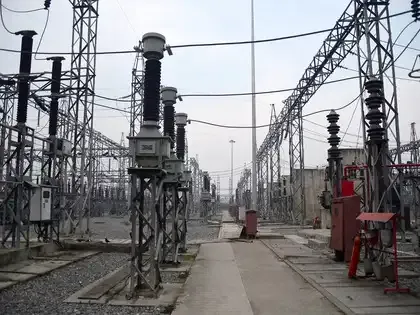
When the present government assumed office in 2017, Uttar Pradesh faced rising demand, aging infrastructure, high transmission losses and inadequate grid capacity. The response was centered on long-term capacity building rather than short-term load management. The state accelerated expansion of transmission infrastructure, strengthening of feeder lines and modernization of substations. Large-scale investments were also undertaken to strengthen the distribution backbone of the power sector across Uttar Pradesh. The state focused on upgrading distribution transformers, expanding and modernizing feeder infrastructure, and strengthening both rural and urban distribution networks to improve supply reliability and reduce technical losses. Feeder segregation helped ensure better load management and more predictable electricity supply for agricultural and domestic consumers. Simultaneously, grid modernization initiatives, including digital monitoring systems and smart infrastructure upgrades, enhanced operational efficiency and improved the overall stability of the electricity network. This infrastructure push became the backbone of improved supply reliability.
The scale of the transformation becomes clearer when viewed against rising consumption patterns. Peak electricity demand in Uttar Pradesh has doubled from around 16,000 MW in 2016–17 to nearly 32,000 MW in 2024–25. Yet unlike earlier years, the state is now largely able to meet this demand without major systemic shortages. This is particularly significant because rising demand itself reflects economic expansion — more industries, more urban households, greater appliance usage, wider electrification and growing rural consumption. The improvement in electricity availability has had consequences far beyond the power sector.
Reliable power supply has emerged as a critical enabler for industrial growth and investment confidence. Manufacturing clusters in Noida, Greater Noida and other industrial corridors now operate in a far more stable electricity environment than a decade ago. The expansion of expressways, logistics infrastructure, data centres and electronics manufacturing in the state has further increased the importance of uninterrupted electricity. Energy reliability is increasingly being treated as core economic infrastructure. The impact is equally visible in rural Uttar
Pradesh. Improved power availability has strengthened irrigation systems, supported rural enterprises, expanded digital connectivity and improved delivery of healthcare and educational services. Reduced dependence on diesel generators has also lowered operational costs for small businesses and households.
Electricity in Uttar Pradesh is no longer merely a public utility; it is becoming an engine of economic and social transformation. Infrastructure expansion alone could not have produced sustainable results without institutional reforms. Improved governance and better law-and-order conditions have contributed significantly to strengthening the power sector. Reduced electricity theft, improved bill recovery, better enforcement mechanisms and more efficient project execution have helped improve the financial stability of distribution companies. The government has also pushed modernization initiatives such as smart metering, digital monitoring systems and feeder-level energy auditing to reduce technical and commercial losses. Importantly, Uttar Pradesh has attempted to improve operational efficiency instead of relying primarily on tariff hikes to finance the sector.
At a time when several states faced mounting financial pressure in the power sector, Uttar Pradesh maintained electricity tariffs unchanged for multiple consecutive years. This has allowed consumers to benefit from improved electricity access without a corresponding rise in tariff burden. The strategy reflects an attempt to balance infrastructure expansion with affordability and financial discipline.
Renewable energy is now becoming central to Uttar Pradesh’s long-term energy strategy. Under the Uttar Pradesh Solar Energy Policy 2022, the state aims to add more than 22,000 MW of solar capacity by 2027 through utility-scale solar parks, rooftop systems, decentralized solar projects and hybrid renewable-energy solutions. The state is also aggressively pursuing agricultural solarization through the PM-KUSUM scheme, which supports installation of solar pumps and feeder solarization for irrigation. Simultaneously, the PM Surya Ghar: Muft Bijli Yojana is accelerating rooftop solar adoption among households through subsidies and simplified implementation mechanisms.
One of the most ambitious proposals is the phased solarization of 50 lakh agricultural pumps, which could significantly reduce subsidy burdens, lower diesel dependence and improve long-term sustainability of rural electricity supply. These initiatives indicate that Uttar Pradesh’s next energy transition will not only focus on supply reliability, but also on clean energy integration and long-term sustainability. As Uttar Pradesh advances toward its ambition of becoming a trillion-dollar economy by 2029–30, electricity demand is expected to rise further — potentially crossing 40,000 MW in the coming years.
Meeting this rapidly rising electricity demand will require another major cycle of investment across the energy value chain. Uttar Pradesh is expected to focus on expanding both thermal and renewable generation capacity, while simultaneously strengthening transmission corridors and modernizing distribution infrastructure. The next phase of reforms will also require the development of smart grids, energy storage systems and advanced load-management technologies to improve efficiency and grid stability.
The state’s policy direction suggests that energy infrastructure will remain central to its broader economic strategy. Uttar Pradesh’s power-sector transformation is no longer simply a story of improved electricity supply. It is a story of infrastructure-led governance, institutional reform and economic
repositioning. A state once associated with chronic shortages and blackouts is now building the energy foundation required for industrial expansion, agricultural modernization and large-scale economic growth. Challenges remain — particularly around distribution efficiency, financial sustainability and future demand management — but the structural shift is unmistakable. Reliable electricity has increasingly moved from being a scarcity-managed resource to becoming a developmental backbone for India’s most populous state.
Today, the picture is markedly different. Uttar Pradesh is now meeting record peak electricity demand of nearly 32,000 MW while providing near round-the-clock power supply across urban centres and significantly improved electricity access in rural areas. What was once considered one of India’s most power-stressed states, is increasingly positioning itself as a model of large-scale energy infrastructure transformation.
The turnaround has been driven by sustained investment in generation, transmission and distribution infrastructure, accompanied by governance reforms, renewable-energy expansion and operational modernization. The contrast reflects not merely an increase in electricity generation, but a structural rebuilding of the state’s power ecosystem.
When the present government assumed office in 2017, Uttar Pradesh faced rising demand, aging infrastructure, high transmission losses and inadequate grid capacity. The response was centered on long-term capacity building rather than short-term load management. The state accelerated expansion of transmission infrastructure, strengthening of feeder lines and modernization of substations. Large-scale investments were also undertaken to strengthen the distribution backbone of the power sector across Uttar Pradesh. The state focused on upgrading distribution transformers, expanding and modernizing feeder infrastructure, and strengthening both rural and urban distribution networks to improve supply reliability and reduce technical losses. Feeder segregation helped ensure better load management and more predictable electricity supply for agricultural and domestic consumers. Simultaneously, grid modernization initiatives, including digital monitoring systems and smart infrastructure upgrades, enhanced operational efficiency and improved the overall stability of the electricity network. This infrastructure push became the backbone of improved supply reliability.
The scale of the transformation becomes clearer when viewed against rising consumption patterns. Peak electricity demand in Uttar Pradesh has doubled from around 16,000 MW in 2016–17 to nearly 32,000 MW in 2024–25. Yet unlike earlier years, the state is now largely able to meet this demand without major systemic shortages. This is particularly significant because rising demand itself reflects economic expansion — more industries, more urban households, greater appliance usage, wider electrification and growing rural consumption. The improvement in electricity availability has had consequences far beyond the power sector.
Reliable power supply has emerged as a critical enabler for industrial growth and investment confidence. Manufacturing clusters in Noida, Greater Noida and other industrial corridors now operate in a far more stable electricity environment than a decade ago. The expansion of expressways, logistics infrastructure, data centres and electronics manufacturing in the state has further increased the importance of uninterrupted electricity. Energy reliability is increasingly being treated as core economic infrastructure. The impact is equally visible in rural Uttar
Pradesh. Improved power availability has strengthened irrigation systems, supported rural enterprises, expanded digital connectivity and improved delivery of healthcare and educational services. Reduced dependence on diesel generators has also lowered operational costs for small businesses and households.
Electricity in Uttar Pradesh is no longer merely a public utility; it is becoming an engine of economic and social transformation. Infrastructure expansion alone could not have produced sustainable results without institutional reforms. Improved governance and better law-and-order conditions have contributed significantly to strengthening the power sector. Reduced electricity theft, improved bill recovery, better enforcement mechanisms and more efficient project execution have helped improve the financial stability of distribution companies. The government has also pushed modernization initiatives such as smart metering, digital monitoring systems and feeder-level energy auditing to reduce technical and commercial losses. Importantly, Uttar Pradesh has attempted to improve operational efficiency instead of relying primarily on tariff hikes to finance the sector.
At a time when several states faced mounting financial pressure in the power sector, Uttar Pradesh maintained electricity tariffs unchanged for multiple consecutive years. This has allowed consumers to benefit from improved electricity access without a corresponding rise in tariff burden. The strategy reflects an attempt to balance infrastructure expansion with affordability and financial discipline.
Renewable energy is now becoming central to Uttar Pradesh’s long-term energy strategy. Under the Uttar Pradesh Solar Energy Policy 2022, the state aims to add more than 22,000 MW of solar capacity by 2027 through utility-scale solar parks, rooftop systems, decentralized solar projects and hybrid renewable-energy solutions. The state is also aggressively pursuing agricultural solarization through the PM-KUSUM scheme, which supports installation of solar pumps and feeder solarization for irrigation. Simultaneously, the PM Surya Ghar: Muft Bijli Yojana is accelerating rooftop solar adoption among households through subsidies and simplified implementation mechanisms.
One of the most ambitious proposals is the phased solarization of 50 lakh agricultural pumps, which could significantly reduce subsidy burdens, lower diesel dependence and improve long-term sustainability of rural electricity supply. These initiatives indicate that Uttar Pradesh’s next energy transition will not only focus on supply reliability, but also on clean energy integration and long-term sustainability. As Uttar Pradesh advances toward its ambition of becoming a trillion-dollar economy by 2029–30, electricity demand is expected to rise further — potentially crossing 40,000 MW in the coming years.
Meeting this rapidly rising electricity demand will require another major cycle of investment across the energy value chain. Uttar Pradesh is expected to focus on expanding both thermal and renewable generation capacity, while simultaneously strengthening transmission corridors and modernizing distribution infrastructure. The next phase of reforms will also require the development of smart grids, energy storage systems and advanced load-management technologies to improve efficiency and grid stability.
The state’s policy direction suggests that energy infrastructure will remain central to its broader economic strategy. Uttar Pradesh’s power-sector transformation is no longer simply a story of improved electricity supply. It is a story of infrastructure-led governance, institutional reform and economic
repositioning. A state once associated with chronic shortages and blackouts is now building the energy foundation required for industrial expansion, agricultural modernization and large-scale economic growth. Challenges remain — particularly around distribution efficiency, financial sustainability and future demand management — but the structural shift is unmistakable. Reliable electricity has increasingly moved from being a scarcity-managed resource to becoming a developmental backbone for India’s most populous state.
(Disclaimer: The opinions expressed in this column are that of the writer. The facts and opinions expressed here do not reflect the views of www.economictimes.com.)





Ravikant Mishra
He is Member, Economic Advisory Group, Government of Uttar Pradesh