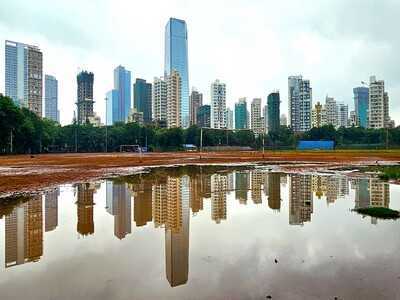
New Delhi [India], May 12 (ANI): India's Tier-2 cities are emerging as major centres for international retail expansion, with smaller urban markets increasingly attracting global brands and institutional investment, according to a study released by Knight Frank India on Tuesday.
According to the report, India is currently witnessing two parallel retail economies -- a mature Tier-1 market affected by ageing retail stock, and a younger Tier-2 market with newer infrastructure and faster growth.
Chandigarh topped the International Brand Penetration Rankings 2026 despite having a population of only 1.3 million, outperforming larger cities in terms of consumption power, Grade A retail quality and international brand density.
Mangaluru emerged as the most brand-dense Tier-2 city, with more than 102 international brand stores per million people, while Lucknow recorded the highest number of unique international brands, hosting 112 brands across 5.6 million square feet of shopping centre stock.
The report noted that cities such as Surat, Jaipur and Nagpur have strong population and consumption expenditure, but international brand penetration remains limited due to the lack of Grade A retail infrastructure.
It stated that Tier-2 India now has 61 per cent Grade A retail stock, compared to 45 per cent in Tier-1 cities. Since 2020, Tier-2 cities have added 5.9 million square feet of Grade A retail space, which is over three times the corresponding addition in Tier-1 cities.
The study further said that American brands account for 46 per cent of all international stores in Tier-2 India and 91 per cent of international food and beverage outlets, largely led by quick-service restaurants.
It also found that retail groups based in the United Arab Emirates account for nearly 79 per cent of the department-store footprint across Tier-2 cities.
Shishir Baijal, International Partner, Chairman and Managing Director of Knight Frank India, said "India's next phase of organised retail expansion will not be led by the metros alone, we are witnessing the emergence of a parallel retail economy across Tier 2 India -- one that is younger, more aspirational, digitally connected and increasingly capable of supporting international brands at scale."
He said the findings show that population size is no longer the defining metric for retail success, and cities such as Chandigarh and Mangaluru are performing better than larger urban centres due to stronger consumption, better retail infrastructure and higher brand absorption.
The report highlighted that while Tier-1 cities account for 98 million square feet of organised retail stock, they continue to face challenges from ageing Grade C malls and high vacancy levels. It said 60 "ghost malls" in Tier-1 cities are operating with vacancy levels above 40 per cent.
In contrast, Tier-2 cities have 36 million sq ft of retail stock, much of which has been developed after 2010, resulting in newer retail environments with lower vacancy and improved operational efficiency.
According to the report, consumption power is replacing population size as the key metric for retail growth. It noted that monthly urban per capita consumption expenditure ranges from Rs 13,425 in Chandigarh to Rs 5,114 in Chhattisgarh.
The study added that rising smartphone usage, UPI adoption and digital content access have reduced the gap in brand awareness between metro and non-metro consumers, accelerating the growth of international retail in Tier-2 cities. (ANI)
-
UK airline suddenly plunged into liquidation - in business since 2004

-
Mum accused of killing daughter 'stopped to buy lottery ticket on way to hospital'

-
Delhi HC sets aside Centre's decision rejecting OCI card to The Wire's Siddharth Varadarajan
-
Women and youth at the centre of Uttar Pradesh's anti-drug awareness drive
-
'I was on Mastermind - this is how much you really get paid for appearing'