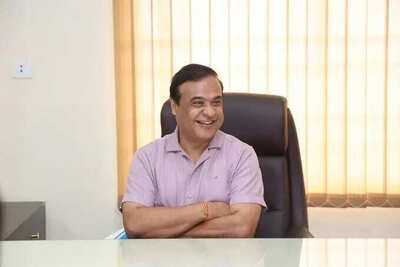
File image of Assam CM Sarma. (Photo:@himantabiswa/X)
In the dynamic political scene of Assam, Chief Minister Himanta Biswa Sarma's emergence as 'Mama' exemplifies the profound impact of digital communication on modern political leadership in India.
The traditional image of political authority has evolved into a more personalized and emotionally engaging identity, largely influenced by the widespread use of social media and smartphones.
Throughout the Brahmaputra and Barak valleys, Sarma is affectionately referred to as 'Mama,' a term that conveys familial closeness and emotional connection.
This change signifies more than just popularity; it highlights how governance and leadership are now experienced through the immediacy of digital platforms rather than through distant institutional frameworks.
From WhatsApp messages and Instagram videos to Facebook Live sessions streamed in tea stalls and homes, Sarma's political communication has woven itself into the fabric of daily social interactions.
Unlike past political figures whose authority was often formal and remote, the digital landscape has allowed for constant visibility, fostering the perception of a leader who is always present in the public's mind.
Experts note that this shift gained momentum alongside India's broader social media-driven political evolution, particularly following Prime Minister Narendra Modi's groundbreaking 2014 election campaign that redefined political outreach through direct digital engagement.
In Assam, Sarma has tailored this model to fit local contexts, merging governance messaging with cultural familiarity and emotional branding.
The carefully crafted digital persona of 'Brand Mama' thrives on relatability, with videos showcasing Sarma interacting with children, addressing concerns, visiting flood-affected areas, conducting late-night inspections, and engaging directly with citizens online circulating widely among supporter-run pages and messaging networks.
These snippets, amplified through memes, reels, and tribute videos, transform governance into an interactive digital narrative.
Political theorists have long contended that communication is central to the exercise of power in interconnected societies.
The text references sociologist Manuel Castells' assertion that legitimacy increasingly arises from the ability to influence communication flows and maintain public attention.
In this context, Sarma's emergence as 'HBS 2.0' illustrates the intersection of governance, emotional branding, and digital mediation.
However, the allure of 'Mama' is not solely based on warmth or approachability. Alongside this endearing public persona lies the image of a resolute administrator.
Social media frequently highlights images of site inspections, law-and-order assessments, healthcare oversight, and bureaucratic meetings, creating what scholars refer to as 'performed governance'—a form of governance that is continuously visible in real-time.
Analysts also interpret Sarma's political rise as part of a larger shift in Northeast politics. Political analyst Ajit Datta, in his 2021 book Himanta Biswa Sarma: From Boy Wonder to CM, characterized Sarma's ascent as emblematic of a political landscape increasingly moving away from entrenched dynastic structures toward merit-based leadership paths.
Similarly, writer Sandip Ghose noted in 2022 that Sarma embodies a new generation of Northeastern politicians who confidently assert regional identity rather than hesitating on the periphery.
Sarma's public addresses in 'Axomiya-inflected Hindi' across states like Telangana and Uttarakhand, observers suggest, bolster this emerging political confidence.
In a state historically influenced by regional and linguistic complexities, digital platforms are also bridging geographical divides.
Citizens across Assam are increasingly engaging with the same political clips, responding to similar narratives, and participating in shared online discussions. While social media does not eliminate older tensions, it has reduced political distance through collective visibility.
Thus, the emergence of 'Mama' as a political symbol signifies more than just affection; it encapsulates a broader transformation in Indian politics, where authority is no longer maintained solely through distance and formality but through carefully nurtured closeness in the digital era.
-
Wall Street Pulls Back As Inflation, Iran Tensions Weigh On Sentiment

-
WHO Warns Hantavirus Fight ‘Not Over Yet’ After Cruise Ship Evacuation

-
'No Prize For Guessing’: Suvendu Reacts To Himanta’s Viral ‘Bad Days’ Post
-
‘Dialogue Window Must Stay Open’: RSS Leader On India-Pakistan Relations
-
'Was A Lot Of Back & Forth': Chitrangda Singh Opens Up About Almost Collaborating With Aditya Dhar 14 Years Ago