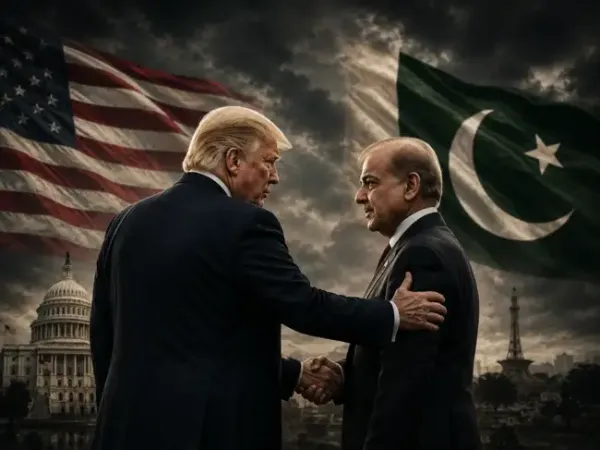
Pakistan’s relationship with the US has long rested on a paradox that successive American administrations understood but rarely resolved. For more than two decades after 9/11, the US publicly described Pakistan as a critical ally in the war on terror while privately accusing sections of the Pakistani security establishment of sheltering, enabling or strategically tolerating the very militant groups killing American soldiers in Afghanistan.
A latest CBS report, citing anonymous US military officials, says that Pakistan allowed Iranian military aircraft access to its airfields while simultaneously projecting itself as a mediator once again revives the familiar question -- why has the US repeatedly looked away while Pakistan played its double game? The answer lies in the uneasy mixture of geopolitics, military dependence, nuclear anxieties and American strategic pragmatism. Pakistan’s conduct during the war on terror was not viewed in the US as an isolated betrayal but as part of a longstanding pattern in which Pakistan cooperated with the US where its interests aligned but undermined US objectives where they diverged. American policymakers might think that an unreliable Pakistan is still preferable to a hostile or destabilised Pakistan.
The design of Pakistan’s double game
The charge that Pakistan pursued a dual policy during the Afghanistan war became a mainstream assessment across large sections of the US security establishment. The central allegation was not merely that militants crossed into Pakistan. It was that elements within Pakistan’s security apparatus viewed some militant groups as strategic assets and therefore protected or tolerated them even while officially partnering with the US against terrorism.
Also Read | Pakistan 'ditched' US despite playing peacemaker, helped Iran park planes at Nur Khan to escape attacks
Few statements captured American frustration more sharply than the testimony of chairman of the Joint Chiefs of Staff Admiral Mike Mullen before the US Senate in 2011 just before he retired. Mullen described the Haqqani Network of Taliban as “a veritable arm of Pakistan’s ISI,” effectively accusing a major non-Nato ally of the US of maintaining links with a group responsible for attacks on American forces in Afghanistan. The statement was extraordinary not only because of its bluntness but because it came from the highest-ranking US military officer.
Mullen also said that with Pakistani support the Haqqanis were behind not only the 13 September embassy assault, but also a truck bomb that wounded 77 US soldiers, and another attack against the Intercontinental Hotel in Kabul, as well as a host of other smaller but effective operations. Mullen said Pakistani intelligence was using the Haqqanis and other extremist groups as its proxies inside Afghanistan. Testifying alongside Mullen, US defense secretary Leon Panetta also decried Pakistani support for the Haqqani network, and he said Pakistani authorities have been told that the US will not tolerate a continuation of the group's cross-border attacks.
Analysts noted at the time that such language reflected a deep collapse of trust between the US and Pakistan.
American officials had for years accused Pakistan of distinguishing between good militants and bad militants. Groups targeting the Pakistani state itself were treated as enemies while anti-India or Afghanistan-focused groups often received varying degrees of tolerance. Analysts have argued that Pakistan’s military establishment viewed Islamist proxies as instruments of regional strategy, particularly against India and for maintaining influence in Afghanistan. In her assessment, support for such groups was not accidental leakage from a weak state but a deliberate strategic doctrine embedded in Pakistan’s security thinking.
This interpretation gained credibility because Taliban safe havens inside Pakistan became increasingly difficult to deny. The so-called “Quetta Shura,” believed to be the Afghan Taliban leadership council, reportedly operated from the Pakistani city of Quetta for years. North Waziristan became synonymous with militant sanctuary. American and NATO commanders repeatedly complained that Taliban fighters could attack coalition forces in Afghanistan and retreat across the border into Pakistan where US forces could not easily pursue them.
One of the strongest criticisms from Western analysts is that Pakistan’s sanctuary system fundamentally altered the trajectory of the Afghanistan conflict. Counterinsurgency campaigns traditionally depend on denying insurgents secure rear bases. Yet Taliban fighters consistently retained the ability to regroup, train, recruit and recover inside Pakistani territory. Journalists have documented how cross-border sanctuary networks sustained the insurgency long after the Taliban regime collapsed in 2001.
Many analysts argued that Pakistan’s military establishment saw the Afghan Taliban as a hedge against Indian influence in Kabul. In this framework, Pakistan feared that a strongly pro-India Afghan government would strategically encircle Pakistan. Militant proxies therefore became tools of geopolitical leverage rather than merely extremist actors.
Also Read | ‘Reflect on your reputation’: India’s sharp message to China over backing Pakistan during Op Sindoor
Osama bin Laden and the collapse of plausible deniability
No episode damaged Pakistan’s credibility more than the discovery of Osama bin Laden in Abbottabad in 2011. Bin Laden was found living in a large compound in a Pakistani military town not far from the country’s premier military academy. For many observers in the West, the idea that the world’s most wanted terrorist could hide there for years without detection strained belief. Pakistan insisted it had no knowledge of bin Laden’s whereabouts. Some analysts accepted the possibility of institutional incompetence. Others suspected that at least rogue elements within the security establishment may have known more than publicly acknowledged. Yet even experts cautious about alleging direct state complicity viewed Abbottabad as devastating evidence of either extraordinary negligence or selective blindness.
The symbolism mattered as much as the operational reality. The US had spent nearly a decade hunting bin Laden with Pakistan officially participating in the war on terror. That he was ultimately located deep inside Pakistan profoundly reinforced suspicions in the US that Pakistan’s security establishment had never fully aligned itself with US objectives.
Why Washington repeatedly looked away
President Donald Trump, who calls Pakistani army chief Asim Munir as his "favourite Field Marshall", himself said during his first presidency in 2018 that Pakistan had been deceiving the US, “The United States has foolishly given Pakistan more than 33 billion dollars in aid over the last 15 years, and they have given us nothing but lies & deceit, thinking of our leaders as fools,” Trump tweeted. “They give safe haven to the terrorists we hunt in Afghanistan, with little help. No more!”
Despite repeated accusations, public anger and periodic aid suspensions, the US never fundamentally severed ties with Pakistan. Analysts across the Western policy establishment generally point to several overlapping reasons.
The first was geography. During the Afghanistan war, Pakistan controlled critical supply routes for US and NATO forces. Fuel, ammunition, food and military equipment frequently moved through Pakistani territory. American planners feared that a complete rupture with Islamabad could severely disrupt military operations. The second factor was Pakistan’s nuclear arsenal. US administrations worried that destabilising Pakistan carried risks far beyond Afghanistan. A nuclear-armed country with deep Islamist networks was viewed as too dangerous to isolate recklessly. Even deeply frustrated policymakers often concluded that engagement was safer than confrontation.
The third reason involved intelligence cooperation. Pakistan did assist the US in capturing or killing several al-Qaeda operatives after 9/11. American intelligence agencies believed they still needed Pakistani cooperation in areas such as surveillance, logistics and regional access. This produced a contradictory relationship in which the US simultaneously distrusted and depended upon Islamabad. The fourth factor was China. American strategists understood that pushing Pakistan too aggressively could accelerate its alignment with China. Over time, this concern became more significant as US-China competition intensified.
Finally, there was simple strategic realism. Many American officials believed Pakistan’s behavior was frustrating but predictable. Pakistani military establishment viewed Afghanistan through the prism of its rivalry with India and therefore pursued policies that often conflicted with US goals. The US repeatedly hoped pressure, incentives or diplomacy could moderate Pakistan’s conduct without triggering a complete breakdown in relations.
The new phase of transactional politics
The recent CBS report claiming that Pakistan allowed Iranian military aircraft access to its airfields while simultaneously positioning itself as a diplomatic intermediary fits into this longer history of strategic balancing. Pakistan has often sought to maintain ties with rival camps simultaneously, extracting leverage from all sides while avoiding full alignment with any single bloc.
Reports that Pakistan is forging closer business ties with networks connected to Trump and his family is another angle to the emerging US-Pakistan bonhomie. Besides American pragmatism and strategic dependence on Pakistan, critics would say that would be another reason for Trump to look away this time.
The US-Pakistan relationship during the war on terror was never a traditional alliance grounded in shared strategic vision. It was a marriage of necessity between two states pursuing overlapping but ultimately divergent objectives. Pakistan wanted influence in Afghanistan, strategic depth against India and continued American military support. The US wanted counterterror cooperation, logistical access and regional stability. Each side believed it could manage the contradictions. Neither fully trusted the other.
Now with reports that Pakistan has entered close business relations with Trump's family, a new dimension could add to the complex US-Pakistan relations if Trump ignores what US military sources have told CBS about Pakistan's help to Iran.
A latest CBS report, citing anonymous US military officials, says that Pakistan allowed Iranian military aircraft access to its airfields while simultaneously projecting itself as a mediator once again revives the familiar question -- why has the US repeatedly looked away while Pakistan played its double game? The answer lies in the uneasy mixture of geopolitics, military dependence, nuclear anxieties and American strategic pragmatism. Pakistan’s conduct during the war on terror was not viewed in the US as an isolated betrayal but as part of a longstanding pattern in which Pakistan cooperated with the US where its interests aligned but undermined US objectives where they diverged. American policymakers might think that an unreliable Pakistan is still preferable to a hostile or destabilised Pakistan.
The design of Pakistan’s double game
The charge that Pakistan pursued a dual policy during the Afghanistan war became a mainstream assessment across large sections of the US security establishment. The central allegation was not merely that militants crossed into Pakistan. It was that elements within Pakistan’s security apparatus viewed some militant groups as strategic assets and therefore protected or tolerated them even while officially partnering with the US against terrorism.
Also Read | Pakistan 'ditched' US despite playing peacemaker, helped Iran park planes at Nur Khan to escape attacks
Few statements captured American frustration more sharply than the testimony of chairman of the Joint Chiefs of Staff Admiral Mike Mullen before the US Senate in 2011 just before he retired. Mullen described the Haqqani Network of Taliban as “a veritable arm of Pakistan’s ISI,” effectively accusing a major non-Nato ally of the US of maintaining links with a group responsible for attacks on American forces in Afghanistan. The statement was extraordinary not only because of its bluntness but because it came from the highest-ranking US military officer.
Mullen also said that with Pakistani support the Haqqanis were behind not only the 13 September embassy assault, but also a truck bomb that wounded 77 US soldiers, and another attack against the Intercontinental Hotel in Kabul, as well as a host of other smaller but effective operations. Mullen said Pakistani intelligence was using the Haqqanis and other extremist groups as its proxies inside Afghanistan. Testifying alongside Mullen, US defense secretary Leon Panetta also decried Pakistani support for the Haqqani network, and he said Pakistani authorities have been told that the US will not tolerate a continuation of the group's cross-border attacks.
Analysts noted at the time that such language reflected a deep collapse of trust between the US and Pakistan.
American officials had for years accused Pakistan of distinguishing between good militants and bad militants. Groups targeting the Pakistani state itself were treated as enemies while anti-India or Afghanistan-focused groups often received varying degrees of tolerance. Analysts have argued that Pakistan’s military establishment viewed Islamist proxies as instruments of regional strategy, particularly against India and for maintaining influence in Afghanistan. In her assessment, support for such groups was not accidental leakage from a weak state but a deliberate strategic doctrine embedded in Pakistan’s security thinking.
This interpretation gained credibility because Taliban safe havens inside Pakistan became increasingly difficult to deny. The so-called “Quetta Shura,” believed to be the Afghan Taliban leadership council, reportedly operated from the Pakistani city of Quetta for years. North Waziristan became synonymous with militant sanctuary. American and NATO commanders repeatedly complained that Taliban fighters could attack coalition forces in Afghanistan and retreat across the border into Pakistan where US forces could not easily pursue them.
One of the strongest criticisms from Western analysts is that Pakistan’s sanctuary system fundamentally altered the trajectory of the Afghanistan conflict. Counterinsurgency campaigns traditionally depend on denying insurgents secure rear bases. Yet Taliban fighters consistently retained the ability to regroup, train, recruit and recover inside Pakistani territory. Journalists have documented how cross-border sanctuary networks sustained the insurgency long after the Taliban regime collapsed in 2001.
Many analysts argued that Pakistan’s military establishment saw the Afghan Taliban as a hedge against Indian influence in Kabul. In this framework, Pakistan feared that a strongly pro-India Afghan government would strategically encircle Pakistan. Militant proxies therefore became tools of geopolitical leverage rather than merely extremist actors.
Also Read | ‘Reflect on your reputation’: India’s sharp message to China over backing Pakistan during Op Sindoor
Osama bin Laden and the collapse of plausible deniability
No episode damaged Pakistan’s credibility more than the discovery of Osama bin Laden in Abbottabad in 2011. Bin Laden was found living in a large compound in a Pakistani military town not far from the country’s premier military academy. For many observers in the West, the idea that the world’s most wanted terrorist could hide there for years without detection strained belief. Pakistan insisted it had no knowledge of bin Laden’s whereabouts. Some analysts accepted the possibility of institutional incompetence. Others suspected that at least rogue elements within the security establishment may have known more than publicly acknowledged. Yet even experts cautious about alleging direct state complicity viewed Abbottabad as devastating evidence of either extraordinary negligence or selective blindness.
The symbolism mattered as much as the operational reality. The US had spent nearly a decade hunting bin Laden with Pakistan officially participating in the war on terror. That he was ultimately located deep inside Pakistan profoundly reinforced suspicions in the US that Pakistan’s security establishment had never fully aligned itself with US objectives.
Why Washington repeatedly looked away
President Donald Trump, who calls Pakistani army chief Asim Munir as his "favourite Field Marshall", himself said during his first presidency in 2018 that Pakistan had been deceiving the US, “The United States has foolishly given Pakistan more than 33 billion dollars in aid over the last 15 years, and they have given us nothing but lies & deceit, thinking of our leaders as fools,” Trump tweeted. “They give safe haven to the terrorists we hunt in Afghanistan, with little help. No more!”
Despite repeated accusations, public anger and periodic aid suspensions, the US never fundamentally severed ties with Pakistan. Analysts across the Western policy establishment generally point to several overlapping reasons.
The first was geography. During the Afghanistan war, Pakistan controlled critical supply routes for US and NATO forces. Fuel, ammunition, food and military equipment frequently moved through Pakistani territory. American planners feared that a complete rupture with Islamabad could severely disrupt military operations. The second factor was Pakistan’s nuclear arsenal. US administrations worried that destabilising Pakistan carried risks far beyond Afghanistan. A nuclear-armed country with deep Islamist networks was viewed as too dangerous to isolate recklessly. Even deeply frustrated policymakers often concluded that engagement was safer than confrontation.
The third reason involved intelligence cooperation. Pakistan did assist the US in capturing or killing several al-Qaeda operatives after 9/11. American intelligence agencies believed they still needed Pakistani cooperation in areas such as surveillance, logistics and regional access. This produced a contradictory relationship in which the US simultaneously distrusted and depended upon Islamabad. The fourth factor was China. American strategists understood that pushing Pakistan too aggressively could accelerate its alignment with China. Over time, this concern became more significant as US-China competition intensified.
Finally, there was simple strategic realism. Many American officials believed Pakistan’s behavior was frustrating but predictable. Pakistani military establishment viewed Afghanistan through the prism of its rivalry with India and therefore pursued policies that often conflicted with US goals. The US repeatedly hoped pressure, incentives or diplomacy could moderate Pakistan’s conduct without triggering a complete breakdown in relations.
The new phase of transactional politics
The recent CBS report claiming that Pakistan allowed Iranian military aircraft access to its airfields while simultaneously positioning itself as a diplomatic intermediary fits into this longer history of strategic balancing. Pakistan has often sought to maintain ties with rival camps simultaneously, extracting leverage from all sides while avoiding full alignment with any single bloc.
Reports that Pakistan is forging closer business ties with networks connected to Trump and his family is another angle to the emerging US-Pakistan bonhomie. Besides American pragmatism and strategic dependence on Pakistan, critics would say that would be another reason for Trump to look away this time.
The US-Pakistan relationship during the war on terror was never a traditional alliance grounded in shared strategic vision. It was a marriage of necessity between two states pursuing overlapping but ultimately divergent objectives. Pakistan wanted influence in Afghanistan, strategic depth against India and continued American military support. The US wanted counterterror cooperation, logistical access and regional stability. Each side believed it could manage the contradictions. Neither fully trusted the other.
Now with reports that Pakistan has entered close business relations with Trump's family, a new dimension could add to the complex US-Pakistan relations if Trump ignores what US military sources have told CBS about Pakistan's help to Iran.