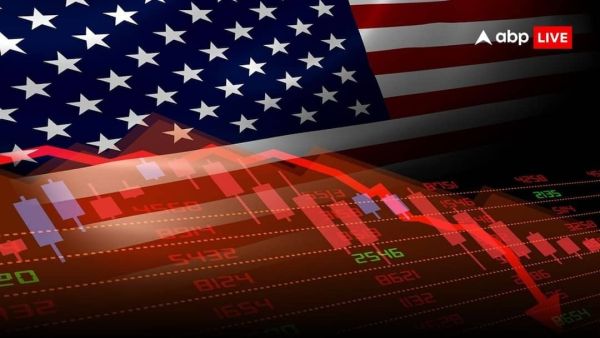
US Stock Market Crash Today: The US stock market took a sharp hit on Tuesday as investors faced a troubling wave of economic data. The Dow Jones Industrial Average fell 307 points, the S&P 500 slid 46 points, and the Nasdaq dropped nearly 1% — all in a single session. The trigger was clear and painful: US CPI inflation climbed to 3.8% year-over-year in April, its highest reading since May 2023. That single number cracked investor confidence like a fault line splitting open under pressure. Markets had spent weeks pricing in a soft landing. Tuesday reminded everyone that inflation doesn't ask for permission to come back.
The Consumer Price Index report for April showed headline inflation rising 0.6% from March alone — the kind of monthly jump that, if sustained, puts the Federal Reserve in an impossible position. Core inflation, which strips out food and energy, came in at 2.8% annually and 0.4% monthly, both above consensus forecasts. These numbers don't exist in a vacuum.
Behind them is the Strait of Hormuz blockade, a military choke point that has sent global fuel prices surging and pushed West Texas Intermediate crude oil above $101 a barrel. When energy gets expensive, everything gets expensive. That's not theory — that's the supply chain in real time.
What makes this US stock market crash today particularly sobering is the context surrounding it. The April jobs report, released just last Friday, showed the labor market still running hot. Strong employment plus rising inflation is a combination the Fed has nightmares about. Rate cuts — the very thing markets have been hoping for all year — now look further away than ever.
The Federal Reserve faces a system locked in a contradiction: the economy is strong enough to keep inflation alive, but not immune enough to absorb prolonged high rates. Investors on Tuesday voted with their sell orders.
Treasury yields climbed, the US dollar strengthened, and volatility surged as traders rapidly reassessed expectations for Federal Reserve interest rate cuts.
The CBOE Volatility Index, commonly known as the fear gauge, climbed above 18 as uncertainty spread across markets.
The inflation shock arrived during an already fragile moment for global markets. Oil prices have surged amid escalating tensions surrounding Iran and fears over disruptions near the Strait of Hormuz. West Texas Intermediate crude crossed $101 per barrel, while Brent crude rose above $107. Rising fuel costs are now feeding directly into consumer inflation, transportation expenses, and corporate cost pressures.
Major tech leaders weakened during Tuesday’s session. Amazon dropped 1.37%, Microsoft lost more than 1%, and Nvidia slipped despite remaining near historic highs. Even companies tied to the artificial intelligence boom experienced pressure as investors reassessed valuations in a higher-rate environment.
The technology sector has been the dominant engine behind the market’s rally over the past year. Artificial intelligence optimism fueled enormous gains in companies like Nvidia, Microsoft, Amazon, and Apple. However, inflation changes the equation rapidly.
Growth stocks rely heavily on expectations of future profits. When interest rates rise, future earnings become less attractive in today’s dollars. That dynamic hits high-valuation technology companies especially hard.
Investors are now questioning whether the extraordinary AI-driven rally became too dependent on expectations of lower rates and abundant liquidity. Tuesday’s inflation data challenged both assumptions.
Microsoft fell more than 1%, Amazon lost ground, and Nasdaq indices significantly underperformed the broader market.
Interestingly, defensive sectors performed better. McDonald’s, Walmart, Johnson & Johnson, and Verizon all gained during the session. That reflects a classic market rotation where investors move toward stable, recession-resistant businesses during uncertainty.
What's especially striking is the reversal this represents. Just one month ago, in March, real earnings were growing at 0.3% hourly and 0.2% weekly. April flipped that entirely. The culprit is a compounding effect: energy prices rising from the Iran conflict, persistent service-sector inflation, and now a CPI reading at a three-year peak all converging at once. For families budgeting groceries, gas, and rent, the math is getting harder. US CPI inflation at 3.8% means the Federal Reserve's 2% target is not just missed — it is being lapped.
This is precisely why the US stock market crash today carries weight beyond Wall Street. When inflation outpaces wages, consumer spending softens. When spending softens, corporate earnings projections get marked down. When projections fall, equities reprice lower. Tuesday's Dow Jones decline, S&P 500 drop, and Nasdaq slide were not panic — they were arithmetic.
Higher oil prices work their way through an economy with a kind of ruthless efficiency. Fuel costs rise first. Then transportation costs for goods follow. Then food prices climb, since modern agriculture runs on diesel.
By the time all that hits the monthly CPI reading, the lag can be two to three months. Which means April's 3.8% inflation print may not yet fully reflect May's oil prices — a reality that will keep the Federal Reserve in a holding pattern and keep the S&P 500 VIX elevated. The fear gauge rose 2.23% on Tuesday, closing at 18.79, a signal that volatility is not fading.
President Trump publicly acknowledged Tuesday that the US-Iran ceasefire is on what he described as "massive life support," stalled over a peace plan neither side can agree on.
Markets read that statement clearly. As long as the Strait of Hormuz remains a friction point, energy-driven inflation is not going away. The Nasdaq 100 fell 1.12% — the sharpest decline of the major indices — reflecting pressure on tech names that are particularly sensitive to rate expectations. When investors fear the Fed stays higher for longer, growth stocks are the first to reprice.
The policy dilemma is genuine and sharp. The April jobs report was stronger than expected — unemployment remained low and job creation beat forecasts. A strong labor market with rising wages and rising prices is a textbook description of an overheating economy.
The Fed's mandate is price stability, and right now prices are not stable. Cutting rates into a 3.8% inflation environment would risk a repeat of the mid-2020s inflation spiral that the central bank spent enormous credibility fighting. Not cutting risks slowing an economy already under pressure from an oil shock.
The US stock market crash today is partly a repricing of rate cut expectations. The bond market was unambiguous: the 10-year Treasury yield rose to 4.456%, up nearly 1% on the day, a signal that traders are pricing in rates staying elevated. The Dollar Index climbed 0.44% to 98.257.
Gold fell 0.77% — a counterintuitive move, but one explained by rising real yields making non-yielding assets like gold less attractive in the short run. Markets are not falling apart. They are recalibrating to a world where inflation has not been tamed.
It is a key input in electric vehicles, solar panels, and semiconductors. As President Trump prepares to meet Chinese President Xi Jinping in Beijing — with artificial intelligence and tariffs headlining the agenda — markets are front-running the possibility that AI infrastructure spending and EV manufacturing agreements could accelerate silver demand.
Trump's China trip brought 16 major executives to the table, including Tesla CEO Elon Musk and Apple CEO Tim Cook. The optics alone shifted certain industrial commodity markets.
Silver's 17% weekly gain is a bet that what gets decided in Beijing has physical-world consequences — in factories, chip fabs, and EV assembly lines. Gold, by contrast, rose only 3% over the same period, confirming that it remains tethered to geopolitical anxiety rather than industrial optimism.
The divergence between silver and gold tells a layered story about how sophisticated markets are parsing this moment. It is not simply risk-on or risk-off. It is a market trying to hedge multiple outcomes simultaneously: an Iran conflict that keeps energy prices elevated, a China meeting that could unlock new industrial demand, a Federal Reserve that cannot cut rates with inflation running at 3.8%, and a US stock market that sold off Tuesday but remains within a few percentage points of all-time highs. The Dow Jones at 49,396 is down on the day — but it was above 50,000 just weeks ago.
The Consumer Price Index report for April showed headline inflation rising 0.6% from March alone — the kind of monthly jump that, if sustained, puts the Federal Reserve in an impossible position. Core inflation, which strips out food and energy, came in at 2.8% annually and 0.4% monthly, both above consensus forecasts. These numbers don't exist in a vacuum.
Behind them is the Strait of Hormuz blockade, a military choke point that has sent global fuel prices surging and pushed West Texas Intermediate crude oil above $101 a barrel. When energy gets expensive, everything gets expensive. That's not theory — that's the supply chain in real time.
What makes this US stock market crash today particularly sobering is the context surrounding it. The April jobs report, released just last Friday, showed the labor market still running hot. Strong employment plus rising inflation is a combination the Fed has nightmares about. Rate cuts — the very thing markets have been hoping for all year — now look further away than ever.
The Federal Reserve faces a system locked in a contradiction: the economy is strong enough to keep inflation alive, but not immune enough to absorb prolonged high rates. Investors on Tuesday voted with their sell orders.
Why did the US stock market crash today after the CPI inflation report? Dow Jones, S&P 500 and Nasdaq tumble
The US stock market suffered a broad sell-off on Tuesday as investors reacted sharply to hotter-than-expected inflation data, rising oil prices, and renewed geopolitical anxiety tied to the Iran conflict. The Dow Jones Industrial Average, S&P 500, and Nasdaq all moved lower after fresh Consumer Price Index data showed inflation accelerating to 3.8%, marking the highest annual inflation reading in nearly three years.Treasury yields climbed, the US dollar strengthened, and volatility surged as traders rapidly reassessed expectations for Federal Reserve interest rate cuts.
The CBOE Volatility Index, commonly known as the fear gauge, climbed above 18 as uncertainty spread across markets.
The inflation shock arrived during an already fragile moment for global markets. Oil prices have surged amid escalating tensions surrounding Iran and fears over disruptions near the Strait of Hormuz. West Texas Intermediate crude crossed $101 per barrel, while Brent crude rose above $107. Rising fuel costs are now feeding directly into consumer inflation, transportation expenses, and corporate cost pressures.
Major tech leaders weakened during Tuesday’s session. Amazon dropped 1.37%, Microsoft lost more than 1%, and Nvidia slipped despite remaining near historic highs. Even companies tied to the artificial intelligence boom experienced pressure as investors reassessed valuations in a higher-rate environment.
The technology sector has been the dominant engine behind the market’s rally over the past year. Artificial intelligence optimism fueled enormous gains in companies like Nvidia, Microsoft, Amazon, and Apple. However, inflation changes the equation rapidly.
Growth stocks rely heavily on expectations of future profits. When interest rates rise, future earnings become less attractive in today’s dollars. That dynamic hits high-valuation technology companies especially hard.
Investors are now questioning whether the extraordinary AI-driven rally became too dependent on expectations of lower rates and abundant liquidity. Tuesday’s inflation data challenged both assumptions.
Microsoft fell more than 1%, Amazon lost ground, and Nasdaq indices significantly underperformed the broader market.
Interestingly, defensive sectors performed better. McDonald’s, Walmart, Johnson & Johnson, and Verizon all gained during the session. That reflects a classic market rotation where investors move toward stable, recession-resistant businesses during uncertainty.
What the CPI Inflation Reading at 3.8% Actually Means for American Families
Inflation at 3.8% is not just a financial markets statistic. It is the lived reality of millions of Americans watching their paychecks fall behind. Real average hourly earnings dropped 0.3% year-over-year in April, according to the Bureau of Labor Statistics. Real weekly earnings fell 0.2%. This means that even though workers are technically earning more dollars, those dollars are buying less than they were a year ago — a quiet erosion of purchasing power that doesn't make headlines every day but accumulates into financial stress over months.What's especially striking is the reversal this represents. Just one month ago, in March, real earnings were growing at 0.3% hourly and 0.2% weekly. April flipped that entirely. The culprit is a compounding effect: energy prices rising from the Iran conflict, persistent service-sector inflation, and now a CPI reading at a three-year peak all converging at once. For families budgeting groceries, gas, and rent, the math is getting harder. US CPI inflation at 3.8% means the Federal Reserve's 2% target is not just missed — it is being lapped.
This is precisely why the US stock market crash today carries weight beyond Wall Street. When inflation outpaces wages, consumer spending softens. When spending softens, corporate earnings projections get marked down. When projections fall, equities reprice lower. Tuesday's Dow Jones decline, S&P 500 drop, and Nasdaq slide were not panic — they were arithmetic.
How the Iran War and Oil Above $100 Are Driving the Nasdaq and S&P 500 Lower
The Strait of Hormuz has historically been called the world's most important oil chokepoint. About 20% of global oil supply passes through it. When the Iran conflict escalated and the blockade tightened, it wasn't just a geopolitical development — it was an inflationary event baked directly into the CPI report markets are now digesting. West Texas Intermediate crude rose 3.3% on Tuesday alone, touching $101.09 per barrel. Brent crude crossed $107. These are not marginal moves.Higher oil prices work their way through an economy with a kind of ruthless efficiency. Fuel costs rise first. Then transportation costs for goods follow. Then food prices climb, since modern agriculture runs on diesel.
By the time all that hits the monthly CPI reading, the lag can be two to three months. Which means April's 3.8% inflation print may not yet fully reflect May's oil prices — a reality that will keep the Federal Reserve in a holding pattern and keep the S&P 500 VIX elevated. The fear gauge rose 2.23% on Tuesday, closing at 18.79, a signal that volatility is not fading.
President Trump publicly acknowledged Tuesday that the US-Iran ceasefire is on what he described as "massive life support," stalled over a peace plan neither side can agree on.
Markets read that statement clearly. As long as the Strait of Hormuz remains a friction point, energy-driven inflation is not going away. The Nasdaq 100 fell 1.12% — the sharpest decline of the major indices — reflecting pressure on tech names that are particularly sensitive to rate expectations. When investors fear the Fed stays higher for longer, growth stocks are the first to reprice.
Why the Federal Reserve's Rate Cut Timeline Just Got Pushed Further Out
The Federal Reserve spent the first quarter of 2026 watching inflation data carefully, hoping the trajectory would bend downward enough to justify a rate cut by mid-year. Tuesday's US CPI inflation print at 3.8% effectively pushed that timeline out. Fed officials have been explicit: they need "sustained progress" toward 2% before cutting. April's data is the opposite of sustained progress. It is acceleration.The policy dilemma is genuine and sharp. The April jobs report was stronger than expected — unemployment remained low and job creation beat forecasts. A strong labor market with rising wages and rising prices is a textbook description of an overheating economy.
The Fed's mandate is price stability, and right now prices are not stable. Cutting rates into a 3.8% inflation environment would risk a repeat of the mid-2020s inflation spiral that the central bank spent enormous credibility fighting. Not cutting risks slowing an economy already under pressure from an oil shock.
The US stock market crash today is partly a repricing of rate cut expectations. The bond market was unambiguous: the 10-year Treasury yield rose to 4.456%, up nearly 1% on the day, a signal that traders are pricing in rates staying elevated. The Dollar Index climbed 0.44% to 98.257.
Gold fell 0.77% — a counterintuitive move, but one explained by rising real yields making non-yielding assets like gold less attractive in the short run. Markets are not falling apart. They are recalibrating to a world where inflation has not been tamed.
Silver Surges 17%, Trump Heads to China: What Investors Are Actually Watching Now
Amid the Dow Jones decline and broader US stock market crash today, one asset stood out dramatically. Silver futures surged 17% over the five days leading into Tuesday — a move so sharp it demanded explanation. The answer lies partly in what silver does that gold does not. Silver is both a monetary metal and an industrial one.It is a key input in electric vehicles, solar panels, and semiconductors. As President Trump prepares to meet Chinese President Xi Jinping in Beijing — with artificial intelligence and tariffs headlining the agenda — markets are front-running the possibility that AI infrastructure spending and EV manufacturing agreements could accelerate silver demand.
Trump's China trip brought 16 major executives to the table, including Tesla CEO Elon Musk and Apple CEO Tim Cook. The optics alone shifted certain industrial commodity markets.
Silver's 17% weekly gain is a bet that what gets decided in Beijing has physical-world consequences — in factories, chip fabs, and EV assembly lines. Gold, by contrast, rose only 3% over the same period, confirming that it remains tethered to geopolitical anxiety rather than industrial optimism.
The divergence between silver and gold tells a layered story about how sophisticated markets are parsing this moment. It is not simply risk-on or risk-off. It is a market trying to hedge multiple outcomes simultaneously: an Iran conflict that keeps energy prices elevated, a China meeting that could unlock new industrial demand, a Federal Reserve that cannot cut rates with inflation running at 3.8%, and a US stock market that sold off Tuesday but remains within a few percentage points of all-time highs. The Dow Jones at 49,396 is down on the day — but it was above 50,000 just weeks ago.