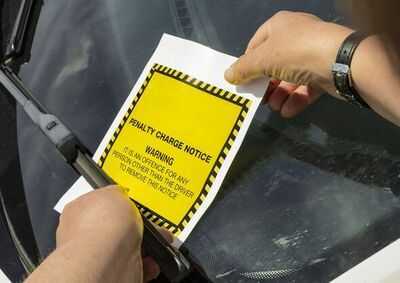
Drivers are reminded to take care when choosing a parking spot, as there are several lesser-known areas to avoid. Under the Highway Code, there are multiple places you cannot stop - and doing so could land you in trouble.
Finding a place to park or pull over in the UK can be easier said than done. With high traffic, especially during rush hour, and limited marked parking spaces, it can be frustrating.
On its website, the RAC compiled a list of all the places you can't park in the UK, based on the Highway Code. It acknowledged that finding a designated car park is best, but not always possible.
It said: "Of course, the most obvious place to park would be in a designated parking bay, either in a car park or at the side of the road.
"These will be marked by a large white 'P' on a blue background, usually alongside the parking area and on directional signage.
"Some parking bays will be free, while others will need to be paid for and some might have restrictions for what type of vehicle can park there. There may also be restrictions on time limits or exclusions for those without permits - it's always worth checking the signs for more information before leaving your car.
"Parking outside of a car park is sometimes the only resort, but can be a minefield if you don't know the rules - here we look at where you can and can't park and what time restrictions might apply."
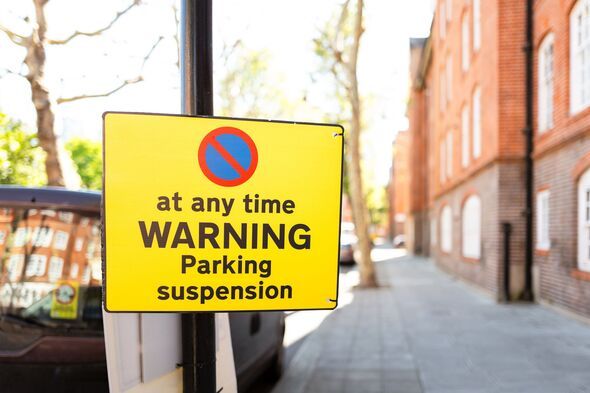
Firstly, the organisation shared some of the most obvious places you can't park, which might be accompanied by a warning sign. These include on double yellow lines, single yellow lines in certain times, and double red lines.
On top of this, you should also steer clear of clearways (marked by a red cross over a blue circle), loading bays, reserved spaces, yellow zig-zag lines (found outside schools, hospitals, or fire, police or ambulance stations), and white zig-zag lines. It also said that it's legal to park outside someone's house unless the vehicle is blocking a driveway or a wheel is over a dropped kerb.
Further to this, you "must not" park partially or wholly on the pavement in London and Scotland, and should not do elsewhere unless signs permit it. In other parts of the UK it is not an offence to do so but it is if you drive on the path.
In addition to the points above, The Highway Code tells us you must not stop or park in the following 18 locations, except when forced to do so by stationary traffic:
- Near a school entrance
- Anywhere that would prevent access for emergency vehicles
- On a bus or tram stop, or a taxi rank
- On the approach to a level crossing
- Opposite or within 32 feet of a junction, except in an authorised parking bay
- Near the brow of a hill or humpback bridge
- Opposite a traffic island or another parked vehicle (if it causes an obstruction)
- Where you would force another vehicle to enter a tram lane
- Where the kerb has been lowered to help wheelchair and mobility vehicle users
- In front of an entrance to a property
- On a bend
- Where you would obstruct a cycle lane
- A tram or cycle lane during its period of operation
- A cycle track
- A pedestrian crossing, including the area marked by the zig-zag lines
- On the carriageway or the hard shoulder of a motorway (except in an emergency)
- Taxi bays (as directed by the upright signs and road markings)
- A road marked with central double white lines, even if a broken white line is on your side of the road, except for dropping off, picking up, loading or unloading
While the Highway Code is not part of the law, you can be prosecuted for breaking the rules. The RAC said: "The Highway Code isn't the law, but many of its rules are in fact legal requirements under the Roads Traffic Act, which you can be prosecuted for contravening.
"You may be fined, given penalty points on your licence, disqualified from driving, or even sent to prison." For more information, visit the RAC website here.
-
As super 'El Nino' looms, wildfires are set to heat up

-
Poor supply a challenge as India aims to double use of scrap in steel production

-
Dubai tests digital property auctions as City Walk home sells in seven days

-
Dubai's hospitality sector is becoming more efficient — but is it becoming too lean?

-
Why India built the seat of Ghana's government and what that says about global relationships