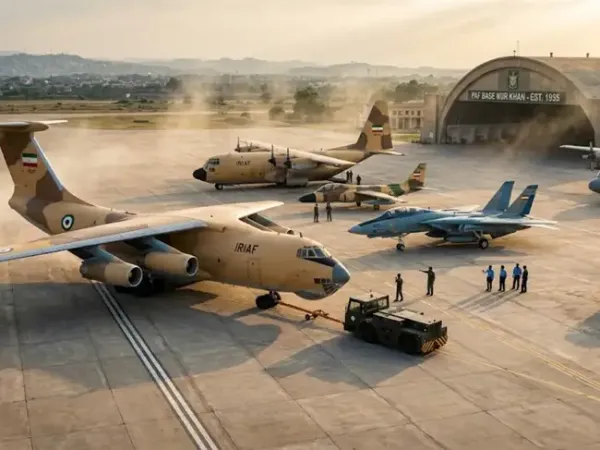
Pakistan has confirmed that Iranian military aircraft were present on its soil during the recent US–Iran conflict period, intensifying scrutiny over its role as a mediator between Washington and Tehran.
The acknowledgment follows reports alleging that Islamabad allowed Iranian aircraft to operate from strategic airbases, including Nur Khan Airbase, during the conflict. The controversy has raised questions over Pakistan’s claim of neutrality in facilitating dialogue between the two sides.
The controversy has triggered historical comparisons to 1971, when Iran, then under Shah Mohammad Reza Pahlavi, provided military assistance to Pakistan during the India–Pakistan war. At the time, Tehran supplied helicopters, fuel, ammunition, and spare parts, while some Pakistani aircraft reportedly took refuge at Iranian bases.
The episode occurred during a period when Iran and Pakistan were aligned within the CENTO alliance, part of a broader US-led containment strategy against Soviet influence.
“The Iranian aircraft currently parked in Pakistan arrived during the ceasefire period and bears no linkage whatsoever to any military contingency or preservation arrangement,” the statement said.
The clarification came after CBS News, citing US officials, reported that Iran had moved multiple military aircraft to Pakistan’s Nur Khan Airbase during the conflict, potentially to shield them from US strikes.
Beijing has publicly supported Pakistan’s role in facilitating indirect communication between Washington and Tehran, even as Islamabad maintains deep dependence on Chinese military equipment, reportedly accounting for the majority of its major arms imports in recent years.
At the same time, Pakistan continues to seek restored defence and intelligence ties with the United States, which have remained strained since the post-9/11 era and earlier disputes over militancy concerns.
The ministry added that some aircraft and support staff remained temporarily in Pakistan ahead of further rounds of engagement, describing the arrangement as logistical and administrative in nature.
However, it did not explain the prolonged presence of Iranian reconnaissance aircraft, including an RC-130 intelligence variant, at a high-security military facility.
Some officials reportedly believe Islamabad may have selectively conveyed positions between Washington and Tehran, raising doubts over the credibility of its mediation efforts.
Speaking during a Senate hearing, Graham said he did not trust Pakistan in this role if the reports proved accurate, arguing that the situation undermined ongoing diplomatic efforts.
US Defence Secretary Pete Hegseth and Chairman of the Joint Chiefs of Staff General Dan Caine declined to comment directly on the allegations, citing the sensitivity of ongoing negotiations.
However, longstanding mistrust in sections of the US security establishment continues to shadow these efforts, with references often made to past tensions, including the killing of Osama bin Laden in Pakistan in 2011 and allegations of inconsistent counterterror cooperation—claims Islamabad rejects.
The latest controversy has added to that skepticism. Senator Graham’s remarks reflect growing pressure in Washington for a reassessment of Pakistan’s role in sensitive diplomatic channels between the US and Iran, further complicating Islamabad’s balancing act between competing global powers.
The acknowledgment follows reports alleging that Islamabad allowed Iranian aircraft to operate from strategic airbases, including Nur Khan Airbase, during the conflict. The controversy has raised questions over Pakistan’s claim of neutrality in facilitating dialogue between the two sides.
The controversy has triggered historical comparisons to 1971, when Iran, then under Shah Mohammad Reza Pahlavi, provided military assistance to Pakistan during the India–Pakistan war. At the time, Tehran supplied helicopters, fuel, ammunition, and spare parts, while some Pakistani aircraft reportedly took refuge at Iranian bases.
Historical parallels revive geopolitical debate
Declassified Nixon-era documents later revealed that the United States quietly encouraged Iranian support for Pakistan, as Washington and its Cold War partners sought to prevent a collapse of Islamabad under pressure from India.The episode occurred during a period when Iran and Pakistan were aligned within the CENTO alliance, part of a broader US-led containment strategy against Soviet influence.
Foreign ministry rejects reports but confirms aircraft arrival
Pakistan’s Ministry of Foreign Affairs said on Tuesday it “categorically rejects” media reports suggesting Iranian aircraft were stationed for any military contingency. However, it confirmed that Iranian aircraft did arrive in the country during the ceasefire period.“The Iranian aircraft currently parked in Pakistan arrived during the ceasefire period and bears no linkage whatsoever to any military contingency or preservation arrangement,” the statement said.
The clarification came after CBS News, citing US officials, reported that Iran had moved multiple military aircraft to Pakistan’s Nur Khan Airbase during the conflict, potentially to shield them from US strikes.
Shift in regional alignments reshapes context
The present situation unfolds in a sharply altered geopolitical environment. Iran is now a principal adversary of the United States in West Asia, while Pakistan has emerged as one of China’s closest strategic partners in South Asia.Beijing has publicly supported Pakistan’s role in facilitating indirect communication between Washington and Tehran, even as Islamabad maintains deep dependence on Chinese military equipment, reportedly accounting for the majority of its major arms imports in recent years.
At the same time, Pakistan continues to seek restored defence and intelligence ties with the United States, which have remained strained since the post-9/11 era and earlier disputes over militancy concerns.
Aircraft presence linked to diplomatic coordination claims
According to Pakistan’s explanation, aircraft from Iran and the United States arrived in the country to support diplomatic processes, including the movement of personnel and administrative teams involved in negotiations.The ministry added that some aircraft and support staff remained temporarily in Pakistan ahead of further rounds of engagement, describing the arrangement as logistical and administrative in nature.
However, it did not explain the prolonged presence of Iranian reconnaissance aircraft, including an RC-130 intelligence variant, at a high-security military facility.
US concerns over Pakistan’s mediation role deepen
Reports from US media, including CNN, have indicated rising concern within sections of the US administration about Pakistan’s role as a mediator in US–Iran contacts.Some officials reportedly believe Islamabad may have selectively conveyed positions between Washington and Tehran, raising doubts over the credibility of its mediation efforts.
Political backlash in Washington
US Senator Lindsey Graham, a Republican, has called for a “complete reevaluation” of Pakistan’s role as a mediator, citing reports of Iranian aircraft being sheltered at Pakistani bases.Speaking during a Senate hearing, Graham said he did not trust Pakistan in this role if the reports proved accurate, arguing that the situation undermined ongoing diplomatic efforts.
US Defence Secretary Pete Hegseth and Chairman of the Joint Chiefs of Staff General Dan Caine declined to comment directly on the allegations, citing the sensitivity of ongoing negotiations.
Pakistan defends mediation efforts amid trust deficit
Pakistani officials have consistently portrayed engagement with Iran as part of efforts to promote regional stability, and have positioned themselves as one of the few countries maintaining working ties with both Tehran and Washington.However, longstanding mistrust in sections of the US security establishment continues to shadow these efforts, with references often made to past tensions, including the killing of Osama bin Laden in Pakistan in 2011 and allegations of inconsistent counterterror cooperation—claims Islamabad rejects.
The latest controversy has added to that skepticism. Senator Graham’s remarks reflect growing pressure in Washington for a reassessment of Pakistan’s role in sensitive diplomatic channels between the US and Iran, further complicating Islamabad’s balancing act between competing global powers.