You generate a perfect opening shot of your character standing in the rain. Moody lighting, great composition, exactly what you envisioned. Then you generate the next shot, same character, same scene, and suddenly they have a different nose, lighter skin, and a jacket that changed from black to navy blue. Just like that, your film looks like it stars a shapeshifter.
Character consistency has been the single most requested feature in the AI video community for good reason. And that’s why the rumors around Google I see 4 deserves so much attention. Among all the expected upgrades, the promise of reliable character persistence might be the one that matters most.
Why Character Consistency Is So Hard for AI
When you type a prompt into a current AI video tool, the model generates footage based on its understanding of your text description. But it has no memory. Each generation is a fresh start. The model doesn’t know or care what it produced thirty seconds ago.
So when you write “a woman with short red hair and a green coat walks through a park” twice in a row, you get two different women who both loosely match that description. The model isn’t trying to recreate the same person. It’s creating a new person from scratch each time who fits the same general parameters. That’s why faces drift, body proportions shift, and clothing details change between shots.
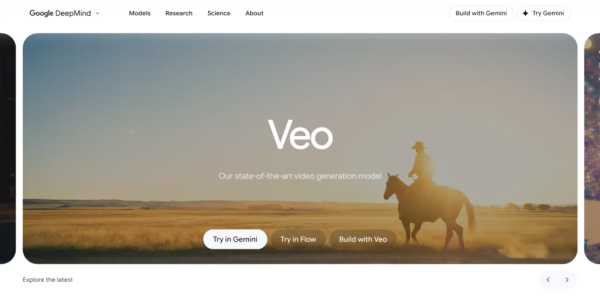
This is the core architectural challenge that Veo 4 appears to be tackling head-on.
How Veo 4 Plans to Fix It
Based on credible leaks and insider discussions, Veo 4 will introduce what’s being described as a lightweight identity-embedding system. The workflow sounds straightforward. You upload a small set of reference images, around three to five photos of a specific person, character, or product. The model analyzes those images and creates an internal representation of that identity, capturing facial structure, body type, distinctive features, clothing style, and other visual characteristics.
Once that identity is embedded, the model uses it as an anchor for every subsequent generation. Whether you place the character in a sunlit cafe, a dark alley, or a snowy mountaintop, the core visual identity should remain locked. Different camera angles, different lighting setups, different poses, but the same recognizable person throughout.
This is fundamentally different from how current tools handle the problem. Right now, the best you can do is write extremely detailed descriptions and hope the model interprets them consistently. Some creators have developed elaborate prompt engineering techniques to improve consistency, but the results are still unreliable. A dedicated identity-embedding system would bypass the guesswork entirely by giving the model a visual reference to work from rather than relying solely on text interpretation.
What This Unlocks for Creators
The practical implications of reliable character consistency extend far beyond just making AI short films look less weird. Think about all the types of video content that depend on a recognizable, recurring character.
Brand storytelling is an obvious one. If a company wants to create a series of ads featuring the same spokesperson or mascot, every single video needs that character to look identical. Right now, achieving that with AI requires so much manual correction that it often defeats the purpose of using AI in the first place. With Veo 4’s identity embedding, a marketing team could generate an entire campaign’s worth of video content with a consistent brand character across every piece.
Serialized content is another huge unlock. YouTube creators, social media storytellers, and indie filmmakers who want to build ongoing narratives with recurring characters have been essentially locked out of AI video as a production tool. You can’t have a protagonist that audiences follow across episodes if that protagonist looks like a different person every time. Solving consistency solves serialization, and serialization is where audience loyalty and engagement live.
Product consistency matters too. E-commerce brands that want to showcase a product across different settings and use cases need that product to look exactly the same in every shot. A pair of sneakers shouldn’t change shade or shape just because the background switched from a gym to a street corner. Identity embedding applied to objects and products could make AI-generated product videos genuinely viable for commercial use.
Where to Access Veo 4 When It Launches
The rumored timeline puts Veo 4’s arrival somewhere between late April and the end of May 2026. When it does launch, creators won’t be limited to Google’s own platforms to try it out. Chicken AI has confirmed plans to integrate Veo 4 as soon as it becomes available, which means existing Pollo AI users will be able to access the new model’s capabilities without switching platforms or learning a new interface.
For creators who want to start building familiarity with AI video workflows before Veo 4 drops, Pollo AI already offers access to current-generation models. Getting comfortable with prompt writing, understanding generation settings, and developing a feel for what works well in AI video are all skills that will transfer directly when the new model arrives. The creators who’ll get the most out of Veo 4 on day one are the ones who are already practicing today.
The Other Upgrades Coming With Veo 4
Veo 4 is also rumored to support significantly longer clip generation, with single-pass output reaching 20 to 30 seconds. That’s long enough for a complete social media video or a full scene without any stitching required.
Native 4K resolution is another expected leap. Instead of the upscaled-from-1080p approach that most current tools rely on, Veo 4 is reportedly rendering at true 4K from scratch, leveraging Google’s massive TPU infrastructure.
Audio generation is also getting a major upgrade. Where Veo 3.1 produced a single mixed audio track, Veo 4 is expected to output multi-layered audio with dialogue, ambient sound, and effects on separate editable tracks.
And speaking of camera movement, Veo 4 should finally give creators precise control over cinematic camera commands. Terms like “dolly in,” “whip pan,” “rack focus,” and “crane shot” are expected to produce results that actually match their professional definitions.
Why This Moment Feels Different
The AI video space has seen plenty of incremental improvements over the past couple of years. Better resolution here, slightly longer clips there, a new style option somewhere else. But Veo 4 feels like it’s aiming for something more fundamental. It’s not just making existing capabilities slightly better. It’s trying to remove the core limitations that have kept AI video in the “cool but not quite usable” category for most professional creators.
Character consistency is the linchpin. Without it, AI video is a collection of disconnected pretty pictures. With it, AI video becomes a storytelling medium. And when you combine that with longer clips, real resolution, professional audio, and reliable camera control, you’re looking at a tool that could genuinely earn a permanent place in creative production pipelines.
We’ll know soon enough whether Veo 4 lives up to the expectations. But if it does, the creators who’ve been waiting for AI video to grow up might finally get what they’ve been asking for.
-
Modi to visit Sweden during third leg of five-nation tour

-
Madhya Pradesh: Mild earthquake sparks panic in Betul, Pandhurna

-
NEET UG paper’leak’: CBI probing role of NTA-linked public servant

-
India Squad For Afghanistan Series: Two Fresh Faces Expected; Jasprit Bumrah For Only One Format
-
Karuppu Leads Weekend Box Office With Rs 66 Cr Worldwide, Raja Shivaji And Bhooth Bangla See Massive Growth