
New Delhi: One 97 Communications, the parent company of Paytm, has emerged as one of the fastest-growing major players on India’s Unified Payments Interface (UPI) network, reporting growth that is more than double the industry average. The company’s latest Q4 FY26 earnings highlight a strong comeback, backed by artificial intelligence (AI)-driven innovation, deeper customer engagement and a strategic focus on high-quality users.
Strong UPI growth outpaces industry trends
In its Q4 FY26 earnings release, Paytm reported that its consumer UPI gross transaction value (GTV) rose 46 per cent year-on-year to Rs 5.5 lakh crore in the March quarter. This significantly outpaced the broader UPI industry growth rate of 21 per cent during the same period.
The company has also recorded consistent gains in its market share throughout FY26, marking a 12-month streak of growth — a performance that sets it apart in an increasingly competitive digital payments ecosystem.
Monthly transacting users (MTUs) on the platform increased by 50 lakh year-on-year to reach 7.7 crore. This indicates that Paytm is not only adding new users but is also improving engagement among its existing customer base.
AI-led innovation driving user engagement
A key driver behind Paytm’s resurgence has been its sustained investment in AI-led product innovation. Over the past year, the company has introduced a range of new features aimed at enhancing user experience and increasing transaction frequency.
These include tools such as a built-in calculator, payment reminders, hidden payment options and AI-powered insights like the Monthly AI Spend Summary. Such features are designed to simplify everyday financial tasks and encourage repeat usage.
Additionally, Paytm has integrated AI across its platform to enable smarter transaction searches, automatic expense categorisation, contextual reminders for recurring payments and improved fraud detection mechanisms. The in-app assistant has also been enhanced to deliver quicker and more personalised responses.
According to the company, these innovations are beginning to translate into measurable gains in both market share and monetisation, with the full impact expected to become more visible in FY27.
Focus shifts to high-quality users
Unlike earlier phases where user acquisition was driven by scale, Paytm is now prioritising the quality of its user base. The company is focusing on customers who transact more frequently and engage more deeply across its ecosystem.
Paytm President and Group CFO Madhur Deora emphasised that the company’s market share gains are outpacing its user growth, indicating stronger engagement rather than just an increase in downloads.
This shift reflects a broader strategic move in the fintech sector, where sustained usage and customer lifetime value are becoming more important than headline user numbers.
Driving higher monetisation per user
With a more engaged user base, Paytm is increasingly focusing on improving monetisation per customer. The company is leveraging its platform to cross-sell a variety of financial services, including credit products and wealth management offerings.
Services such as Paytm Postpaid, personal loans, equity broking, mutual fund SIPs and digital gold investments are being actively promoted to users who demonstrate higher engagement levels.
Founder and CEO Vijay Shekhar Sharma noted that growth in transaction value is not solely driven by an increase in users, but also by higher usage among existing customers. He highlighted that long-tenured users are showing stronger financial activity, including increased credit usage.
Paytm reported a 36 per cent rise in the number of users availing financial services, adding 2 lakh customers to reach a total base of 7.5 lakh by the end of the March quarter. Revenue from financial services distribution also grew 38 per cent to Rs 750 crore in Q4 FY26.
Profitability and outlook strengthen investor confidence
The company’s improved operational performance has also translated into profitability gains. Paytm reported its first full-year profit of Rs 552 crore in FY26, marking a significant milestone in its turnaround journey.
Global brokerage firms such as Bernstein, Goldman Sachs, Citi and Jefferies have maintained positive ratings on the stock following the March quarter results. Analysts have highlighted revenue growth, improving margins in the core payments business and better operating leverage as key strengths.
Paytm has indicated that its continued investment in AI is expected to further enhance efficiency. The company projects that revenue and contribution profit will grow at a faster pace than indirect expenses, leading to expansion in EBITDA margins.
Conclusion: A data-driven comeback story
Paytm’s recent performance signals a shift from aggressive expansion to sustainable, quality-driven growth. By focusing on AI-led innovation, deeper engagement and higher monetisation, the company appears to be strengthening its position in India’s digital payments landscape.
While competition remains intense, Paytm’s ability to consistently gain market share and deliver profitability suggests that its strategy is beginning to yield results. If the current momentum continues, the fintech major could further consolidate its standing in the evolving UPI ecosystem.
-
Canvas Strikes Deal With Hackers To Delete Stolen Data After Cyberattack

-
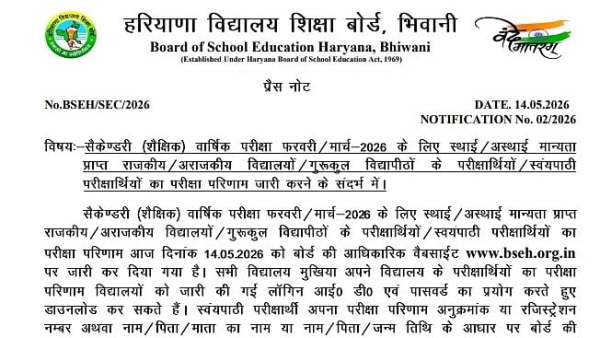
HBSE Class 10 Result 2026 Out; Rechecking And Re-evaluation Window Opens At bseh.org.in; Apply Within 20 Days
-
UAE moon sighting on May 17: When is Eid Al Adha 2026; what astronomy centre says

-
Princess Kate's handbag cost £4k but we found similar for under £100

-
Corbyn slammed for 'snippy' Sky News interview as he refuses to back Burnham