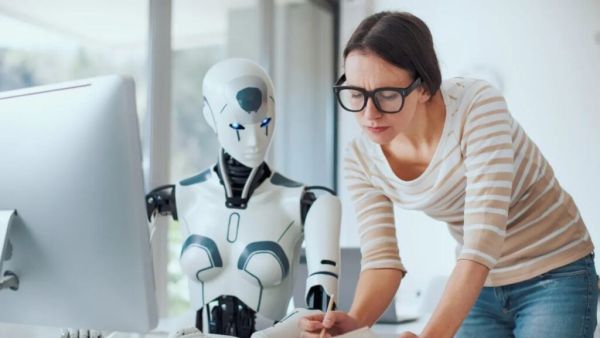
Artificial intelligence has made it easier than ever to create output.
Emails can be drafted in seconds. Meeting notes can be summarized automatically. Research can be pulled together faster than before. Documents, reports, briefs, and proposals can now move from blank page to usable draft with far less manual effort.
But the executive workload has not disappeared.
In many cases, it has simply moved.
The bottleneck for CEOs and founders is no longer only task execution. It is context. Someone still has to decide which email matters, which meeting should move, which investor needs a faster reply, which document is ready to send, which travel change is urgent, and which AI-generated output is accurate enough to trust.
That layer of work is not easily automated.
The hidden work AI does not fully remove
The modern executive day is built around coordination.
Inbox management, calendar decisions, meeting preparation, travel changes, stakeholder follow-ups, internal reminders, document review, and operational handoffs all sit around the CEO. These are not always complex tasks individually, but together they create a constant stream of small decisions.
AI can support parts of that work. It can summarize threads, draft replies, extract action items, and speed up research. But it does not naturally have its own responsibility.
It does not understand the full political context behind a board email. It does not know which client expects a warmer tone. It does not automatically understand which meeting can be moved and which one would create relationship damage if rescheduled. It cannot reliably judge when a founder needs to be protected from interruptions or when a fast response is commercially important.
That is why the next productivity shift may not be AI replacing assistants.
It may be assistants becoming stronger operators because of AI.
The role is shifting from task support to workflow ownership
For years, virtual assistant services were often framed as a cheaper way to outsource admin tasks. That model worked well for narrow, repeatable work: data entry, basic scheduling, research lists, travel booking, or simple inbox cleanup.
The current environment is different.
Executives are not just trying to reduce admin. They are trying to reduce cognitive load. They need someone who understands the operating system around their work: what needs attention, what can wait, what needs preparation, and what should never reach the CEO in the first place.
That is where the assistant role starts to move closer to workflow ownership.
A strong executive assistant does not simply wait for instructions. They manage the surrounding system. They coordinate the calendar, track follow-ups, prepare context before meetings, keep communication moving, and use tools to make the entire workflow faster.
AI helps with speed. Human judgment helps with direction.
The combination matters.
Why this matters more for UK and European executives
For UK and European CEOs, the issue is not only whether an assistant can use AI tools. Time-zone alignment and business-context alignment still matter.
An assistant handling inbox, calendar, travel, and stakeholder communication often needs to operate during the same working day as the executive. If support happens only overnight, many decisions still come back to the CEO during the day.
That creates friction.
A delayed reply to an investor, a late calendar update, or a travel issue handled after business hours can create more work rather than less. For executives who need real-time support, the lowest-cost model is not always the lowest-friction model.
This is one reason companies offering managed executive support are beginning to position themselves differently from traditional task-based VA platforms.
DonnaPro, for example, positions its virtual executive assistant model around real human assistants who use AI tools while still owning the judgment-heavy work around a CEO’s day. Its UK-focused service also frames the company as a UK virtual assistant agency for CEOs and founders who need inbox, calendar, travel, and follow-up support during their working day. DonnaPro’s current service pages state that its assistants are EU-based, work UK hours, are trained on AI tools, and support executive workflows such as inbox, calendar, travel, research, and stakeholder communication.
AI creates more leverage, but also more noise
There is another issue emerging.
AI does not only reduce work. It can also increase the volume of work moving through a company. More drafts get created. More summaries are produced. More ideas move faster. More people can send more polished communication with less effort.
For a CEO, that can mean more inputs, not fewer.
The inbox may become cleaner in appearance but heavier in volume. Meetings may be easier to summarize but still require decisions. Research may be faster to generate but still needs interpretation. A calendar may be easier to automate but harder to prioritize.
This is where human operators remain important.
The value is not just doing the task. The value is deciding what should happen next.
The market may be underestimating the human layer
Much of the AI conversation focuses on software. That is understandable. Tools are visible, scalable, and easy to compare.
But executive productivity is not only a software problem.
It is an operating problem.
A CEO can buy more tools and still remain the bottleneck if no one owns the workflows around those tools. An AI assistant can draft an email, but someone still has to know whether it should be sent, softened, escalated, delayed, or rewritten. A scheduling tool can find openings, but someone still has to know which meeting deserves priority.
The companies that win this next phase of productivity may not be the ones that remove humans from the loop entirely. They may be the ones that use AI to make capable humans faster, more consistent, and better supported.
For executives, that changes the buying question.
It is no longer just, “Which AI tool should we use?”
It becomes, “Who owns the work after the tool produces the output?”
That distinction is likely to matter more as AI becomes standard across every company. When everyone has access to faster tools, the advantage shifts back to judgment, context, trust, and execution.
AI can accelerate the work.
But someone still has to manage what the work means.
-
Princess Eugenie delivered another major blow after announcing third pregnancy
-
Princess Eugenie delivered another major blow after announcing third pregnancy
-
Rory McIlroy ready to take drastic action as he discusses PGA Championship injury scare
-
Princess Kate opens up about beloved family member after 'sad' passing
-
Princess Kate opens up about beloved family member after 'sad' passing