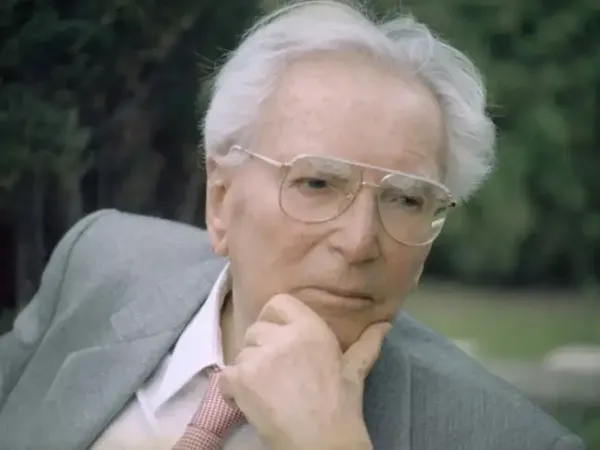
People often chase promotions, recognition, wealth, or the perfect life, believing they will feel content once they “make it.” But one of the world’s most influential psychiatrists believed the harder people chase these things directly, the further they drift away. His words, shaped not by comfort but by unimaginable suffering and survival, continue to resonate decades later. Even today, his philosophy feels strikingly relevant in a world obsessed with achievement, validation, and constant comparison.
Viktor Frankl was born in Vienna in 1905. He was not just a psychiatrist and philosopher but also the founder of logotherapy, a school of thought that centred around one powerful idea: human beings are driven primarily by a search for meaning. According to Frankl, meaning gives people direction during both ordinary life and extreme suffering. This belief came from his lived experiences.
Quote of the day by Viktor Frankl
One of his most remembered reflections explored the modern obsession with happiness and success. Frankl argued that people often lose both when they make them the central goal of life. In his words, people should not “aim at success” because the more they chase it directly and turn it into a target, the more likely they are to miss it.
He believed that success and happiness are not things that can be forced. Instead, they emerge naturally as side effects of living with purpose, dedicating oneself to meaningful work, or caring deeply about something beyond personal gain. He described happiness as something that “must happen” rather than something manufactured through constant pursuit.
Frankl further explained that people should focus less on obsessing over outcomes and more on listening to their conscience, doing meaningful work sincerely, and carrying it out to the best of their ability. According to him, in the long run, success eventually follows those who stop constantly thinking about it. What made Frankl’s philosophy so powerful was the life he lived before writing these ideas.
About Viktor Frankl
During the Holocaust, Frankl and his family were sent to Nazi concentration camps. In 1942, they were deported to the Theresienstadt camp. His father died there. Later, in 1944, Frankl, his mother, and his wife were moved to Auschwitz. His mother was murdered, and his wife died shortly afterwards.
Frankl survived years of unimaginable brutality, starvation, despair, and loss. While imprisoned, he observed how prisoners who found even the smallest sense of meaning or hope often had a greater ability to mentally survive the horrors around them. These experiences later became the foundation of his psychological philosophy.
In 1945, Frankl returned to Vienna carrying devastating grief but also a profound understanding of human resilience. Soon after, he wrote the book Man's Search for Meaning, which would go on to become one of the most influential books in psychology and personal development.
In the book, Frankl documented life inside concentration camps, the hopelessness many prisoners experienced, and his belief that meaning could help people endure even the darkest circumstances. The work continues to inspire readers across generations because it does not offer shallow optimism. Instead, it speaks honestly about suffering while insisting that purpose can still exist within it.
His theory
Frankl’s theory of logotherapy later became known as the third school of Viennese psychotherapy after the approaches developed by Sigmund Freud and Alfred Adler.
Over his lifetime, Frankl wrote 39 books and became one of the most respected voices in existential psychology. Yet, among all his teachings, his reflections on happiness and success remain some of the most timeless. In an age where people constantly measure themselves against milestones, social media achievements, and societal expectations, Frankl’s message offers a quieter but deeper perspective: fulfillment often arrives when life stops revolving entirely around the pursuit of it.
Viktor Frankl was born in Vienna in 1905. He was not just a psychiatrist and philosopher but also the founder of logotherapy, a school of thought that centred around one powerful idea: human beings are driven primarily by a search for meaning. According to Frankl, meaning gives people direction during both ordinary life and extreme suffering. This belief came from his lived experiences.
Quote of the day by Viktor Frankl
One of his most remembered reflections explored the modern obsession with happiness and success. Frankl argued that people often lose both when they make them the central goal of life. In his words, people should not “aim at success” because the more they chase it directly and turn it into a target, the more likely they are to miss it.He believed that success and happiness are not things that can be forced. Instead, they emerge naturally as side effects of living with purpose, dedicating oneself to meaningful work, or caring deeply about something beyond personal gain. He described happiness as something that “must happen” rather than something manufactured through constant pursuit.
Frankl further explained that people should focus less on obsessing over outcomes and more on listening to their conscience, doing meaningful work sincerely, and carrying it out to the best of their ability. According to him, in the long run, success eventually follows those who stop constantly thinking about it. What made Frankl’s philosophy so powerful was the life he lived before writing these ideas.
The meaning of the quote of the day by Viktor Frankl
Viktor Frankl believed that success and happiness can not be forced or chased directly. According to him, people often become unhappy when they obsess over achievements, recognition, or outcomes. Instead, real fulfilment comes naturally when a person dedicates themselves to meaningful work, relationships, or a purpose greater than personal gain. His quote suggests that people should focus on living sincerely, following their conscience, and giving their best effort rather than constantly measuring success. Ironically, when people stop obsessing over happiness or success, they are more likely to experience both genuinely and deeply as a natural result of a meaningful life.About Viktor Frankl
During the Holocaust, Frankl and his family were sent to Nazi concentration camps. In 1942, they were deported to the Theresienstadt camp. His father died there. Later, in 1944, Frankl, his mother, and his wife were moved to Auschwitz. His mother was murdered, and his wife died shortly afterwards.Frankl survived years of unimaginable brutality, starvation, despair, and loss. While imprisoned, he observed how prisoners who found even the smallest sense of meaning or hope often had a greater ability to mentally survive the horrors around them. These experiences later became the foundation of his psychological philosophy.
In 1945, Frankl returned to Vienna carrying devastating grief but also a profound understanding of human resilience. Soon after, he wrote the book Man's Search for Meaning, which would go on to become one of the most influential books in psychology and personal development.
In the book, Frankl documented life inside concentration camps, the hopelessness many prisoners experienced, and his belief that meaning could help people endure even the darkest circumstances. The work continues to inspire readers across generations because it does not offer shallow optimism. Instead, it speaks honestly about suffering while insisting that purpose can still exist within it.
His theory
Frankl’s theory of logotherapy later became known as the third school of Viennese psychotherapy after the approaches developed by Sigmund Freud and Alfred Adler.Over his lifetime, Frankl wrote 39 books and became one of the most respected voices in existential psychology. Yet, among all his teachings, his reflections on happiness and success remain some of the most timeless. In an age where people constantly measure themselves against milestones, social media achievements, and societal expectations, Frankl’s message offers a quieter but deeper perspective: fulfillment often arrives when life stops revolving entirely around the pursuit of it.