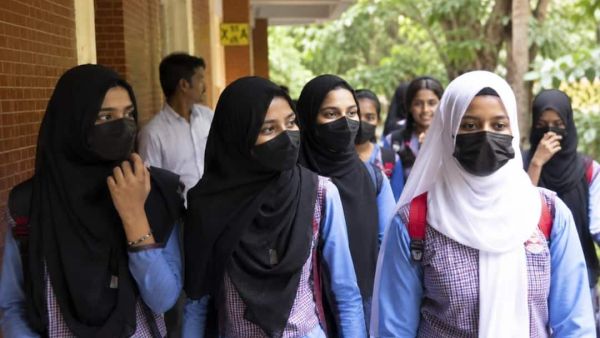
The Karnataka government has withdrawn its controversial 2022 order on dress code restrictions in schools and colleges, allowing students to wear “limited traditional and religious symbols” along with prescribed uniforms. Under the revised guidelines, students will now be permitted to wear hijabs, turbans, janivara (sacred thread), Shivadhara and Rudraksha, provided these do not alter the core identity of the uniform. The government said the move aims to balance institutional discipline with constitutional secularism and ensure that no student is denied education because of personal faith or cultural identity.
New Rules
The fresh guidelines make school and college uniforms mandatory but clarify that religious and traditional symbols can be worn as supplementary items. The state government said these additions must not disturb the uniformity or discipline of educational institutions.
Authorities have also directed institutions not to deny entry to classrooms or examination halls to students wearing permitted religious symbols. At the same time, the government stressed that no student should be forced either to wear or remove such symbols against their will.
The revised order will come into immediate effect across Karnataka and automatically override all earlier institutional directives or local resolutions that contradict the new policy.
Kerala CM Deadlock Nears End, Congress To Announce Final Decision Tomorrow
Secularism Explained
In its order, the government referred to the Karnataka Education Act, 1983, saying the state has the authority to maintain discipline in educational institutions. However, it added that schools and colleges must also uphold a secular and inclusive atmosphere.
The order stated that constitutional secularism does not mean opposition to personal religious beliefs, but rather institutional neutrality and non-discrimination. It also cited social reformer Basavanna’s principles of “Iva Nammava”-meaning “he is one of us”-to underline that no student should be excluded from education on the basis of identity or belief.
The government clarified that special dress code regulations imposed during national or state-level examinations may continue separately.
Officials from the School Education Department and Pre-University Education Directorate have been tasked with ensuring uniform implementation of the policy across the state without discrimination.
Chennai-Abu Dhabi Flight Carrying 280 Passengers Grounded After 'Fire' Breaks Out On Wing
-
Trainer aircraft of private firm crash-lands in Maharashtra's Baramati; pilot safe

-
Avoid using four-wheelers every Wednesday: Chandigarh Administrator Kataria to UT officials

-
Device with low-grade explosives found inside private hospital in Pune; ATS joins probe

-
33 killed as strong storm, rains lash various UP districts; CM orders relief, compensation measures

-
Uttarakhand HC expresses displeasure over delay in Lokayukta appointment