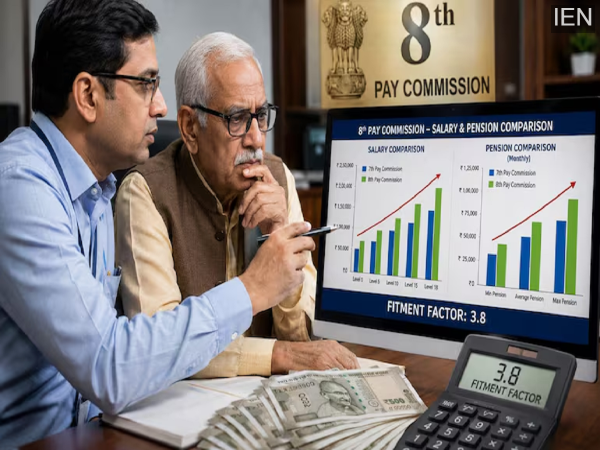
The 8th Central Pay Commission has started a major round of discussions with representatives from the defence and railway sectors, raising fresh hopes among lakhs of central government employees and pensioners waiting for salary and pension revisions. The high-level meeting began in Delhi on May 13 and is scheduled to continue on May 14 as well.
The commission is now directly interacting with employee unions, departmental bodies, and stakeholder groups to understand their concerns and expectations before finalizing its recommendations to the government. The discussions are expected to focus heavily on salary structure revisions, allowances, pension benefits, service conditions, and the future formula for pay hikes.
Why These Meetings Matter
This is considered one of the most important phases of the 8th Pay Commission process because the panel has started gathering ground-level feedback directly from employees and pension representatives.
Defence personnel and railway employees form one of the largest sections of the central workforce. Their demands regarding pay parity, pension revision, hardship allowances, and inflation adjustments are likely to play a major role in shaping the commission’s final recommendations.
Employee unions are reportedly pushing for major changes in the existing salary framework, arguing that rising inflation and living expenses have significantly reduced purchasing power over the past few years.
When Will the 8th Pay Commission Report Arrive?
One of the biggest questions among central employees remains the timeline for salary revision implementation. According to the current schedule, the government has reportedly given the commission 18 months to submit its recommendations.
There is also speculation that if the final report gets delayed, the commission may submit an interim report to provide temporary relief to employees and pensioners before the complete recommendations are finalized.
Major Factors the Commission Will Consider
The commission is not expected to make recommendations solely based on employee demands. Several broader economic and fiscal factors will also influence the final outcome.
The panel is likely to examine:
- The government’s financial position and fiscal discipline
- Rising pension liabilities
- Balance between public and private sector salaries
- Inflation and cost-of-living pressures
- Long-term impact on state government finances
- Availability of funds for development and welfare spending
Officials believe the commission will try to strike a balance between improving employee salaries and protecting the country’s financial stability.
Demand to Raise Minimum Basic Salary to ₹65,000
Employee organizations have reportedly placed a strong demand before the commission to increase the minimum basic pay from the current ₹18,000 to ₹65,000.
According to pension and employee groups, the existing salary structure is no longer sufficient to meet the needs of an average family amid rising inflation. They have cited the Aykroyd Formula and changing economic conditions to justify the proposed hike.
If accepted even partially, this could become one of the biggest salary revisions in recent pay commission history.
Fitment Factor Proposal Creates Buzz
Another major discussion point is the proposed increase in the fitment factor from 2.57 to 3.8. Employee representatives believe a higher fitment factor would lead to a meaningful rise in salaries, pensions, and allowances while improving employees’ purchasing power.
The fitment factor is considered one of the most crucial components of any pay commission because it directly determines how much salaries increase after revision.
Demand for Higher DA and Automatic Merger
Several organizations have also demanded that Dearness Allowance (DA) should increase by at least 4% during every six-month revision cycle. They argue that the current system often fails to match real inflation levels.
Another key proposal suggests that once DA touches the 50% mark, it should automatically merge with the basic salary. If implemented, this would significantly increase the basic pay structure and positively affect future allowances and pension calculations.
Push for Bigger Annual Increment and HRA Revision
Employee bodies have also proposed increasing the annual increment rate from 3% to 5%. In addition, they have recommended rounding off revised salaries to the nearest ₹1,000 to simplify the pay structure.
Housing benefits are also under discussion. Organizations are seeking higher House Rent Allowance (HRA) rates for X, Y, and Z category cities. The current rates of 10%, 20%, and 30% are proposed to be increased to 12%, 24%, and 36% respectively.
Millions of Employees Watching Closely
The ongoing meetings in Delhi have significantly raised expectations among central government employees, pensioners, railway staff, and defence personnel across the country.
While no final decision has been announced yet, these discussions are expected to play a major role in determining how salaries, pensions, allowances, and retirement benefits may change under the 8th Pay Commission framework in the coming years.
-
Princess Eugenie delivered another major blow after announcing third pregnancy
-
Princess Eugenie delivered another major blow after announcing third pregnancy
-
Rory McIlroy ready to take drastic action as he discusses PGA Championship injury scare
-
Princess Kate opens up about beloved family member after 'sad' passing
-
Princess Kate opens up about beloved family member after 'sad' passing