Nothing feels more refreshing during peak summer than biting into a cold, juicy watermelon. Packed with water, vitamins, and antioxidants, it’s one of the season’s most-loved fruits. But with watermelon demand soaring during hot weather, concerns around artificial colouring and chemical adulteration are also growing.
According to the Food Safety and Standards Authority of India, some sellers may use unsafe dyes to make watermelons appear brighter red and fresher than they actually are. One of the most commonly reported adulterants is erythrosine, a synthetic colouring agent that can potentially affect health if consumed in large amounts over time.
That is why food safety experts recommend checking watermelon properly before eating it.
Why Watermelon Adulteration Is Becoming a Concern
Watermelon naturally contains around 90% water and is known for its hydrating and cooling properties during summer. It is also rich in vitamins A and C and contains antioxidants like lycopene, which may support heart health and help protect cells from damage.
However, to make the fruit look more visually appealing, some traders allegedly inject or coat watermelons with artificial red dyes to enhance colour and freshness.
This can make chemically treated fruits difficult to identify just by looking at them from the outside.
Simple Cotton Ball Test Recommended by FSSAI
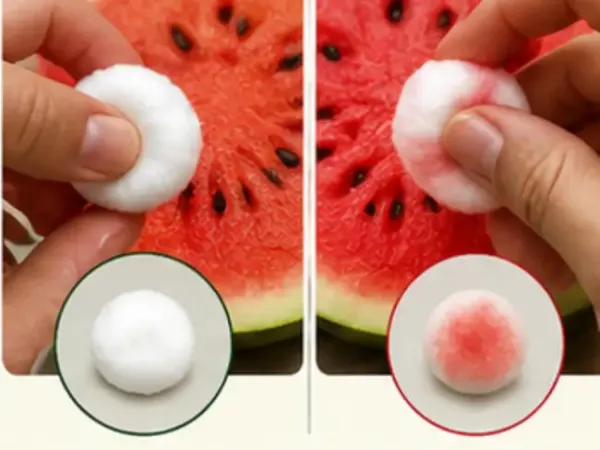
One of the easiest ways to check whether a watermelon has been artificially coloured is by using a cotton ball.
To do this, cut the watermelon into two halves and gently rub a clean cotton ball over the red flesh inside. If the cotton remains unchanged, the watermelon is likely natural and safe.
However, if the cotton ball starts turning red or pink, it may indicate the presence of artificial colouring agents like erythrosine.
This quick test has become widely shared online because it takes only a few seconds and can help detect suspicious colouring.
What Is Erythrosine and Why Can It Be Harmful?
Erythrosine, also known as Red No. 3 or E127, is a synthetic food dye commonly used to give foods a bright red or pink appearance. It is often used in processed foods, sweets, beverages, and sometimes illegally on fruits to improve appearance.
Health experts say occasional small exposure may not always be dangerous, but excessive consumption over time could potentially impact the thyroid gland and hormone function.
Some studies have also linked high intake of artificial food dyes to hyperactivity and attention-related issues in children. In sensitive individuals, it may also trigger itching, rashes, or allergic reactions.
Try the Water Test at Home
Another easy way to check your watermelon is through a simple water test.
Take a small portion of the red pulp and place it into a glass of plain water. If the water quickly changes colour or turns reddish, it could mean the fruit has been treated with artificial dye.
Naturally ripened watermelon usually does not release strong colour into water instantly.
This method is often considered one of the easiest home checks during summer when watermelon consumption increases sharply.
Don’t Ignore the Seeds
Even the seeds can offer clues about whether the fruit is natural or tampered with.
In most watermelon varieties, healthy seeds are black, dark brown, or off-white depending on the type. If you notice unusually red or pink-coloured seeds, it could signal that artificial colouring has seeped into the fruit.
While it may seem like a small detail, food safety experts say unusual seed colour can sometimes point towards adulteration.
Why Food Safety Checks Matter During Summer
As temperatures rise, fruits like watermelon become a daily staple in many households. But with increased seasonal demand often comes the risk of shortcuts and artificial treatments in the market.
Simple home checks like the cotton test, water test, and seed inspection can help consumers make safer choices and avoid chemically treated fruits.
A few extra seconds before eating could make all the difference to your summer health.
Inputs from TOI
According to the Food Safety and Standards Authority of India, some sellers may use unsafe dyes to make watermelons appear brighter red and fresher than they actually are. One of the most commonly reported adulterants is erythrosine, a synthetic colouring agent that can potentially affect health if consumed in large amounts over time.
That is why food safety experts recommend checking watermelon properly before eating it.
Why Watermelon Adulteration Is Becoming a Concern
Watermelon naturally contains around 90% water and is known for its hydrating and cooling properties during summer. It is also rich in vitamins A and C and contains antioxidants like lycopene, which may support heart health and help protect cells from damage.However, to make the fruit look more visually appealing, some traders allegedly inject or coat watermelons with artificial red dyes to enhance colour and freshness.
This can make chemically treated fruits difficult to identify just by looking at them from the outside.
Simple Cotton Ball Test Recommended by FSSAI
One of the easiest ways to check whether a watermelon has been artificially coloured is by using a cotton ball.To do this, cut the watermelon into two halves and gently rub a clean cotton ball over the red flesh inside. If the cotton remains unchanged, the watermelon is likely natural and safe.
However, if the cotton ball starts turning red or pink, it may indicate the presence of artificial colouring agents like erythrosine.
This quick test has become widely shared online because it takes only a few seconds and can help detect suspicious colouring.
What Is Erythrosine and Why Can It Be Harmful?
Erythrosine, also known as Red No. 3 or E127, is a synthetic food dye commonly used to give foods a bright red or pink appearance. It is often used in processed foods, sweets, beverages, and sometimes illegally on fruits to improve appearance.Health experts say occasional small exposure may not always be dangerous, but excessive consumption over time could potentially impact the thyroid gland and hormone function.
Some studies have also linked high intake of artificial food dyes to hyperactivity and attention-related issues in children. In sensitive individuals, it may also trigger itching, rashes, or allergic reactions.
Try the Water Test at Home
Another easy way to check your watermelon is through a simple water test.Take a small portion of the red pulp and place it into a glass of plain water. If the water quickly changes colour or turns reddish, it could mean the fruit has been treated with artificial dye.
Naturally ripened watermelon usually does not release strong colour into water instantly.
This method is often considered one of the easiest home checks during summer when watermelon consumption increases sharply.
Don’t Ignore the Seeds
Even the seeds can offer clues about whether the fruit is natural or tampered with.In most watermelon varieties, healthy seeds are black, dark brown, or off-white depending on the type. If you notice unusually red or pink-coloured seeds, it could signal that artificial colouring has seeped into the fruit.
While it may seem like a small detail, food safety experts say unusual seed colour can sometimes point towards adulteration.
Why Food Safety Checks Matter During Summer
As temperatures rise, fruits like watermelon become a daily staple in many households. But with increased seasonal demand often comes the risk of shortcuts and artificial treatments in the market.Simple home checks like the cotton test, water test, and seed inspection can help consumers make safer choices and avoid chemically treated fruits.
A few extra seconds before eating could make all the difference to your summer health.
Inputs from TOI