PM's appeal revives tram debate: “Not obsolete, just underutilised”
ETimes | May 14, 2026 5:39 PM CST

Kolkata’s tram system is back in focus, driven by both policy contradictions and rising public interest. Once dismissed as outdated, trams are now being reconsidered as a low-cost, sustainable option in a city facing congestion and growing fuel dependence. Following Prime Minister Narendra Modi’s call to conserve fuel and rethink mobility, residents, planners and transport advocates are revisiting trams not as nostalgia, but as a viable part of the city’s transport mix. “There is a visible shift,” says Dr. Debasish Bhattacharyya of the Calcutta Tram Users Association. “People are talking about trams not just as heritage, but as a sustainable and economical mode of transport.”The renewed interest, however, raises a key question: if trams still make sense, why have they nearly disappeared?
‘ Years of shrinking routes and unclear policy’ For those closely tracking the system, the answer lies in years of erosion. “This didn’t happen overnight , Kolkata’s trams have been dismantled step by step,” says Sagnik Gupta , Joint Secretary of the Calcutta Tram Users Association. “Since around 2011, routes were shut one after another, depots were repurposed, but no clear policy ever said trams would be completely shut down.” Even when the Calcutta High Court intervened in 2021 and the state assured that trams would be retained in a limited, heritage form, activists say ground reality told a different story. “By 2025, even that heritage stretch was being compromised. Infrastructure was altered, bus stands came up where tram movement was supposed to continue ,that shows the real intention,” Gupta adds. The issue, he argues, is not feasibility but intent. “There is no real technical reason why trams cannot run in Kolkata today. The problem is not feasibility ,it is intent.” Bhattacharyya echoes this, pushing back against the idea that trams are economically unviable. “We are not asking to preserve trams as nostalgia ,we are saying they make economic sense,” he says. “If you factor in environmental savings, safety, and long-term sustainability, the return on investment is actually very high. That is the hidden truth.” At the same time, administrative ambiguity continues to stall any revival. “Different authorities keep denying responsibility. Decisions are delayed, projects are stopped midway ,this indecision is damaging the system further,” he adds.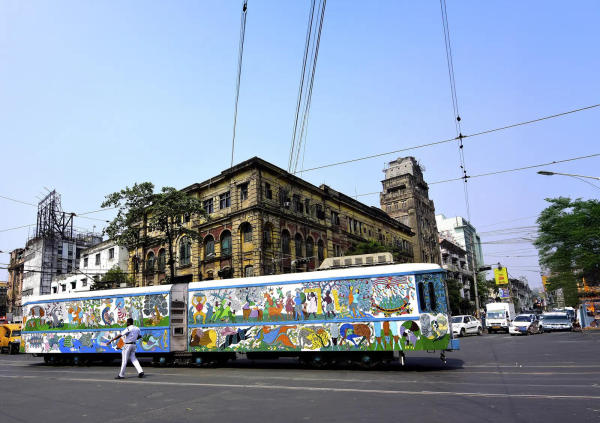
Can trams still work in a modern Kolkata? On the ground, citizens and urban experts offer a mix of optimism and realism , not blind support, but conditional belief. “For me, trams are not just nostalgia pieces,” says urban policy advocate Arghyadip Hatua. “They still make practical sense , but revival cannot happen by only repainting tramcars. The city needs better walking spaces. Every tram journey begins and ends with walking.” Hatua points to high-density corridors like Tollygunge–Ruby and transit hubs like Sealdah and BBD Bagh as logical routes. “Instead of adding more cars and app cabs, trams can become proper urban connectors,” he says. Residents agree that the proble m is not the tram itself, but how it is integrated into the city. “Earlier, trams were known to be very slow, and that pushed people away,” says Bartik Saha. “But if there is a separate dedicated lane, not affected by traffic, then speed and efficiency can improve significantly , like in many foreign cities.” Entrepreneur Kunal Mandal frames the issue as one of urban priorities. “The tram doesn’t need more road; it already has tracks. What it needs is the city to stop treating private cars as the default priority. That’s a governance choice, not an engineering impossibility.” He adds that the argument around congestion is often misplaced: “The tram carries far more people per metre of road than a private car does. The real congestion comes from single-occupancy vehicles.” Why trams still make sense for Kolkata
There are approx 250 tramcars in the system, but barely 10 are operational in shifts , and many more can be brought back if repaired
‘ Years of shrinking routes and unclear policy’ For those closely tracking the system, the answer lies in years of erosion. “This didn’t happen overnight , Kolkata’s trams have been dismantled step by step,” says Sagnik Gupta , Joint Secretary of the Calcutta Tram Users Association. “Since around 2011, routes were shut one after another, depots were repurposed, but no clear policy ever said trams would be completely shut down.” Even when the Calcutta High Court intervened in 2021 and the state assured that trams would be retained in a limited, heritage form, activists say ground reality told a different story. “By 2025, even that heritage stretch was being compromised. Infrastructure was altered, bus stands came up where tram movement was supposed to continue ,that shows the real intention,” Gupta adds. The issue, he argues, is not feasibility but intent. “There is no real technical reason why trams cannot run in Kolkata today. The problem is not feasibility ,it is intent.” Bhattacharyya echoes this, pushing back against the idea that trams are economically unviable. “We are not asking to preserve trams as nostalgia ,we are saying they make economic sense,” he says. “If you factor in environmental savings, safety, and long-term sustainability, the return on investment is actually very high. That is the hidden truth.” At the same time, administrative ambiguity continues to stall any revival. “Different authorities keep denying responsibility. Decisions are delayed, projects are stopped midway ,this indecision is damaging the system further,” he adds.
Can trams still work in a modern Kolkata? On the ground, citizens and urban experts offer a mix of optimism and realism , not blind support, but conditional belief. “For me, trams are not just nostalgia pieces,” says urban policy advocate Arghyadip Hatua. “They still make practical sense , but revival cannot happen by only repainting tramcars. The city needs better walking spaces. Every tram journey begins and ends with walking.” Hatua points to high-density corridors like Tollygunge–Ruby and transit hubs like Sealdah and BBD Bagh as logical routes. “Instead of adding more cars and app cabs, trams can become proper urban connectors,” he says. Residents agree that the proble m is not the tram itself, but how it is integrated into the city. “Earlier, trams were known to be very slow, and that pushed people away,” says Bartik Saha. “But if there is a separate dedicated lane, not affected by traffic, then speed and efficiency can improve significantly , like in many foreign cities.” Entrepreneur Kunal Mandal frames the issue as one of urban priorities. “The tram doesn’t need more road; it already has tracks. What it needs is the city to stop treating private cars as the default priority. That’s a governance choice, not an engineering impossibility.” He adds that the argument around congestion is often misplaced: “The tram carries far more people per metre of road than a private car does. The real congestion comes from single-occupancy vehicles.” Why trams still make sense for Kolkata
- Fuel-independent mobility: Electric system reduces reliance on petrol and diesel
- Affordable transport: Historically the cheapest way to travel across the city
- High capacity, low space use: Moves more people per road space than private cars
- En
- vironmentally sustainable: Zero emissions at point of use
- Safer commute: Lower accident rates and minimal crime
- Existing ecosystem: Tracks, depots and workshops still partly intact
- Lower investment: Can be modernised at a fraction of large infrastructure costs
- Gariahat ( South Kolkata ): relatively more active, though services thin out during afternoons
- Shyambazar ( North Kolkata ): sparse, irregular operations
- Esplanade – Maidan – Racecourse (heritage corridor):
- most visible central route
- currently non-operational in parts, with missing overhead wires and covered tracks
- most visible central route
- Belgachia – Rajabazar – Sealdah network (since 2018)
- Galiff Street depot – BBD Bagh corridor
(via Aurobindo Sarani, Rabindra Sarani , Bowbazar, Amherst Street) (since July 2017) - Kalighat – Kidderpore / Hazra – Mominpur (since 2018)
- Tollygunge – Ballygunge link (since Aug 2024)
- MG Road corridor (since July 2021)
- Bidhannagar (Ultadanga – Kankurgachi) (since May 2020)
- Kidderpore – Esplanade via Maidan (since May 2020)
- Behala – Joka stretch (since May 2011)
- No formal blanket closure announced
- Tracks and depot linkages largely intact
- Network exists physically, but operations reduced to minimal, fragmented services
There are approx 250 tramcars in the system, but barely 10 are operational in shifts , and many more can be brought back if repaired
READ NEXT
-
Yogi government’s ‘Hunter’: 9 years, 36 thousand arrests and property worth Rs 83 crore seized, cow slaughterers are no longer safe
-
Alia Bhatt seen in bindi on forehead, nose ring and saree gown, desi style won hearts at Cannes

-
Reetha is a boon for hair. If you want to get rid of dandruff and hair fall, then use it in this way.

-
Sweet and sour chutney of raw mango enhances the taste of food in summer, make it in this way…

-
You Can Get A Simple Yes Or No Answer From The Universe While You Sleep