The great Tollywood rental revolt
ETimes | May 14, 2026 11:39 PM CST

The battle for the Telugu box office intensified Tuesday as exhibitors met in Kondapur to demand a new revenue-sharing model. Coming on the heels of a South Indian Film Producers Council meeting, the move signals a growing divide between producers and theatre owners. Exhibitors are now pushing for a percentage-based split, calling it a vital lifeline for the region’s single-screen cinemas.
What is the issue?
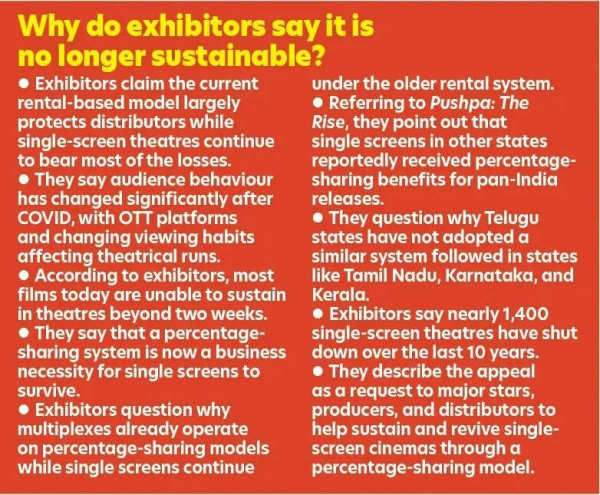
At the centre of the conflict is the battle between the traditional rental system and the proposed percentage-sharing model in Telugu cinema exhibition. Exhibitors say under the current rental system Telangana’s nearly 450 single screen theatres — including around 150 in Hyderabad — are struggling to cope with rising operational expenses that range from ₹12,000 to ₹18,000 per day.
How the existing rental model works
‘Why fight over reduced revenues while ignoring bigger issues?’
While exhibitors and producers continue debating revenue-sharing models, some industry voices believe the crisis extends far beyond theatre economics alone. Producer Bunny Vas reacted to the ongoing developments through a social media post on Wednesday, arguing that the industry was ignoring deeper structural problems. “There’s no point fighting over how to divide shrinking revenues if we are unwilling to address the actual issues affecting the industry,” he wrote. He further stated that star heroes must complete films faster, OTT release windows should be extended beyond the current 27-day cycle, and filmmakers need to focus on creating stronger content that genuinely interests audiences. “Only then will people return to theatres,” he said.
Speaking about the current financial situation, Bunny Vas added that revenues from big-budget films have nearly halved, while earnings from smaller films have fallen even further. “We are celebrating collections that are actually being driven by increased ticket prices and rising costs, which ultimately place an extra burden on audiences,” he said.
Meanwhile,
‘No meaning in continuing’: Natti Kumar quits
 The ongoing turmoil has also exposed growing dissatisfaction within industry bodies. Telugu Film Producer Council Joint Secretary Natti Kumar on Wednesday stepped down from his position, citing concerns over transparency, accountability and the functioning of the organisation. “Under these circumstances, I feel there is no meaning in continuing in a responsible position where I am unable to contribute effectively,” he said in his resignation statement.
He further stressed the need for “transparency, accountability, regular meetings, fair elections and collective decision-making” within the council. “I sincerely request all concerned members to take necessary steps to conduct proper elections, appoint qualified accountants and auditors, maintain transparent accounts, strengthen the council’s administration, and ensure that the organisation functions democratically and professionally in the future. I request the council to kindly accept my resignation and take it into consideration for the better future functioning of the organisation,” he added.
What is the issue?
At the centre of the conflict is the battle between the traditional rental system and the proposed percentage-sharing model in Telugu cinema exhibition. Exhibitors say under the current rental system Telangana’s nearly 450 single screen theatres — including around 150 in Hyderabad — are struggling to cope with rising operational expenses that range from ₹12,000 to ₹18,000 per day.
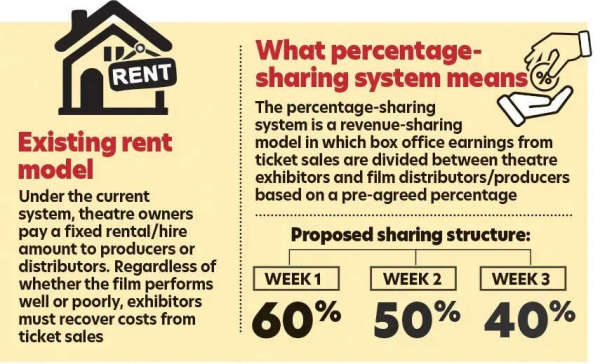
How the existing rental model works
- Theatre exhibitors pay distributors/producers a fixed rental amount (weekly or for a fixed run) to screen a film.
- This payment is made regardless of the film’s actual box office performance.
- If the film performs well, exhibitors can profit after covering the agreed rental and expenses.
- But if collections are poor, theatre owners still have to pay the fixed amount, leading to losses.
- Week 1: 60% to exhibitors / 40% to distributor-producer
- Week 2: 50% to exhibitors / 50% to distributor-producer
- Week 3 onwards: 40% to exhibitors / 60% to distributor-producer
‘Why fight over reduced revenues while ignoring bigger issues?’
While exhibitors and producers continue debating revenue-sharing models, some industry voices believe the crisis extends far beyond theatre economics alone. Producer Bunny Vas reacted to the ongoing developments through a social media post on Wednesday, arguing that the industry was ignoring deeper structural problems. “There’s no point fighting over how to divide shrinking revenues if we are unwilling to address the actual issues affecting the industry,” he wrote. He further stated that star heroes must complete films faster, OTT release windows should be extended beyond the current 27-day cycle, and filmmakers need to focus on creating stronger content that genuinely interests audiences. “Only then will people return to theatres,” he said.
Speaking about the current financial situation, Bunny Vas added that revenues from big-budget films have nearly halved, while earnings from smaller films have fallen even further. “We are celebrating collections that are actually being driven by increased ticket prices and rising costs, which ultimately place an extra burden on audiences,” he said.
Meanwhile,
‘No meaning in continuing’: Natti Kumar quits
The ongoing turmoil has also exposed growing dissatisfaction within industry bodies. Telugu Film Producer Council Joint Secretary Natti Kumar on Wednesday stepped down from his position, citing concerns over transparency, accountability and the functioning of the organisation. “Under these circumstances, I feel there is no meaning in continuing in a responsible position where I am unable to contribute effectively,” he said in his resignation statement.
He further stressed the need for “transparency, accountability, regular meetings, fair elections and collective decision-making” within the council. “I sincerely request all concerned members to take necessary steps to conduct proper elections, appoint qualified accountants and auditors, maintain transparent accounts, strengthen the council’s administration, and ensure that the organisation functions democratically and professionally in the future. I request the council to kindly accept my resignation and take it into consideration for the better future functioning of the organisation,” he added.
READ NEXT
-
How Can CSK Still Qualify For IPL 2026 Playoffs?

-
CBSE Issues Clarification On On-Screen Marking System After Class 12 Result Discussions
-
'20 Years Is Enough': US President Donald Trump Demands Strong Guarantees From Iran On Nuclear Deal

-
'In my darkest times, biggest light in my life is...': Amid divorce battle, Celina Jaitly reveals one Bollywood actress who stood by her side. Who is she?

-
Arm Holdings to face US antitrust probe over chip tech: Report