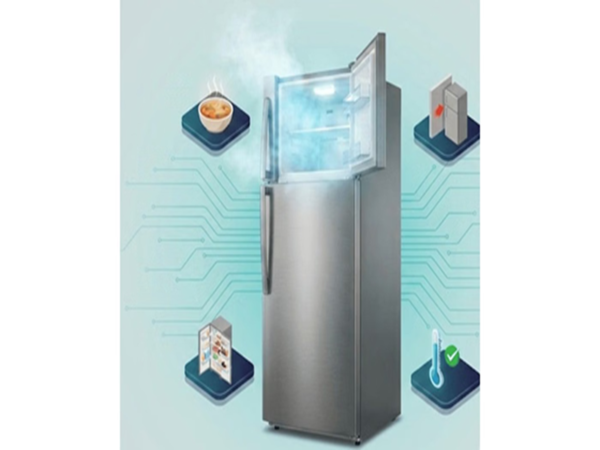
Fridge Cooling Issues: Many people unknowingly make mistakes that gradually compromise their refrigerator's cooling efficiency. Initially, the problem may seem minor, but over time, issues such as rising electricity bills, reduced cooling performance, and hefty repair costs begin to emerge. In many instances, the situation escalates to the point where people are forced to purchase a brand-new refrigerator. If you want your fridge to function properly for the long haul, you should immediately change these habits.
**Placing Hot Food Directly into the Fridge Can Prove Costly**
Many people, in their haste, place hot lentils, vegetables, or other cooked food directly into the refrigerator. They are often unaware that doing so causes the internal temperature of the fridge to rise abruptly, placing undue strain on the compressor. This forces the refrigerator to work harder, leading to increased electricity consumption and a gradual weakening of the cooling system. Therefore, always allow food or milk to cool down to room temperature before placing it inside the fridge.
**Placing the Fridge Flush Against a Wall Can Reduce Cooling Efficiency**
Many people position their refrigerator flush against a wall—often due to a lack of space—but this prevents air from circulating the condenser located at the back, trapping the heat generated by the machine. Consequently, the fridge remains constantly warm, and its cooling capacity begins to deteriorate over time. To avoid this, ensure you maintain a gap of at least six inches between the refrigerator and the wall.
**Leaving the Door Open for Extended Periods**
If you frequently open the refrigerator door, leave it open for extended periods, or simply forget to close it, the cold air or refrigerant gas trapped inside escapes. When this happens repeatedly, the refrigerator is forced to work much harder to lower the internal temperature back to the desired level. This places a strain on the cooling system and can also lead to an increase in your electricity bill. To prevent this, open the refrigerator only when necessary and close it immediately after use.
**Overstocking the Fridge Can Obstruct Airflow**
Many people tend to stuff their refrigerators with more items than necessary. While this may help prevent the food itself from spoiling, it ironically begins to cause damage to the refrigerator itself. This is because, under such conditions, cold air cannot circulate properly inside the unit. Consequently, some sections become excessively cold while others remain insufficiently cooled. Constant overloading also places increased strain on the compressor. Therefore, when storing items, always ensure that airflow is maintained and that cold air can circulate freely.
**Neglecting Cleaning Can Also Be a Cause**
It is also essential to clean the refrigerator periodically. Failure to do so regularly allows dust to accumulate on the coils located at the back and on the internal trays. This diminishes the machine's cooling efficiency and forces the motor to work harder. Furthermore, it can lead to the proliferation of unpleasant odors and bacteria. Therefore, you should thoroughly clean the interior and exterior of the refrigerator at least once a month. In fact, you may have noticed that after a good cleaning, the refrigerator not only looks sparkling but also performs more efficiently.
**Incorrect Temperature Settings Can Also Cause Harm**
Setting the temperature either too low (excessively cold) or too high (insufficient cooling) can be detrimental. An excessively low temperature increases electricity consumption, whereas insufficient cooling can cause food items to spoil rapidly. Therefore, you should utilize a balanced temperature setting that is appropriate for the prevailing weather conditions and your specific requirements.
Not Using a Stabilizer Can Prove Costly
In many areas, the electricity voltage remains unstable. Consequently, operating a refrigerator without a stabilizer can lead to damage to the compressor and electronic components. Over time, the cooling efficiency gradually diminishes, and repair costs may escalate. Therefore, if your area experiences frequent voltage fluctuations, it is essential to use a stabilizer with your refrigerator. Even if such fluctuations are not an issue, using a stabilizer is generally considered a prudent practice for safeguarding electronic appliances.
Disclaimer: This content has been sourced and edited from Amar Ujala. While we have made modifications for clarity and presentation, the original content belongs to its respective authors and website. We do not claim ownership of the content.
-
Did You Know? Now, Instead of Form 16, You Will Receive Form 130! How Much Has Income Tax Changed—From PAN to TDS?

-
Plug Pins: Why do phone chargers have 2 pins, but laptops have 3? 90% of people don't know the secret behind the third pin..
-
Your Phone Will Now Operate Based on Your Habits—This Feature Is Coming to Android

-
Kerala CM-Designate VD Satheesan Meets Pinarayi Vijayan Amid Transition Of Power

-
DK Shivakumar Claims SIR Exercise Meant To ‘Cut’ SC, BC, Minority Votes In Karnataka