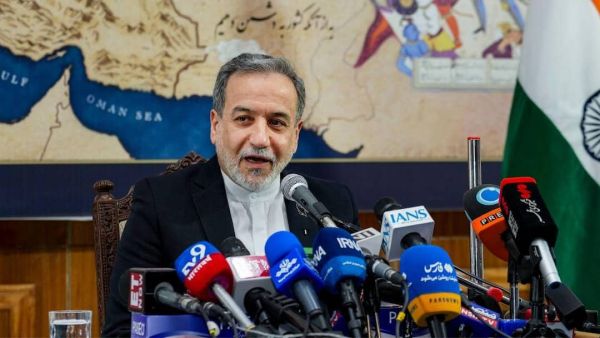
Iranian Foreign Minister Abbas Araghchi said on Friday that Tehran has “no trust” in the United States and would only engage in negotiations if Washington demonstrated genuine seriousness about reaching a settlement. His remarks came as efforts to secure a lasting peace agreement following last month’s ceasefire remained stalled.
Speaking to reporters during a visit to New Delhi for the BRICS foreign ministers’ meeting, Araghchi said the situation surrounding the Strait of Hormuz remained highly sensitive and complex. The strategically crucial waterway is central to global oil and commodity shipments, carrying nearly a fifth of the world’s seaborne energy supplies under normal conditions.
Araghchi also stated that vessels could continue passing through the Strait of Hormuz, provided they were not “at war” with Iran and coordinated movements with the Iranian navy. Tehran had effectively restricted most shipping activity through the strait after the United States and Israel launched military operations against Iran in February.
Hormuz Strait Remains at Centre of Global Concern
In a post on X, Araghchi said he had informed External Affairs Minister S Jaishankar that Iran would continue to fulfil what he described as its “historical duty” of protecting security in the Strait of Hormuz.
The narrow maritime corridor remains one of the world’s most strategically important trade routes, and disruptions there have raised fears across international energy and financial markets. While Tehran has signalled willingness to restore normal shipping conditions, uncertainty surrounding negotiations has kept tensions elevated.
Araghchi expressed hope that diplomatic progress would eventually allow the full normalisation of traffic through the strait. He said Iran wanted the waterway to become “completely secured” once negotiations advanced towards a satisfactory conclusion.
Pakistan-Mediated Talks Face Fresh Obstacles
Talks between Washington and Tehran, mediated by Pakistan, have struggled to gain momentum after both sides rejected each other’s latest proposals last week. Although a ceasefire was announced last month, efforts to turn the fragile truce into a long-term agreement have faced repeated setbacks.
Araghchi said “contradictory messages” from the United States had deepened Iranian doubts over Washington’s true intentions. However, he insisted the mediation process itself had not collapsed and described the negotiations as being in “difficulty” rather than entirely broken down.
The Iranian foreign minister also pointed to a history of interrupted diplomacy, noting that two previous rounds of talks over the past 13 months were cut short after the United States and Israel launched air strike campaigns against Iran.
Iran Signals Readiness for Diplomacy and Conflict
Despite the stalled negotiations, Araghchi said Iran was continuing to support the current ceasefire in order to give diplomacy a chance. At the same time, he warned that Tehran remained prepared to resume fighting if necessary.
Among the key sticking points in negotiations are Iran’s nuclear ambitions and Tehran’s control over the Strait of Hormuz. Both issues remain highly contentious and central to ongoing discussions between the two countries.
Just hours before Araghchi’s comments, US President Donald Trump said his patience with Iran was “running out”. Trump also revealed that he had discussed the issue with Chinese President Xi Jinping and that both leaders agreed Tehran must reopen the strait fully.
Iran Welcomes China’s Diplomatic Role
When asked whether Iran would support mediation efforts by Beijing, Araghchi welcomed any country capable of helping move diplomacy forward.
“We have very good relations with China,” he said, describing the two countries as strategic partners. He added that Tehran believed China had “good intentions” and would welcome any constructive effort aimed at easing tensions and advancing negotiations.
Araghchi reiterated that Iran hoped diplomatic efforts would ultimately lead to a stable resolution, allowing security to return fully to the Strait of Hormuz and enabling normal maritime traffic to resume without disruption.
-
Love Horoscope Today for Saturday, May 16, 2026: Pisces will keep their partner happy, know the condition of other signs

-
Aquarius Tarot Horoscope Today, May 16, 2026: Exchange of Auspicious Messages Will Increase, Benefit of Artistic Thinking

-
Career Horoscope Today, May 16, 2026: Sagittarius Will Succeed, Check the Career Outlook for All Zodiac Signs

-
Pisces Tarot Horoscope Today, May 16, 2026: Success in tasks and focus on savings growth

-
Gemini Tarot Horoscope Today, May 16, 2026: Continue to make positive strides in all matters and stay focused on your goals