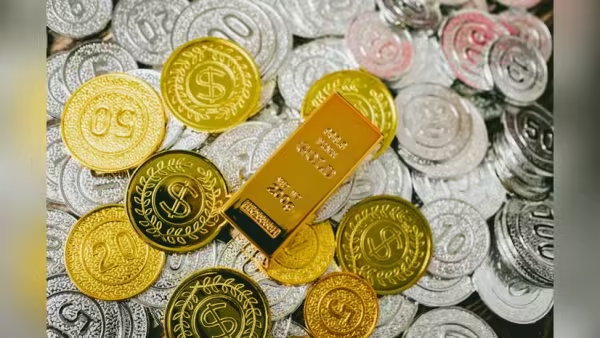
Gold and Silver Prices Fall Sharply as Bullion Market Witnesses Historic Correction
India’s bullion market witnessed a dramatic correction after silver prices crashed by nearly ₹20,000 per kilogram in a single day, while gold prices also recorded a steep decline, becoming around ₹3,000 cheaper per 10 grams.
According to data released by the India Bullion and Jewellers Association (IBJA), silver prices plunged by ₹19,693 and slipped to ₹2.68 lakh per kilogram, compared to ₹2.87 lakh recorded a day earlier. The sharp fall has triggered intense discussions among investors, traders, jewellers, and households closely tracking precious metal prices.
Gold prices also saw a major decline. The price of 24-carat gold dropped by ₹3,000 per 10 grams and settled around ₹1.58 lakh, down from approximately ₹1.61 lakh recorded earlier.
The latest correction marks one of the most significant short-term declines in India’s bullion market in recent months and comes after an extraordinary rally earlier this year that pushed both gold and silver to historic highs.
Market experts say the recent fall reflects a combination of profit booking, easing panic buying, changing global sentiment, and attempts by governments and central banks to stabilise economic pressures linked to rising imports and geopolitical uncertainty.
Silver Witnesses Extraordinary Volatility
Silver has emerged as the most volatile precious metal this year, experiencing massive price swings within a relatively short period.
At the beginning of 2026, silver prices stood near ₹2.30 lakh per kilogram. Prices then surged aggressively and touched an all-time high of approximately ₹3.86 lakh per kilogram on January 29, driven by intense investor demand, global uncertainty, industrial buying, and safe-haven purchasing trends.
However, within just 106 days, silver prices have collapsed by around ₹1.18 lakh per kilogram from peak levels.
Analysts say such volatility is unusual even for commodities known for rapid market movements.
The sharp correction has created mixed reactions across the market. Investors who entered at peak prices are facing substantial losses, while buyers waiting for lower rates are viewing the correction as an opportunity.
Jewellers and bullion traders say silver demand often reacts more aggressively than gold because silver has both investment and industrial applications. Any changes in global economic expectations, manufacturing activity, or speculative trading can therefore create sharper price fluctuations.
Gold Prices Also Decline From Record Highs
Gold, traditionally considered a safer and more stable asset, has also witnessed a notable correction after hitting historic highs earlier this year.
Gold prices had climbed dramatically during January amid strong global uncertainty and intense safe-haven demand. On January 29, 2026, 24-carat gold touched an all-time high of approximately ₹1.76 lakh per 10 grams.
Since then, however, prices have fallen by nearly ₹18,000 per 10 grams.
Despite the correction, analysts point out that gold prices still remain significantly higher compared to levels recorded at the end of 2025, when the metal was trading near ₹1.33 lakh per 10 grams.
The sharp rise earlier this year was driven by multiple global factors including geopolitical tensions, currency instability, central bank buying, inflation concerns, and increased investor demand for safer assets.
Experts believe the recent decline reflects temporary cooling rather than a complete reversal of long-term bullish sentiment toward precious metals.
PM Modi’s Appeal on Gold Buying Gains Attention
The market correction has also renewed discussions around Prime Minister Narendra Modi’s recent appeal asking citizens to reduce gold purchases in the national interest.
During public rallies in Karnataka and Telangana, the Prime Minister urged people to avoid buying gold jewellery for one year as part of efforts to conserve India’s foreign exchange reserves.
“There was a time when during a crisis, people would donate gold in the national interest. Today there is no need for donation, but in the national interest we have to decide that for one year, whatever program happens at home, we will not buy gold jewelry,” the Prime Minister had said.
The appeal was linked to India’s heavy dependence on imported gold.
India imports nearly 99% of its gold consumption from foreign countries, making gold one of the largest contributors to the nation’s import bill. During 2025-26, India’s gold import expenditure reportedly reached around ₹6.4 lakh crore.
Economists say reducing excessive gold imports could help ease pressure on foreign exchange reserves, improve trade balances, and reduce external vulnerabilities during periods of global economic stress.
The Prime Minister’s remarks sparked significant debate across business, jewellery, and investment circles, with some supporting the economic logic behind the appeal while others questioned its practical impact on cultural and household buying patterns.
Why Precious Metals Are Falling
Market analysts attribute the sharp fall in bullion prices to several interconnected factors.
One major reason is profit booking after the extraordinary rally witnessed earlier this year. Many investors who purchased gold and silver during lower price phases have started selling to secure profits.
Global market sentiment has also shown signs of stabilisation after periods of extreme geopolitical tension that previously drove panic buying into safe-haven assets.
Currency fluctuations and the strengthening of the U.S. dollar have additionally influenced commodity pricing trends worldwide.
When the dollar strengthens, commodities like gold and silver often face downward pressure because they become relatively more expensive for international buyers.
Experts also point toward changing investor behaviour. Some traders have shifted capital toward equities and other assets following signs of temporary stabilisation in global financial markets.
Silver, because of its smaller market size and dual industrial-investment role, has reacted even more dramatically than gold.
Buyers Returning to Jewellery Markets
The sharp correction has already started attracting retail buyers back into jewellery markets across several Indian cities.
Jewellers say many consumers who had postponed wedding purchases and festive buying during peak price periods are now returning to explore lower rates.
Wedding demand remains one of the biggest drivers of gold consumption in India, and price declines often trigger immediate buying interest.
Bullion traders believe the coming weeks could witness stronger physical demand if prices remain relatively stable.
However, analysts warn that volatility may continue because global geopolitical developments and crude oil prices remain unpredictable.
Experts Advise Caution for Investors
Financial experts are advising investors to remain cautious despite the correction.
While lower prices may appear attractive, analysts say precious metal markets remain highly sensitive to international developments, including geopolitical tensions, inflation expectations, currency movements, and central bank policies.
Experts suggest that long-term investors should focus on gradual accumulation strategies rather than emotional buying during periods of extreme volatility.
They also recommend purchasing only certified and hallmarked gold from reliable jewellers.
The Bureau of Indian Standards (BIS) hallmark remains one of the most important indicators of gold purity and authenticity in India.
Identifying Genuine Gold and Silver Remains Important
With increasing retail buying expected after the recent price decline, jewellers and consumer experts are reminding buyers to verify product authenticity carefully.
Consumers are advised to purchase only BIS-certified gold jewellery and cross-check daily bullion prices before making purchases.
For silver buyers, traditional authenticity tests continue to remain popular.
Experts say genuine silver typically does not stick to magnets, melts ice quickly because of high thermal conductivity, and often leaves black marks when rubbed against a white cloth due to oxidation properties.
Bullion Markets Likely to Stay Volatile
Market observers believe gold and silver prices may continue witnessing fluctuations in the coming months because of ongoing uncertainty in global markets.
Geopolitical tensions, central bank policies, energy prices, inflation concerns, and international trade developments are all expected to influence future price trends.
While the recent correction has brought temporary relief for buyers, analysts warn that precious metal markets remain highly unpredictable.
For now, however, India’s bullion markets are witnessing one of the sharpest corrections seen in recent times — a development that has stunned investors, excited buyers, and reignited debates around the country’s massive dependence on imported gold.
The post Massive Silver Price Crash Shocks Markets as Gold Becomes Dramatically Cheaper appeared first on CliQ INDIA.
-
Mateus Mane’s Rise: From Bench to Breakthrough at Wolves Amid Interest from Manchester United and Liverpool

-
Rising to Greatness: How Barcelona’s Sydney Schertenleib Became Women’s Football’s Brightest Young Star

-
Chelsea’s WSL Reign Unravels: How Sonia Bompastor’s Risky Approach Backfired and What Lies Ahead for the Blues

-
Lionel Messi reacts to Inter Miami fans’ protest over players’ ‘respect’ concerns during MLS victory against Portland Timbers

-
Mario Basler: The Bayern Munich Maverick Whose Talent and Rebellious Spirit Defined an Era