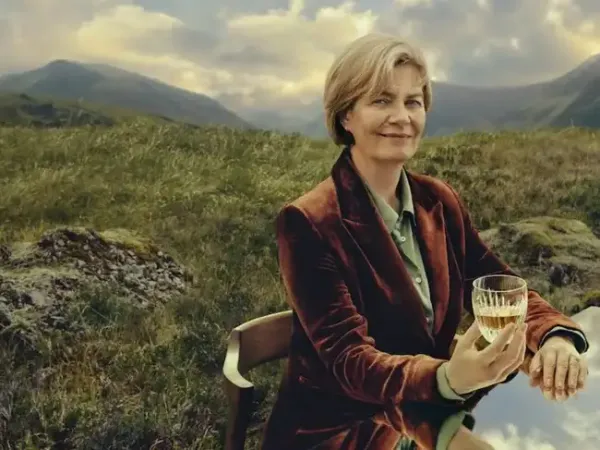
Whether you have it neat, in an effervescent cocktail or chilled over ice, the experience of drinking a glass of whisky stays the same: An amalgamation of flavours that command the palate. And while the drink can be downed in minutes, it takes experience and expertise to be able to unlock the secrets in that singular glass — the maturation period, the casks and the craftsmanship.
“Every bottle carries a story, from the people who craft it to the flavours shaped over time,” says Stephanie Macleod, master blender at Dewars. “It’s not just the process of making whisky that is fascinating, but the people, their passion and their pride.”
Edited excerpts from the interview:
1. You’ve mentioned that you didn’t enjoy whisky when you first entered the industry. What changed your perspective over time?
My whisky career started in academia at the University of Strathclyde, Scotland, where I studied Food Science. I’m not sure what drew me into whisky research, as at that stage in my life, I had no understanding of whisky and it didn’t seem relevant to me.
However, when I started to work with it and understand the subtle nuances and the impact of distillation and then maturation on the flavour profile, I was hooked. I knew that I didn’t just want to study Scotch whisky, I wanted to be part of it.
2. What was that moment when you realised that whisky went from being a job to becoming a passion?
It wasn’t one single moment, it was a realisation, gradually. The research years were really where it began, the main area of focus was the influence of maturation on the flavour profile of whisky. From that point on I fell in love with whisky and with the industry. But what kept me here, what really made it a passion, was something less tangible. I was drawn to the whisky world not only by the complexities and nuances but also by the collective spirit of the Scotch whisky industry.
3. Can you tell us a bit about how you differentiate flavour profiles across casks and ages?
Let’s start at the beginning: Each distillery has its own distinct flavour profile. In order to manage these flavour profiles for blending, we group them into categories, firstly on whether it’s a malt or a grain Scotch whisky and then by flavour profile: For instance grassy, floral, fruity, cereal, peaty.
Each type of oak cask imbues its character to the spirit during maturation — for example a Bourbon barrel will impart a vanilla character, whilst Oloroso sherry casks will impart a deep colour and rich spice. Specific percentages from the flavour categories and the wood types ensure that our blends have a consistent flavour profile.
4. What’s your personal favourite way to drink whisky?
It genuinely depends on the day. In the blending room: Neat and then watered down to 23 per cent alcohol. At home, it depends on the whisky available and often, the weather. I love whisky with ginger ale, a wedge of lime and ice. Sometimes, I like it with a block of ice or with a splash of water, too.
The most important thing I’d say to anyone is that there is no ideal way to enjoy your Scotch. You can add ice, soft drinks, however you enjoy it. People shouldn’t be frightened of whisky, it’s versatile. You can discover new tasting notes, flavours and even create new rituals.
5. What’s one thing about whisky you’re still learning about even after years in the craft?
The cask. It's always the cask. The wood is endlessly complex; two casks filled at the same distillery, on the same day, from the same spirit, can produce completely different whisky after maturation. We don’t fully understand all the variables yet: The precise location in the warehouse, the temperature fluctuations from season to season, the exact chemistry of what the wood is releasing over time.
American white oak and European white oak are completely different. And now with casks from Japan and France, the study of maturation feels like it has no ceiling. People are really appreciating the difference that the cask can make to the whisky. After all these years, the warehouse still holds surprises and I hope it always will.
6. Indians now are more focused on experimentation rather than ritual. What do you think this shift reveals about the Indian drinking culture?
It reveals something very exciting: Confidence. A generation ago, whisky drinking in India was governed by certain inherited rituals such as how you poured it, what you mixed it with, what occasions it belonged to.
Now, younger Indian consumers are picking up the glass and asking their own questions: What does this taste like neat? What happens if I make it a highball? Which whisky pairs best with my favourite appetiser?
Today’s consumers are experimental, which is fueling the rise of an evolved cocktail culture in India’s spirits landscape. This mindset also means people are more open to blended Scotch, they’re not following received wisdom that single malt is superior; they’re tasting and deciding for themselves. India isn’t just consuming whisky culture, it’s beginning to shape it.
7. Once touted as a man’s domain, do you see a lot of change in who is shaping whisky culture in India today, and how younger consumers are redefining the rituals surrounding it?
Absolutely, and it’s one of the most exciting things happening in this industry. Whisky drinkers today are more diverse than ever before. What I love about India specifically is the energy, people are having whisky cocktails with food, building home bars and approaching the whole experience with curiosity rather than formality. That openness is what will define the next generation of whisky culture, not just in India, but globally.
“Every bottle carries a story, from the people who craft it to the flavours shaped over time,” says Stephanie Macleod, master blender at Dewars. “It’s not just the process of making whisky that is fascinating, but the people, their passion and their pride.”
Edited excerpts from the interview:
1. You’ve mentioned that you didn’t enjoy whisky when you first entered the industry. What changed your perspective over time?
My whisky career started in academia at the University of Strathclyde, Scotland, where I studied Food Science. I’m not sure what drew me into whisky research, as at that stage in my life, I had no understanding of whisky and it didn’t seem relevant to me.
However, when I started to work with it and understand the subtle nuances and the impact of distillation and then maturation on the flavour profile, I was hooked. I knew that I didn’t just want to study Scotch whisky, I wanted to be part of it.
2. What was that moment when you realised that whisky went from being a job to becoming a passion?
It wasn’t one single moment, it was a realisation, gradually. The research years were really where it began, the main area of focus was the influence of maturation on the flavour profile of whisky. From that point on I fell in love with whisky and with the industry. But what kept me here, what really made it a passion, was something less tangible. I was drawn to the whisky world not only by the complexities and nuances but also by the collective spirit of the Scotch whisky industry.
3. Can you tell us a bit about how you differentiate flavour profiles across casks and ages?
Let’s start at the beginning: Each distillery has its own distinct flavour profile. In order to manage these flavour profiles for blending, we group them into categories, firstly on whether it’s a malt or a grain Scotch whisky and then by flavour profile: For instance grassy, floral, fruity, cereal, peaty.
Each type of oak cask imbues its character to the spirit during maturation — for example a Bourbon barrel will impart a vanilla character, whilst Oloroso sherry casks will impart a deep colour and rich spice. Specific percentages from the flavour categories and the wood types ensure that our blends have a consistent flavour profile.
4. What’s your personal favourite way to drink whisky?
It genuinely depends on the day. In the blending room: Neat and then watered down to 23 per cent alcohol. At home, it depends on the whisky available and often, the weather. I love whisky with ginger ale, a wedge of lime and ice. Sometimes, I like it with a block of ice or with a splash of water, too.
The most important thing I’d say to anyone is that there is no ideal way to enjoy your Scotch. You can add ice, soft drinks, however you enjoy it. People shouldn’t be frightened of whisky, it’s versatile. You can discover new tasting notes, flavours and even create new rituals.
5. What’s one thing about whisky you’re still learning about even after years in the craft?
The cask. It's always the cask. The wood is endlessly complex; two casks filled at the same distillery, on the same day, from the same spirit, can produce completely different whisky after maturation. We don’t fully understand all the variables yet: The precise location in the warehouse, the temperature fluctuations from season to season, the exact chemistry of what the wood is releasing over time.
American white oak and European white oak are completely different. And now with casks from Japan and France, the study of maturation feels like it has no ceiling. People are really appreciating the difference that the cask can make to the whisky. After all these years, the warehouse still holds surprises and I hope it always will.
6. Indians now are more focused on experimentation rather than ritual. What do you think this shift reveals about the Indian drinking culture?
It reveals something very exciting: Confidence. A generation ago, whisky drinking in India was governed by certain inherited rituals such as how you poured it, what you mixed it with, what occasions it belonged to.
Now, younger Indian consumers are picking up the glass and asking their own questions: What does this taste like neat? What happens if I make it a highball? Which whisky pairs best with my favourite appetiser?
Today’s consumers are experimental, which is fueling the rise of an evolved cocktail culture in India’s spirits landscape. This mindset also means people are more open to blended Scotch, they’re not following received wisdom that single malt is superior; they’re tasting and deciding for themselves. India isn’t just consuming whisky culture, it’s beginning to shape it.
7. Once touted as a man’s domain, do you see a lot of change in who is shaping whisky culture in India today, and how younger consumers are redefining the rituals surrounding it?
Absolutely, and it’s one of the most exciting things happening in this industry. Whisky drinkers today are more diverse than ever before. What I love about India specifically is the energy, people are having whisky cocktails with food, building home bars and approaching the whole experience with curiosity rather than formality. That openness is what will define the next generation of whisky culture, not just in India, but globally.