
Listen to this article in summarized format
Loading...
××
Subscribe to

Unlock AI Briefing and Premium Content
New Year Offer 24 Hours Left
Subscribe NowAlready a member? Sign In
What's Included
- Exclusive Stories
- Daily ePaper Access
- Smart Market Tools
- Curated Investment Ideas
- Ad-lite Experience
Subscription

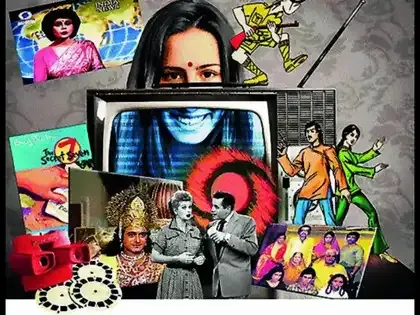
If you are a parent now of, say, a 15-year-old, and you were a kid in the late 80s or 90s, and you work in a senior position at a global firm, you might get the feeling that you're a parent in a different country from the one you were born in. You grew up in socialist India with 4-hour power cuts, and your child plays a Fifa game on his latest iPhone like he's in Belgium or China.
Sometimes, when I'm consumed by madness and have a death wish, I teach stand-up comedy to kids between 11 and 16 years in Mumbai. It is the closest I've been to a riot. Although the theoretical purpose is to teach critical thinking, logic, argument, and opinion, it devolves into shouting and mob violence.
Yes, the goal is to allow kids to create and get a glimpse into their own minds, and what makes them laugh. But all the while that I try to do that, I am also protecting my nether regions. I only bring this up because one of the segments we do is getting them to describe a recent holiday and discuss the pros and cons of someone they admire.
These children come from diverse economic backgrounds and represent a range of state and international school boards. Notwithstanding the PM's latest exhortation to skip travelling outside the country, every single one of them talked about a foreign holiday, described one, aspired to one, or were ashamed they hadn't yet gone on one. One even said, 'I asked my parents, why are you so poor?'
Every hero they described was either a famous Premier League footballer - not so much because of his football skills, but because of the sports car he drove, or how much he was sold for. All that excited them were material things like a big apartment complex with a swimming pool, the owner of an IPL team, number of Instagram followers...
It made me wonder why we didn't all aspire to such things when we were 15. Perhaps, because we didn't have any of these things.
I don't want to sound like a grumpy old uncle with a 'kids today [eyeroll]' rant. My purpose is to understand why early teen urban kids in a much more economically successful India than the one I grew up in have that jaded, zombie-like look all the time, as if nothing and no one impresses them.
You could invite them to see a lion and a bear fight it out for survival, and they'd just glance up from their phone for a second and then go back to some Korean Netflix show. The answer is that they have the whole world on their phone. They can learn from YouTube about Scandinavian baking or Spanish high-school life. So, all they need from actual life, when they look up and interact with humans or family, is money.
In our time, so little was possible that everything felt wondrous and new. Once, our school invited Kapil Dev. We were 13-year-olds in junior school, and as a special treat we were marched out in a line, made to stand behind a rope like prisoners of war, and allowed to glimpse him for all of 5 seconds while he ate an omelette with the principal and waved as we shuffled past. It felt almost religious - like seeing the pope - until someone smacked us on the back and told us to keep moving.
Perhaps, like Mao-era museums in China or DDR Museum in Berlin, we need a museum of pre-liberalisation India, so children today can understand how thrilling it once was for a family merely to be waitlisted for a Premier Padmini, a machine that resembled a car, though by global standards it barely qualified as one. And that was only if you were wealthy enough to afford it.
Sometimes, when I'm consumed by madness and have a death wish, I teach stand-up comedy to kids between 11 and 16 years in Mumbai. It is the closest I've been to a riot. Although the theoretical purpose is to teach critical thinking, logic, argument, and opinion, it devolves into shouting and mob violence.
Yes, the goal is to allow kids to create and get a glimpse into their own minds, and what makes them laugh. But all the while that I try to do that, I am also protecting my nether regions. I only bring this up because one of the segments we do is getting them to describe a recent holiday and discuss the pros and cons of someone they admire.
These children come from diverse economic backgrounds and represent a range of state and international school boards. Notwithstanding the PM's latest exhortation to skip travelling outside the country, every single one of them talked about a foreign holiday, described one, aspired to one, or were ashamed they hadn't yet gone on one. One even said, 'I asked my parents, why are you so poor?'
Every hero they described was either a famous Premier League footballer - not so much because of his football skills, but because of the sports car he drove, or how much he was sold for. All that excited them were material things like a big apartment complex with a swimming pool, the owner of an IPL team, number of Instagram followers...
It made me wonder why we didn't all aspire to such things when we were 15. Perhaps, because we didn't have any of these things.
I don't want to sound like a grumpy old uncle with a 'kids today [eyeroll]' rant. My purpose is to understand why early teen urban kids in a much more economically successful India than the one I grew up in have that jaded, zombie-like look all the time, as if nothing and no one impresses them.
You could invite them to see a lion and a bear fight it out for survival, and they'd just glance up from their phone for a second and then go back to some Korean Netflix show. The answer is that they have the whole world on their phone. They can learn from YouTube about Scandinavian baking or Spanish high-school life. So, all they need from actual life, when they look up and interact with humans or family, is money.
In our time, so little was possible that everything felt wondrous and new. Once, our school invited Kapil Dev. We were 13-year-olds in junior school, and as a special treat we were marched out in a line, made to stand behind a rope like prisoners of war, and allowed to glimpse him for all of 5 seconds while he ate an omelette with the principal and waved as we shuffled past. It felt almost religious - like seeing the pope - until someone smacked us on the back and told us to keep moving.
Perhaps, like Mao-era museums in China or DDR Museum in Berlin, we need a museum of pre-liberalisation India, so children today can understand how thrilling it once was for a family merely to be waitlisted for a Premier Padmini, a machine that resembled a car, though by global standards it barely qualified as one. And that was only if you were wealthy enough to afford it.
(Disclaimer: The opinions expressed in this column are that of the writer. The facts and opinions expressed here do not reflect the views of www.economictimes.com.)

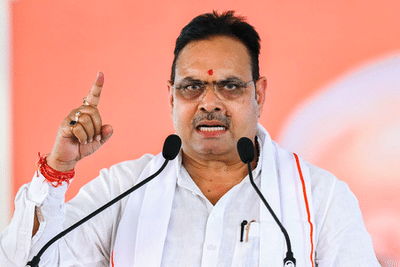



Anuvab Pal
Anubav Pal is an Indian stand up comedian, screenwriter, playwright and novelist