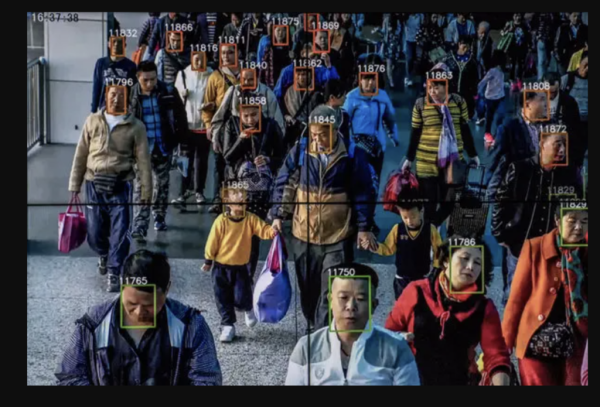
Artificial intelligence is rapidly transforming from a productivity tool into something far more controversial: a powerful mechanism for state control.
Researchers, policy experts, and human-rights groups are increasingly warning that AI could help governments:
- Monitor citizens continuously
- Predict dissent before protests happen
- Manipulate public opinion at scale
- Automate censorship and surveillance.
The concern is no longer science fiction.
Many of these systems already exist in different forms worldwide.
AI Makes Surveillance Faster, Cheaper & More Powerful
According to global internet-freedom studies, AI dramatically increases governments’ ability to:
- Process massive datasets
- Track online behavior
- Identify political opponents
- Monitor social-media activity in real time.
Modern AI surveillance systems can combine:
- Facial recognition
- Location tracking
- Voice analysis
- Social-media scanning
- Biometric databases.
This allows authorities to build highly detailed digital profiles of citizens.
Freedom House warned that AI acts as:
Facial Recognition Is Becoming A Major Fear
One of the biggest concerns involves AI-powered facial recognition.
Governments can now potentially:
- Track individuals across cities
- Identify protesters automatically
- Match faces with national databases
- Monitor crowds in real time.
Critics warn this could fundamentally change:
- Privacy rights
- Freedom of assembly
- Anonymous political participation.
Several countries have already experimented with:
- Smart policing systems
- AI-powered CCTV networks
- Automated threat scoring tools.
AI Can Also Manipulate Public Opinion
The danger is not limited to surveillance.
Generative AI now enables:
- Deepfake videos
- AI-generated propaganda
- Synthetic political messaging
- Automated troll campaigns.
Researchers say governments or political actors could use AI to:
- Flood social media with misinformation
- Influence elections
- Smear opponents
- Create fake public sentiment at massive scale.
The worrying part is:
AI-generated content is becoming increasingly difficult to distinguish from reality.
Democracies Are Also Facing Difficult Questions
Importantly, experts say the risks are not limited to authoritarian countries.
Even democratic governments are increasingly exploring AI for:
- Law enforcement
- Welfare verification
- Border control
- Tax monitoring
- Predictive policing.
A recent academic study found that although AI may improve efficiency in government systems, it can also reduce citizens’:
- Sense of control
- Transparency
- Ability to challenge decisions.
Researchers warned of a possible:
- “Failure-by-success” effect
…where governments become overly dependent on opaque AI systems because they initially appear efficient.
Global Debate Over AI “Red Lines” Is Growing
Because of these risks, international experts are now calling for:
- AI regulation
- Global safeguards
- “Red lines” banning certain uses of AI.
Proposals include restrictions on:
- Mass surveillance
- Autonomous weapons
- AI social scoring systems
- Political manipulation technologies.
The European Union has already introduced:
- AI governance rules
- Risk-based AI regulations
- Restrictions on high-risk surveillance uses.
Meanwhile:
- Human-rights groups argue many governments still lack strong oversight mechanisms.
India Is Also Expanding AI Governance Discussions
India has increasingly become part of the global AI governance debate.
Recent discussions around:
- AI regulation
- Deepfake control
- Synthetic content labeling
- Platform compliance rules
…have intensified amid the country’s growing AI ambitions.
At the same time:
- Civil-liberty experts warn that AI regulation must balance:
- Innovation
- Security
- Privacy
- Freedom of expression.
Why This Matters
The AI debate is no longer only about chatbots and automation.
The bigger issue is whether advanced AI systems could fundamentally reshape:
- State power
- Civil liberties
- Privacy
- Democratic accountability.
Experts fear that if unchecked, AI may allow governments to:
- Monitor societies continuously
- Predict human behavior
- Influence populations algorithmically
- Suppress dissent more efficiently than ever before.
And as AI becomes cheaper, smarter, and more autonomous, the line between:
- Public safety
and - Digital authoritarianism
…may become increasingly difficult to define.
-
Rory McIlroy bites back at PGA Championship fans after unruly treatment

-
UP to Recruit Over 23,000 Teachers in Major Education Drive, Big Relief for Aspirants

-
Is Waterbirth Safe in India? What Expecting Parents Should Know

-
Can rose petals really boost collagen? Here's what research says about the viral skincare trend

-
'My dream took just 22 years, but her first flight took 84': Grandmother's journey with grandson leaves internet emotional