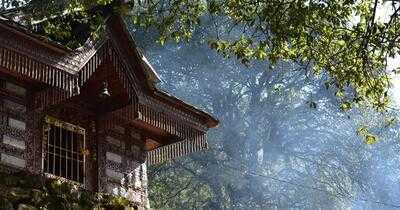
In Himachal Pradesh, the influence of traditional beliefs, religion and cultural practices continues to shape the conservation of forest land.
Dev Vans, or sacred groves, are forest patches revered as the domain of local deities (devtas). Village customs strictly prohibit tree-felling, leaf collection, and the entry of alcohol or meat within its boundaries. Known as the “Land of Unknown Gods”, Himachal Pradesh spans 55,673 sq km and contains 514 documented sacred groves, often found across valleys and slopes, near settlements, temples and water sources.
For generations, in Himachal Pradesh, it was faith, not legislation, that determined which forests would remain untouched. “Nobody wants to anger the god,” says Anurita Saxena, Principal at Rajkiya Kanya Mahavidyalaya, Shimla, who has spent decades researching the state’s cultural practices. “The customs allow certain forests to remain untouched, hence conserving nature.”
The sacred groves continue to remain at the centre of community life, where rituals and festivals reinforce connections between people and nature, particularly in Himachal’s remote and elevated zones.
Ceremonies unfold under their canopies, and community gatherings celebrate their presence tightening the bond between inhabitants and terrain. In numerous villages, sacred forests adjoin temples and fall under the watch of kardars or caretakers, governing access and rules.
These belief-based practices have also helped preserve forest patches across generations,...
Read more
-
Telangana govt sanctions Rs 221 crore for gurukul, hostel schools
-
Why an ordinance to increase number of Supreme Court Judges?
-
Rachel Reeves told 'wake-up' as independent shop in UK spa town closes - opened in 2011
-
'BBC let him down!' rage Eurovision fans after 'unfair' decision

-
Gardeners urged to scatter orange peel in garden in May